Post by : Saif
Al-Najjar
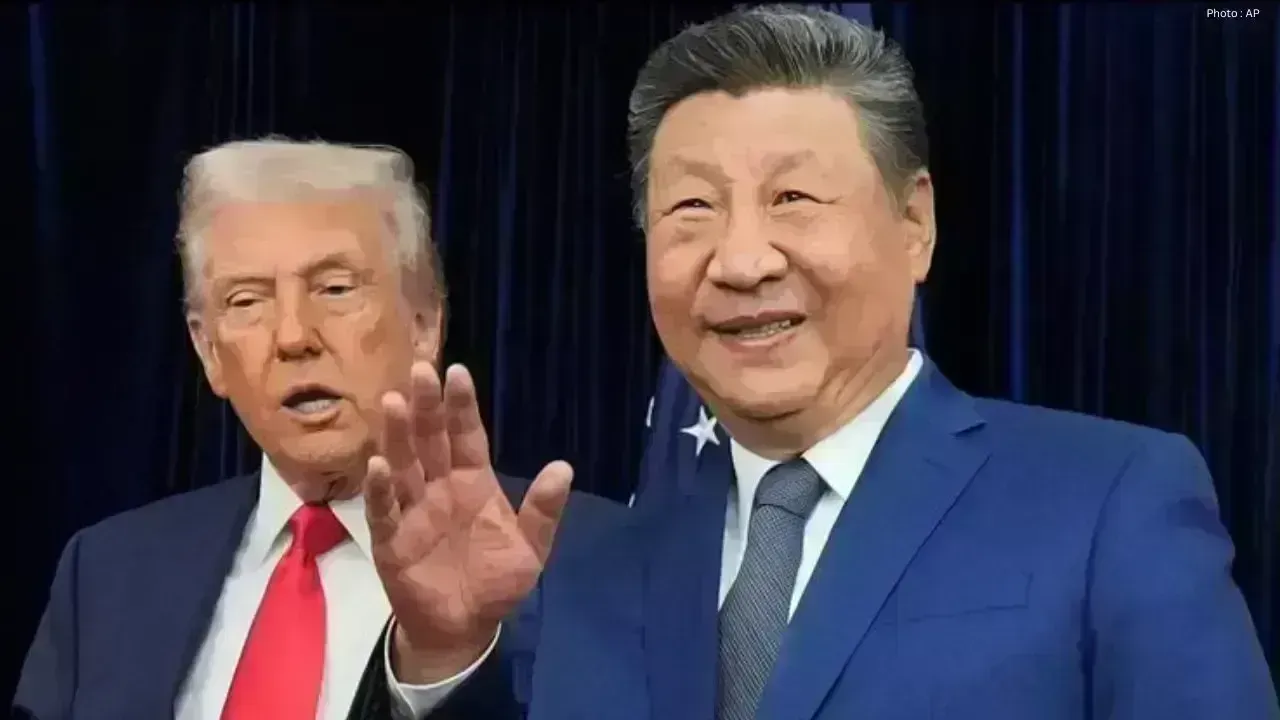
Attention is riveted on the imminent meeting between U.S. President Donald Trump and Chinese President Xi Jinping in Beijing. Set against a backdrop of elevated tensions surrounding trade, Taiwan, technology, and the implications of Iran's activities in the Middle East, this summit is poised to be significant.
While both leaders express a desire for stable relations, numerous challenges remain unaddressed. Analysts suggest that this summit may not lead to resolute solutions but aims to mitigate escalating tensions. Discussions are anticipated to heavily revolve around economic collaboration, security challenges, and broader political stability.
Trade discussions are expected to dominate the agenda. The past few years have seen the U.S. and China embroiled in a series of tariff conflicts. Despite reaching a temporary tade pausing agreement last year, major disagreements continue. The U.S. consistently advocates for China to increase purchases of American products like soybeans and beef, while China seeks alleviation from technology export barriers and semiconductor limitations.
The economic landscapes for both nations have transformed markedly. American businesses are decreasing their reliance on Chinese production, while China is committing substantial funds to bolster its tech sectors and lessen dependency on Western innovations. This competing dynamic is intensifying in all areas from artificial intelligence to rare earth minerals.
Taiwan is anticipated to emerge as a crucial topic during the talks. China views Taiwan as an integral part of its territory, stridently opposing U.S. military assistance to the island. Conversely, the U.S. continues to back Taiwan's defense capabilities. China has long issued stern warnings to the U.S. regarding support that it believes promotes Taiwanese autonomy.
In recent years, military activities around Taiwan have surged. Chinese military forces frequently operate near the island, escalating concerns about potential conflict. Concurrently, the U.S. and allies persist in military collaborations within the Indo-Pacific, which China interprets as a threat to its dominance.
The ongoing crisis involving Iran stands out as another pressing topic for the summit. The U.S. is urging China to leverage its relationship with Iran to help diminish tensions within the Middle East. As a significant economic partner, China engages in substantial oil trade with Iran. Washington believes that China could significantly contribute to regional stability.
This conflict is also relevant to China since the Strait of Hormuz is vital for its oil shipments, meaning disruptions could jeopardize its energy security. Thus, Beijing has robust incentives to foster conditions that avoid escalating conflict.
The summit is attracting notable figures from American businesses too, with indications that leaders from major companies such as Apple, Tesla, and Boeing may accompany the U.S. delegation. Their involvement underscores the immense economic implications of U.S.-China relations, even amid prevailing political friction.
The implications of this summit resonate globally. A stable U.S.-China dynamic can bolster trading networks and investments, while ongoing conflict may induce uncertainty across industries and financial markets.
Expectations for groundbreaking agreements are tempered. The fundamental differences between the two nations reflect deep-rooted strategic rivalry. Nonetheless, both administrations realize that outright conflict could be detrimental to global economic stability.
This meeting also symbolizes the evolving global power landscape. China’s economic and technological advancements challenge the U.S.'s efforts to maintain its position of influence. Currently, both nations engage in competition not just in trade, but also in military might, diplomatic relations, technology, and global alliances.
Though the discussions may seem disconnected from daily life, their implications are substantial. Decisions made by Washington and Beijing have the potential to influence global fuel prices, technological access, employment opportunities, and international peace. The relationship between these two large nations impacts almost every key global concern today.


 English