Post by : Shakul
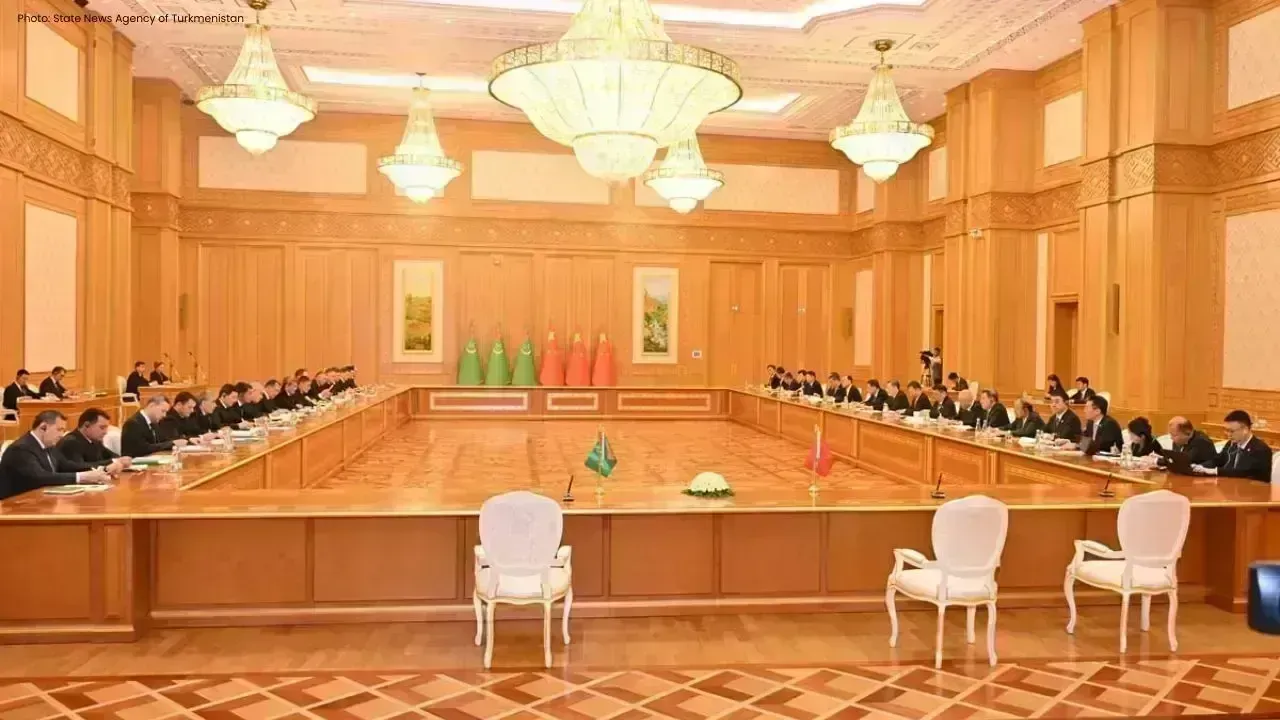
In a significant move to solidify their strategic partnership, Turkmenistan and China convened for the seventh session of the Intergovernmental Committee for Cooperation in Ashgabat. This high-profile meeting underscored the commitment of both nations to advance the agreements formed at the leadership level, aiming to broaden their collaborative efforts.
With leaders like President Serdar Berdimuhamedov of Turkmenistan and President Xi Jinping of China at the forefront, the discussions further strengthened bilateral relations. Their ongoing engagement has propelled the partnership to new heights, fostering mutual trust, strategic alignment, and clear long-term objectives.
During the session, the two nations assessed their progress across critical areas, including political dialogue, economic partnerships, and cultural interactions. The intergovernmental committee has proven to be a vital mechanism for synchronizing cooperative initiatives and ensuring the effective implementation of agreements in various sectors.
A core focus of the meeting was trade and economic collaboration. As one of Turkmenistan's primary trading allies, China expressed interest in diversifying trade, boosting export possibilities, and cultivating a supportive business climate. The goal is a balanced and thriving trade relationship that serves both nations.
Energy cooperation remains a pivotal aspect of their alliance, predominantly within the natural gas sector. Turkmenistan regards China as a key long-term partner for energy exports, and discussions centered around current projects like the Turkmenistan-China gas pipeline. Enhancements in supply capacity and maintaining stable energy flows are critical to ensuring energy security and economic resilience.
The development of transport and logistics was also a major point of discussion. Both countries are examining how to connect Turkmenistan’s “Reviving the Great Silk Road” initiative with China’s Belt and Road strategy. Creating multimodal transport corridors is anticipated to improve connectivity between Asia and Europe, facilitating better trade efficiency and regional integration.
The meeting also delved into new collaboration areas such as digital transformation, artificial intelligence, agriculture, and industrial growth. Turkmenistan is keen on leveraging advanced technologies from China to enhance its industrial sector and productivity. Agricultural cooperation, with a focus on water-efficient techniques and research partnerships, was similarly prioritized.
Moreover, cultural and humanitarian exchanges were identified as vital to the partnership. Efforts in educational collaboration, student exchanges, and cultural programs are expected to deepen ties between the two nations’ populations. Both sides recognized the necessity of sustaining regular exchanges to foster mutual understanding and friendship.
The session concluded with the endorsement of various agreements and memorandums concerning energy, science, technology, transport, culture, and education. These initiatives are anticipated to inject new momentum into bilateral cooperation and unveil fresh avenues for joint development in the future.


 English