Post by : Mariam
Al-Faris
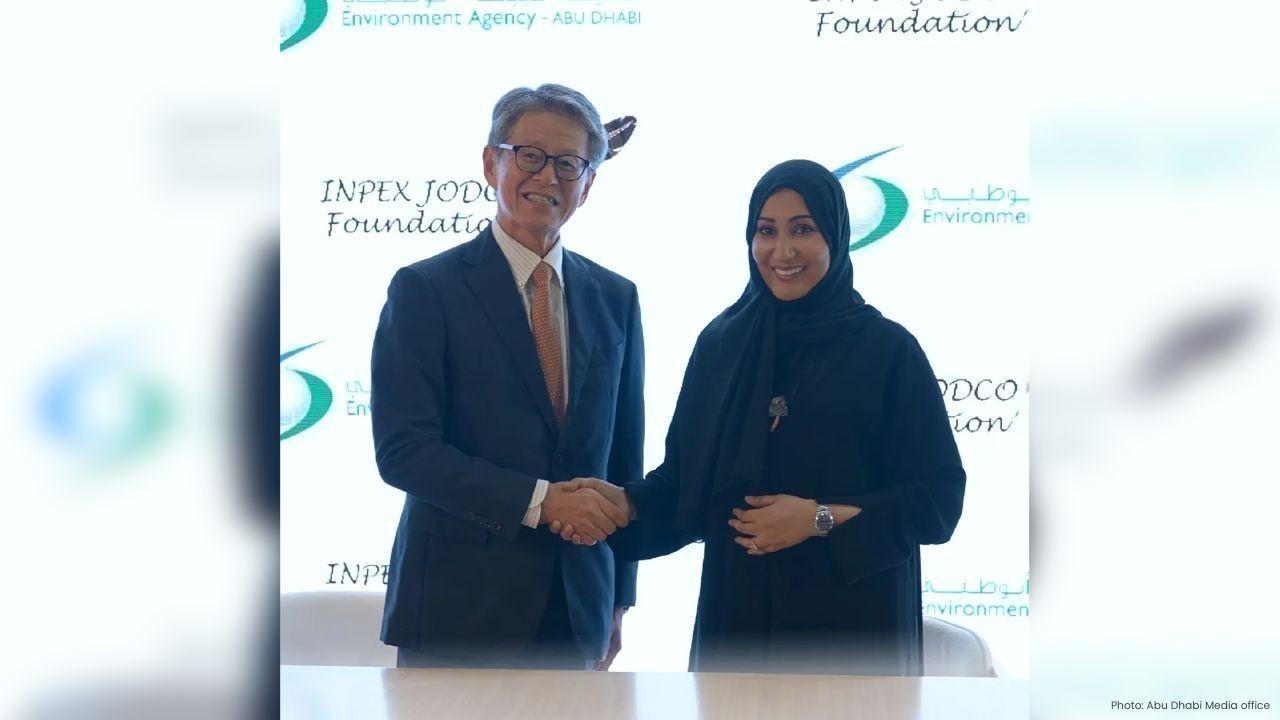
Under the patronage of H.H. Sheikh Khaled bin Mohamed bin Zayed Al Nahyan, Crown Prince of Abu Dhabi, the Environment Agency – Abu Dhabi (EAD) and the INPEX JODCO Foundation signed a Memorandum of Understanding (MoU) to strengthen raptor conservation and cultural collaboration between the UAE and Japan. The agreement was formalised during the IUCN World Conservation Congress 2025 and builds on a successful pilot project conducted in Japan from 2024 to 2025.
Focus on Falcons and Raptors Protection
The MoU expands efforts to safeguard falcons and other raptor species through joint scientific research, habitat protection, and educational outreach. The collaboration will allow both countries to share expertise, develop new conservation methods, and strengthen their commitment to protecting wildlife and biodiversity.
Joint Scientific Research Initiatives
As part of the partnership, the UAE and Japan will launch joint research initiatives. In Japan, artificial nests equipped with monitoring cameras will be installed to study breeding behavior, population dynamics, and habitat use. Meanwhile, the Abu Dhabi Falcon Hospital will support research, rehabilitation, and veterinary care for raptor species in the UAE, ensuring the health and survival of these birds.
Training and Knowledge Exchange
The collaboration also includes specialised training for Japanese zoo staff, fostering knowledge exchange in avian medicine, conservation strategies, and best practices. This initiative aims to strengthen skills, enhance scientific understanding, and build a network of experts dedicated to raptor preservation.
Cultural Collaboration and Heritage
The project integrates cultural elements that highlight the significance of falconry in Emirati heritage, recognised by UNESCO as part of the Intangible Cultural Heritage of Humanity. Japan’s cultural appreciation for harmony with nature complements this initiative, reinforcing a shared respect for wildlife and sustainable practices across both nations.
Leadership Support and Strategic Vision
Dr. Shaikha Salem Al Dhaheri, Secretary-General of EAD, expressed gratitude to H.H. Sheikh Khaled bin Mohamed bin Zayed Al Nahyan for his support. She emphasized that the partnership blends heritage, innovation, and conservation expertise to protect raptors and ecosystems while strengthening cultural ties between the UAE and Japan.
Expected Outcomes and Community Engagement
The initiative will produce valuable data to guide species management, assess habitats, monitor populations, and inform breeding patterns. Public awareness will be enhanced through school programs, exhibitions, and community engagement, ensuring that conservation becomes a shared responsibility among citizens.
Falcon Restoration and Environmental Impact
Through the Sheikh Zayed Falcon Release Programme, EAD has successfully returned 2,355 falcons to the wild. This programme, recognised globally for restoring endangered species, demonstrates Abu Dhabi’s leadership in wildlife protection and its commitment to environmental sustainability, human well-being, and biodiversity preservation.


 English