Post by : Bianca
Haleem
May 22 marks the observance of International Biodiversity Day as organizations worldwide strive to conserve vital ecosystems, wildlife, and plant life fundamental to human existence and ecological stability.
The significance of biodiversity extends to sustaining ecosystems, enhancing food production, climate regulation, and safeguarding natural resources for future generations. However, experts caution that biodiversity is dangerously diminishing due to climate change, pollution, urban development, and other unsustainable human practices.
Reports indicate that about 75% of terrestrial and 66% of marine ecosystems have been significantly altered by human activities. Alarmingly, close to one million species are now at risk of extinction.
UNESCO is at the forefront of global biodiversity conservation, melding science, culture, and environmental protection efforts. UNESCO sites in 195 countries span nearly 10 million square kilometers and serve as benchmarks for balancing biodiversity conservation with sustainable development goals.
These designated areas, which include World Heritage Sites and Biosphere Reserves, encompass roughly 6% of Earth’s land area, aiming to ensure communities coexist harmoniously with nature while safeguarding ecosystems and disseminating scientific knowledge.
Mangrove ecosystems play a crucial role in combating climate change by sequestering carbon, providing coastal protection, and supporting marine life. Latin America and the Caribbean hold about 26% of the world’s mangrove forests, yet these crucial ecosystems are threatened by habitat destruction and resource overexploitation.
To combat these issues, the “MangRes” project was initiated by UNESCO to restore mangrove forests in seven World Biosphere Reserves through community-driven scientific efforts. Significant conservation projects are also underway in the Amazon to mitigate forest degradation and support sustainable livelihoods for local and indigenous populations.
Since 2021, UNESCO initiatives have launched over 42 projects aimed at ecosystem restoration and creating sustainable employment opportunities that connect scientific research with local and indigenous knowledge for enhanced biodiversity defense and climate resilience.
Additionally, UNESCO has introduced the Environmental DNA (eDNA) Expeditions project, a global venture that engages citizen scientists in studying marine biodiversity and assessing climate change effects on oceanic life. This initiative mobilized 250 citizen scientists from 19 countries, leading to the identification of over 4,000 marine species via eDNA sampling.
The future expansion of UNESCO Global Geoparks is also underway, which combines ecological protection with sustainable development and community engagement. Currently, there are 229 UNESCO Global Geoparks across 50 nations.
The 7th World Conference on Marine Biodiversity is set for Bruges, Belgium, from November 17 to 20, 2026, to review progress in marine conservation under the theme “The marine biodiversity insights we need, for the ocean we want.”
In Qatar, biodiversity protection is a national priority, driven by the Qatar National Environment and Climate Change Strategy. Qatar aims to restore natural ecosystems while ensuring clean air, water, and sustainable resources for the future.
The country is dedicated to conserving over 25% of its land by 2030 through environmental restoration, protecting endangered species, sustainable fishing, and habitat conservation initiatives.
Dr. Dhafi Heedan, Assistant Director of the Wildlife Development Department, emphasized that the Ministry’s plans for 2025 and 2026 are heavily oriented toward wildlife and biodiversity protection in terrestrial and marine environments. Protection efforts include sea turtle initiatives, monitoring nesting sites, rescuing injured turtles, and conserving mangrove and marine habitats.
The Ministry is also focused on rehabilitating natural areas, planting native trees, and conducting biodiversity surveys alongside public awareness initiatives and collaborations with academia and the private sector.
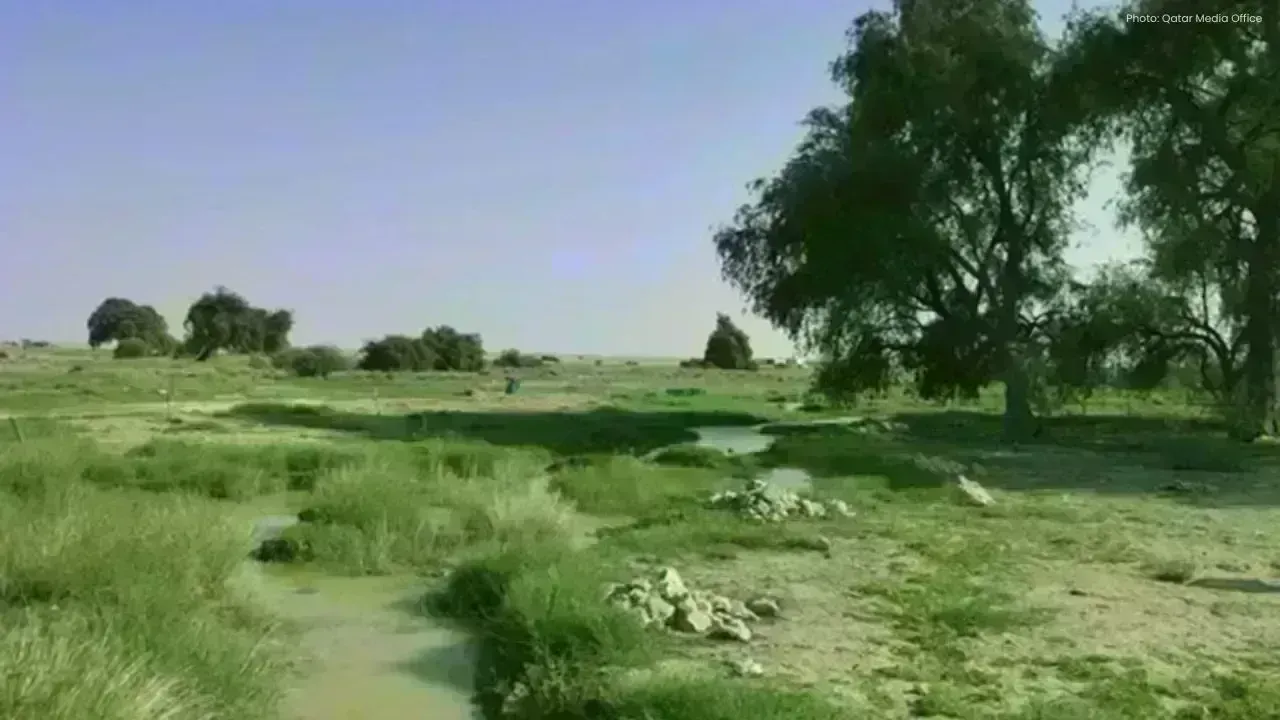
Challenges such as rising temperatures, humidity, marine pollution, invasive species, and damage from off-road vehicles threaten Qatar’s natural vegetation.
In response, Qatar has launched several conservation initiatives, including a national seed dispersal project and efforts to eliminate invasive mesquite trees. The country is also committed to protecting endangered species, including the hawksbill sea turtle and the Arabian oryx, which are shielded under UNESCO policies.
Saif Al Hajari, Head of the Nature Conservators Centre, noted that biodiversity preservation is a collective responsibility involving government bodies, universities, research facilities, NGOs, and environmental reserves. Conservation projects encompass whale shark monitoring, dugong tracking, coral restoration, mangrove planting, and marine ecosystem recovery efforts.
Important scientific undertakings have also been instituted, including the Biodiversity Database Project and the Arabian Oryx Genome Project, to enhance wildlife monitoring and conservation strategies.
Qatar has ratified vital international environmental agreements like the Convention on Biological Diversity, reinforcing its commitment to biodiversity conservation and sustainable environmental development for future generations.


 English