Post by : Shweta
In a notable escalation of tensions, the United States has declared a blockade on Iranian ports, as President Donald Trump confirmed the US Navy's new strategy following the failure of talks in Pakistan.
The US Central Command (CENTCOM) has stated that the blockade will commence on Monday, focusing on vessels navigating to and from Iranian ports. However, shipping routes between non-Iranian ports will remain open through the significant Strait of Hormuz, which alleviates earlier fears of a full maritime closure.
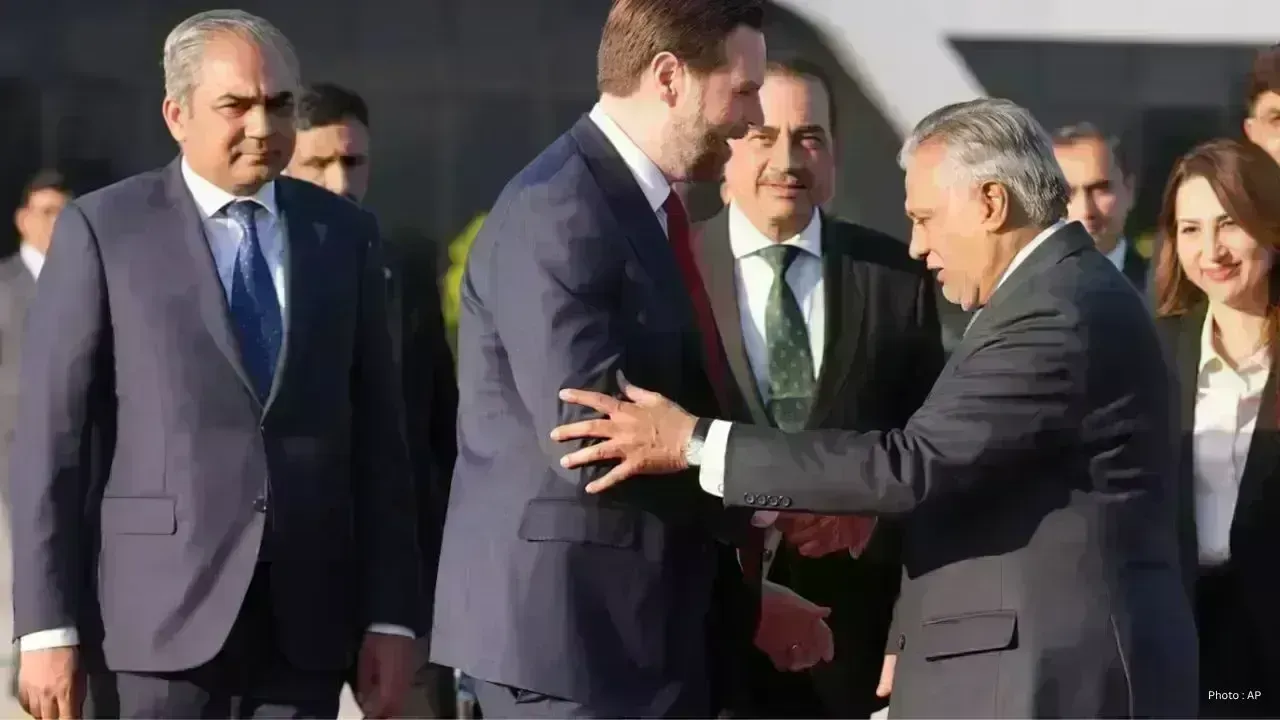
This decision follows high-stakes negotiations in Islamabad, where US Vice President JD Vance led the talks aimed at mending ties between Washington and Tehran. The discussions fell apart due to ongoing disagreements, particularly surrounding Iran’s nuclear ambitions and broader geopolitical issues.
President Trump indicated that the blockade aims to diminish Iran’s economic power, particularly regarding its influence over oil shipments in the Strait of Hormuz, a crucial route that facilitates about 20 percent of the world’s oil transport. Even ahead of the blockade’s implementation, maritime activity in the region has been subdued amidst widespread apprehension.
Global energy markets have reacted swiftly to this announcement, with significant rises in oil prices for both US and Brent crude following the news. Analysts caution that ongoing disruptions in the Strait of Hormuz could further unsettle oil markets and global trade dynamics.
Iran has responded firmly, asserting its control over the strait. The Revolutionary Guard indicated that civilian maritime traffic would be permitted, yet any military vessels might be met with a severe response. This statement underscores the potential for further escalation as tensions remain high.
Experts express skepticism about the feasibility of enforcing such a blockade, citing the complexities of monitoring navigation in a sensitive maritime corridor like the Strait of Hormuz. This undertaking could expose US naval assets to dangerous scenarios, including missile or drone attacks.
As the ceasefire between both nations approaches its expiration on April 22, uncertainty looms over the next steps. Although both sides hint at a willingness for further discussions, critical issues remain unresolved.
International leaders are increasingly concerned about the situation, urging both the US and Iran to re-engage in dialogue to avoid further tensions. The coming days will be pivotal for regional peace and the stability of the global energy market.


 English