Post by : Shweta
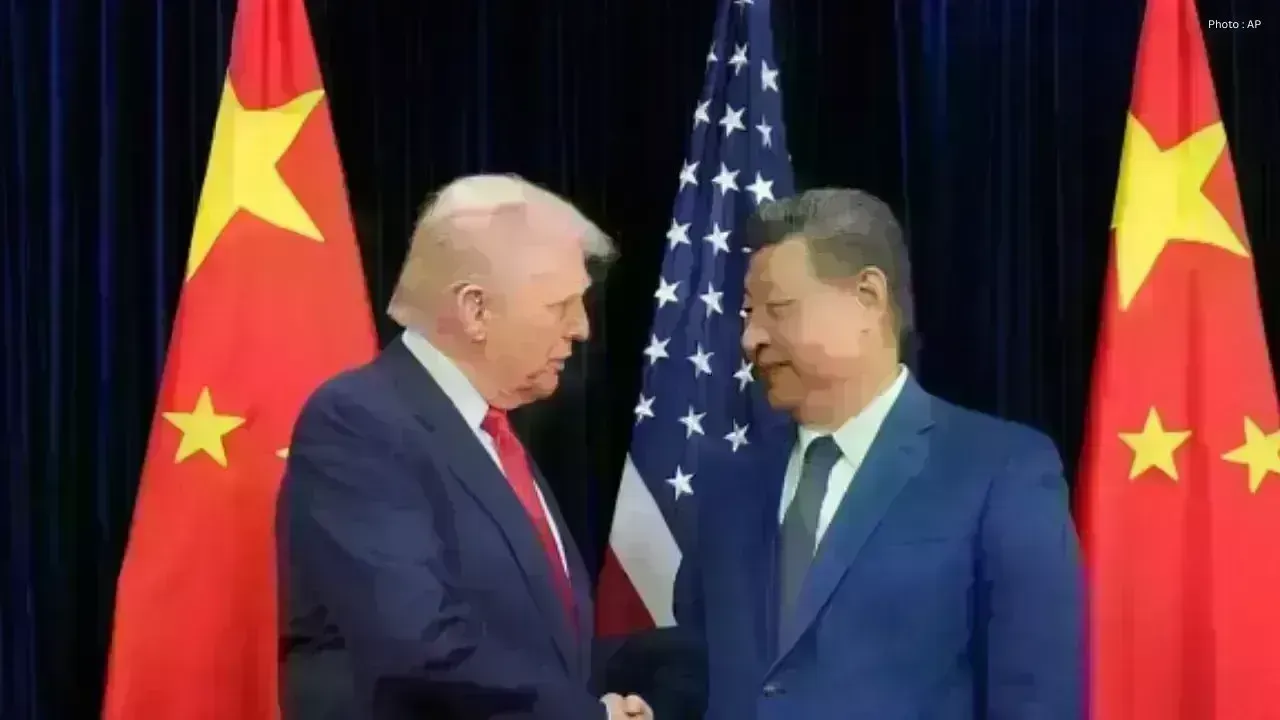
In a pivotal summit held in Beijing, Chinese President Xi Jinping delivered a stern message to U.S. President Donald Trump regarding Taiwan, underscoring a topic that remains pivotal in the U.S.-China dynamic. Trump, in turn, characterized Xi as a “great leader,” aiming to foster a cooperative dialogue amid existing tensions between the two powerful nations.
This summit convened the heads of the world’s foremost economies against a backdrop of escalating uncertainty surrounding trade, technology, military competition, and global security. As discussions veered toward economic alliances and trade issues, the subject of Taiwan quickly took center stage.
According to official reports from China, Xi asserted that Taiwan is a “core national interest” for Beijing, warning the U.S. against any actions perceived as bolstering Taiwanese independence efforts. China has long regarded Taiwan as an integral part of its territory and prioritizes reunification, even suggesting force may be employed if deemed necessary.
Xi reportedly urged Trump to acknowledge China’s sovereignty, advocating for a decrease in U.S. military and political backing for Taiwan. Chinese state media reiterated that foreign intervention in Taiwan's affairs is seen as an infringement on China's internal matters.
During the conversations, Trump praised Xi as a “great leader,” reflecting an emphasis on constructive dialogue while seeking to avoid direct confrontation during these sensitive negotiations. He also highlighted the importance of achieving economic stability and preventing unnecessary escalations between the two countries.
Despite the optimistic tone of the discussions, significant disagreements remain. The U.S. continues to support Taiwan through arms provisions, strategic partnerships, and unofficial diplomatic interactions. While Washington adheres to the “One China” principle, it also commits to assisting Taiwan in its defense efforts through the Taiwan Relations Act.
Taiwan stands as a significant global flashpoint, with China intensifying military drills near the island, encompassing naval operations and aerial missions. The U.S. and its allies have responded by bolstering their naval presence and enhancing security partnerships throughout the Indo-Pacific.
The summit also touched upon tariff issues, technological restrictions, cybersecurity, artificial intelligence, and global supply chains. Despite enduring trade tensions, both nations maintain extensive economic ties.
Analysts suggest Xi likely approached this meeting with assurance, bolstered by China’s expanding trade networks and influence in Asia, Africa, and the Middle East. On the other hand, Trump contends with domestic pressures requiring a strong stance on China and safeguarding American economic interests.
Critics view Trump’s commendation of Xi as part of his diplomatic strategy to forge personal ties with influential global leaders, but there are concerns that such language could undermine the U.S. position on Taiwan and human rights issues.
Taiwanese officials closely observed the summit, particularly regarding Xi's sovereignty statements. Taipei's leaders have consistently rejected Beijing's claims and are enhancing defense collaborations with the U.S. and allies.
Global markets attentively followed the summit, recognizing that escalating hostilities between the U.S. and China could have wide-reaching repercussions in international trade and economic stability. Investors generally prefer indications of stable dialogue between Washington and Beijing, despite persistent disagreements.
While the summit ended without significant breakthroughs on Taiwan, both administrations characterized the discussions as vital for sustaining communication amid intensifying geopolitical competition. Experts predict that Taiwan will continue to be a critical and potentially volatile factor shaping future U.S.-China relations.
As superpower rivalry intensifies, the Beijing summit illustrated the intricate links between diplomacy, economic interests, and military tensions in the broader struggle for influence across the Indo-Pacific and global order.


 English