Post by : Shweta
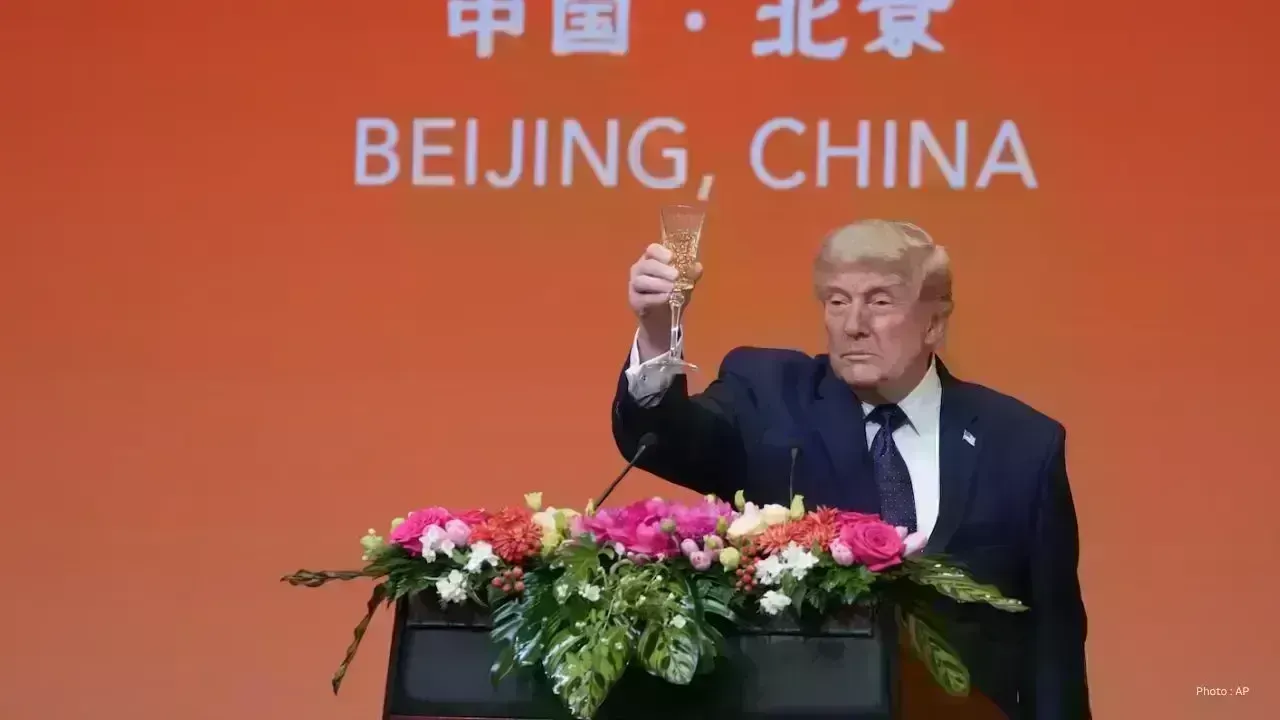
During a recent high-level meeting, Chinese President Xi Jinping cautioned U.S. President Donald Trump that escalating tensions regarding Taiwan could result in significant conflict between China and the United States, marking a critical point in international relations. This warning reflects the ongoing escalation of tensions in the Indo-Pacific region.
Xi emphasized that Taiwan is a “fundamental national interest” for China and declared that Beijing would not accept any moves toward Taiwanese independence. Historically, Chinese leadership has reiterated its commitment to reunification with Taiwan, urging outside nations to refrain from intervening in what it deems an internal affair.
The Chinese leader expressed that continued military, political, or strategic interactions between Washington and Taiwan could intensify relations to a breaking point. Chinese officials view the Taiwan situation as the most delicate aspect of U.S.-China relations.
Trump acknowledged the need for stability while reinforcing America's established strategic goals in the Indo-Pacific region. U.S. policy continues to support Taiwan through military sales, collaboration, and informal diplomatic relations, as outlined in the Taiwan Relations Act.
Taiwan has assumed a pivotal role in the escalating geopolitical tensions of recent years. China has ramped up military activities near the island, deploying fighter aircraft, naval ships, and surveillance planes into Taiwanese waters. Beijing argues that these maneuvers are essential for defending national sovereignty and deterring independence efforts.
Nonetheless, the U.S. and its allies perceive China’s military assertiveness in the region as a serious security alarm. Consequently, American naval operations and military collaborations in the Indo-Pacific have expanded, aiming to assure allies and secure free navigation.
Experts suggest Xi’s remarks mirror Beijing's growing discontent with increasing U.S.-Taiwan cooperation. Recently, American legislators and officials have heightened their engagements with Taiwanese leadership while additional military support for Taipei has been approved.
Taiwan's administration firmly opposes China's territorial claims, asserting that its future should be democratically determined by its citizens. Taiwanese authorities consistently raise alarms that Beijing’s military maneuvers jeopardize regional peace.
The Taiwan issue holds immense global significance, as any armed conflict in the region could severely disrupt international trade, technology manufacturing, and critical shipping routes. Taiwan houses some of the globe's leading semiconductor firms, rendering it vital to worldwide technology supply chains.
Xi's warning emerged amidst broader discussions encompassing trade disputes, artificial intelligence advancements, tariffs, cybersecurity, and economic competition between the two superpowers. Although consistent diplomatic engagements continue, the strategic rivalry remains intense.
Analysts suggest that both China and the U.S. strive to avoid a direct military clash, while fortifying their strategic positions in Asia. However, miscalculations or unexpected incidents regarding Taiwan pose significant risks to international security.
Global markets and international observers closely monitor U.S.-China relations, as escalating tensions could have far-reaching implications for global economic stability. Nations throughout Asia, Europe, and the Pacific express concerns about potential conflicts and their consequences on international trade and regional security alliances.
Some experts argue that ongoing diplomatic dialogue between Trump and Xi is crucial for minimizing misunderstandings and preventing escalation, despite existing major disagreements. However, rising aggressive rhetoric about Taiwan from both sides is a growing concern.
As the geopolitical rivalry between the U.S. and China intensifies, Taiwan remains central to larger disputes over military strength, economic power, technological leadership, and regional authority in the Indo-Pacific.
Xi’s comments during their meeting underline the profound impact of the Taiwan dilemma on U.S.-China relations and suggest it as one of the most perilous diplomatic issues the global community faces today.


 English