Post by : Bianca
Haleem
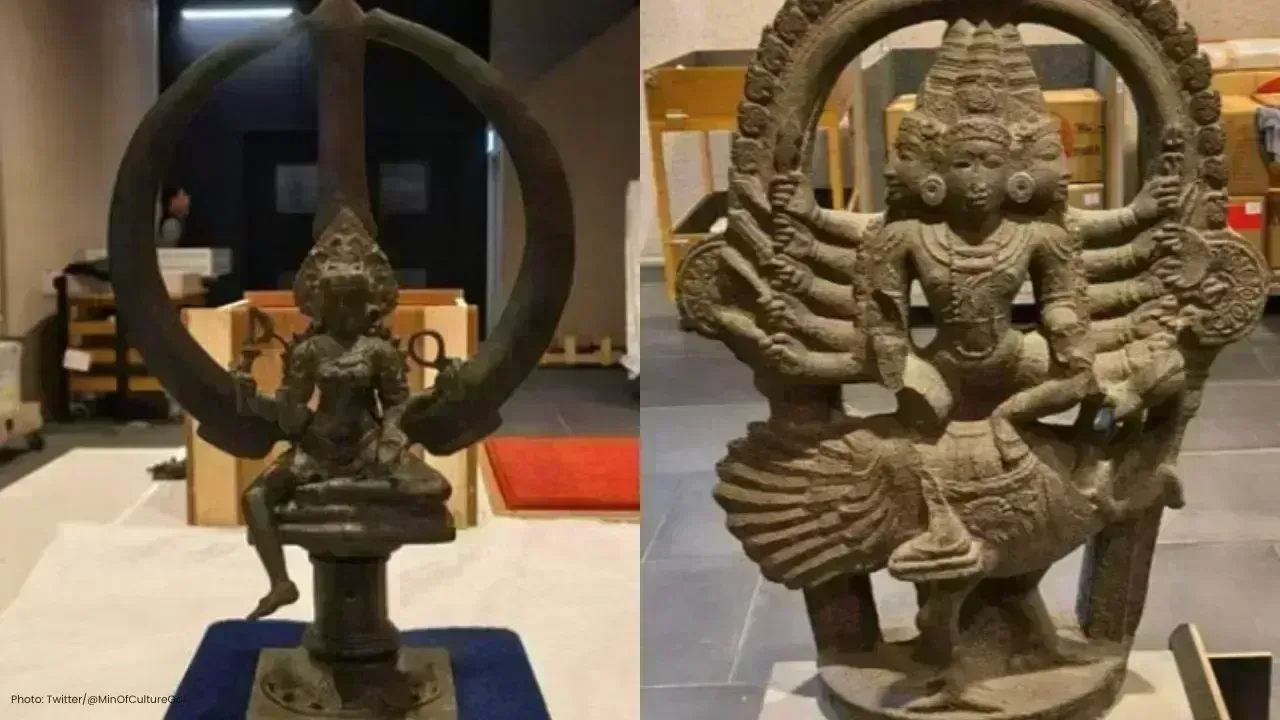
Australia has pledged the return of three ancient temple artefacts from Tamil Nadu that were previously stolen. This significant announcement was made during Prime Minister Narendra Modi's recent visit to Melbourne for the India-Australia Annual Leaders' Summit.
The artefacts include a ceremonial trident depicting Goddess Bhadrakali, a granite idol of Nandi, and a six-headed stone idol of Kartikeya (Skanda-Subramanya). These priceless items, dating back to the 11th and 12th centuries, were linked to temples in Thanjavur and Thiruvarur districts before they vanished into the international antiquities market.
ClearIndication of Strengthening Ties
During discussions with Australian Prime Minister Anthony Albanese, PM Modi noted the importance of this return. Following their talks, both leaders emphasized in a joint statement the value of this act in promoting cultural cooperation.
According to Australia's Prime Minister's Office, this action illustrates its dedication to nurturing cultural bonds with India. India's Ministry of External Affairs similarly praised the move, labeling it a vital step in restoring the nation's stolen cultural heritage.
Contribution to Heritage Recovery Efforts
While these artefacts may be smaller than some celebrated Chola bronzes previously recovered, they carry immense cultural and religious significance.
This return contributes to India's ongoing efforts to reclaim stolen idols, sculptures, and other antiquities which were removed through illicit trafficking. Many have ended up in museums and private collections abroad, and their recovery has often come as a result of diplomatic and legal actions.
Read More: Dr Mahathir Mohamad Celebrates His 101st Birthday
Increasing Repatriation Efforts Since 2014
In the past decade, India has considerably stepped up its initiatives to recover lost cultural treasures.
Reportedly, only 13 antiquities were returned from the time of independence until 2014. However, since then, over 640 items have been brought back from various locations, including North America and Europe, increasing the total recoveries to above 650.
Much of this success has come during high-profile diplomatic encounters, where foreign nations return stolen artefacts to bolster bilateral relations.
Australia's Role in Cultural Repatriation
Australia has emerged as a significant ally in India's quest to recover lost cultural assets.
The first major return occurred in September 2014, when former Australian Prime Minister Tony Abbott brought back two Chola masterpieces to PM Modi during his visit to New Delhi.
These included the Nataraja idol, which had been plundered from the Brihadeeswarar Temple, and an Ardhanarishvara idol. Both items had made their way into Australian institutions with the help of forged acquisition documents.
In 2022, Australia returned 29 antiquities from various regions of India, showing continued commitment to cultural restitution.
United States Leads in Antique Returns
The US holds the record for returning the highest number of stolen Indian artefacts.
During PM Modi's trip to Washington DC in June 2016, the US repatriated close to 200 artefacts, including notable pieces from the Chola period.
Further recoveries followed in 2021 and September 2024, with considerable art collections returned from various periods in Indian history.
Assistance from Other Nations
India's reclamation efforts have received support from numerous countries.
Notably, Canada restored a 10th-century sculpture during PM Modi's visit in 2015, and Singapore returned a bronze idol in 2016 after negotiations.
Countries like the UK, Germany, and Italy have also repatriated artefacts through various means, including judicial orders and diplomatic efforts.
Temples in Tamil Nadu: Targets for Traffickers
Many of the recovered items originate from Tamil Nadu's ancient temples.
The region boasts thousands of temples from the Chola dynasty, making them targets for antiquities traffickers because of their remarkable sculptures.
A significant number of thefts have occurred in village temples lacking adequate security, leading to the replacement of original objects with replicas in some instances.
Investigations have shown that illegal idols often ended up in galleries and collections worldwide through sophisticated smuggling operations.
Process of Art Recovery in India
Institutions in India initiate recovery by verifying the origins of stolen artefacts.
Officials compile comparative analysis from temple records, photographs, and documentation from relevant authorities.
This evidence is then presented to foreign entities and law enforcement. Many museums have willingly returned items upon recognizing discrepancies in ownership claims, while other recoveries emerge from legal, diplomatic, and collaborative cultural agreements.
Significance of Artifact Returns
The recent announcement from Melbourne underscores India's persistent pursuit to reclaim its cultural and religious treasures from the globe.
The return of the trident, Nandi idol, and Kartikeya sculpture illustrates Japan's dedication to recovering its historical artefacts while steadily enhancing cultural ties with Australia.


 English