Post by : Bianca
Haleem
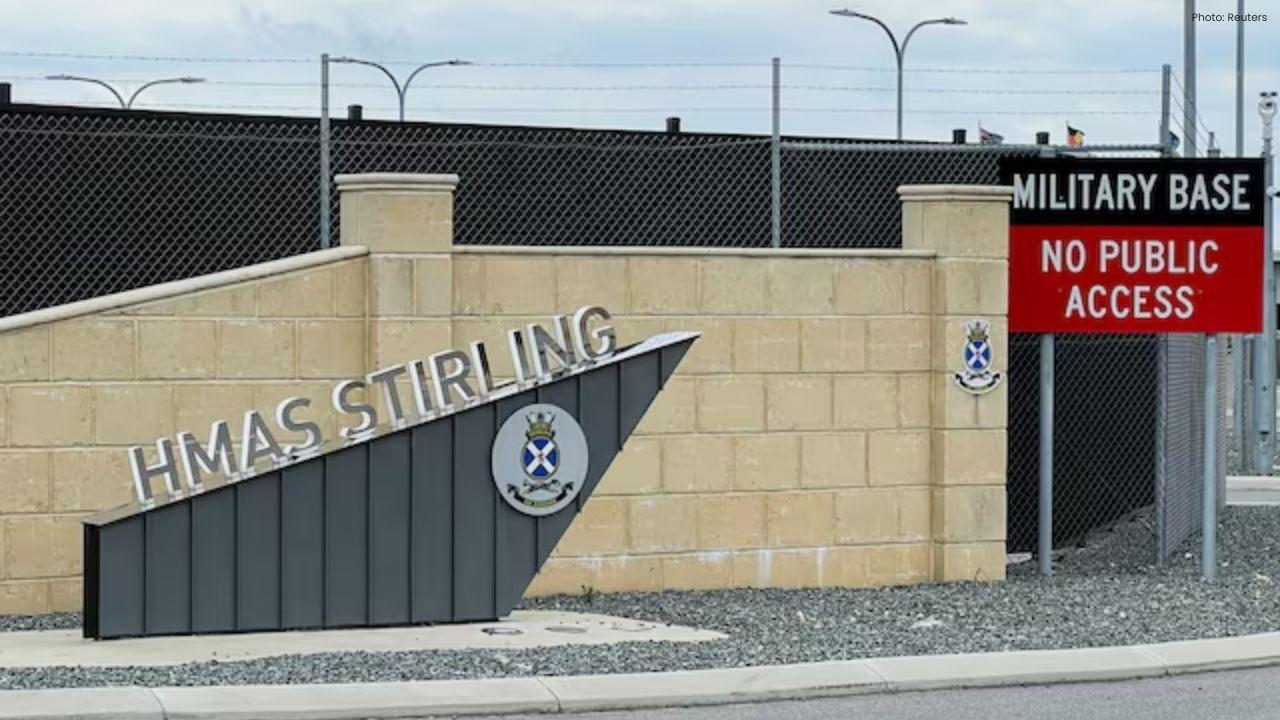
Australia’s AUKUS submarine base, situated on the west coast, is becoming a key digital hub, thanks to newly laid undersea internet cables by Google and local provider SUBCO that are converging near HMAS Stirling — the forthcoming home of U.S. nuclear submarines.
Documents reviewed by Reuters indicate that three robust undersea cables will traverse from Australia to Africa and Asia, landing at or near the naval base in Rockingham, south of Perth. This development accompanies the strengthening of ties between Canberra and Washington under the AUKUS agreement, aiming for boosted digital and military resilience amid rising tensions with China.
SUBCO has confirmed that its forthcoming high-capacity cable, meant to connect Australia’s east and west coasts, will include a branch reaching directly to HMAS Stirling. Official project filings have so far only alluded to a landing site in Perth, roughly 60 kilometers north of the base. Bevan Slattery, the company’s founder, described the network as crucial for the stability of the region and the advancement of Australia’s AI initiatives.
Google has even broader plans. The tech giant aims to establish two significant routes from Western Australia — one heading north to Christmas Island and another extending west across the Indian Ocean to Africa. Both routes are set to land at Madora Bay, neighboring the AUKUS base, thereby positioning it strategically at a global data intersection.
This connection could greatly improve secure communications among Australia, the U.S., and other allied nations. Approximately 1,000 U.S. Navy personnel are scheduled to relocate to Rockingham and nearby Mandurah next year, in preparation for four Virginia-class submarines expected by 2027.
Experts point out that the enhancement of subsea networks presents a dual advantage — providing faster, more resilient data for military and commercial use, but also increasing risk for potential sabotage. Australia’s navy has previously warned that while these undersea cables serve as the country’s digital backbone, they simultaneously create a significant vulnerability.
As construction proceeds, Australia’s environmental regulatory body has halted the assessment of Google’s Western Australian cable projects, underscoring the need to evaluate their potential effects on marine ecosystems. Google insists it will adhere to all environmental and security regulations.
The understated arrival of these cables signifies not merely a technological advancement but also reflects Australia’s expanding role as a pivotal player in the evolving digital and defense landscape within the Indo-Pacific region.


 English