Post by : Shweta
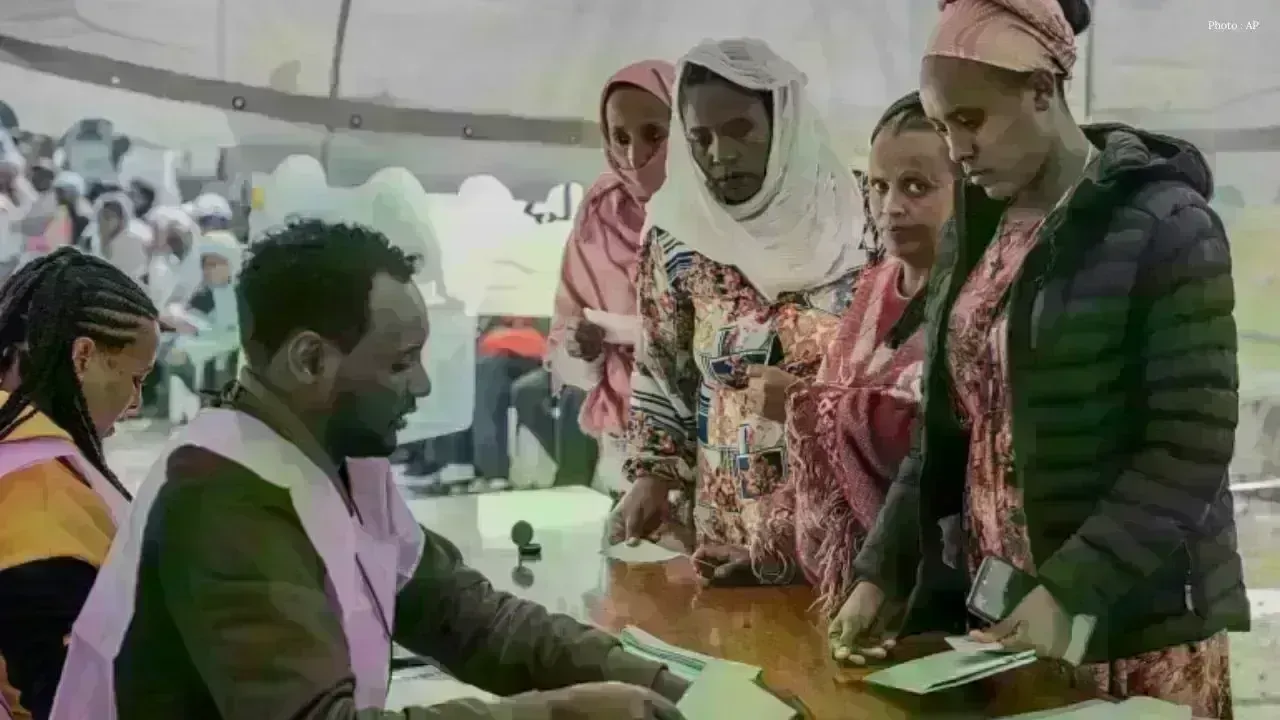
As millions of Ethiopian voters take to the polls in a pivotal national election, anticipation builds around Prime Minister Abiy Ahmed and his ruling Prosperity Party, anticipated to maintain a stronghold in power. This election has garnered significant attention both regionally and globally, coinciding with the nation’s ongoing economic hurdles and rising tensions across various regions.
Polling locations opened across Ethiopia, allowing citizens to elect members to the House of Peoples' Representatives, which serves as the national parliament. A majority win in this election grants the victorious party the authority to form the government and appoint the prime minister. Given the Prosperity Party's substantial political influence throughout the country, analysts predict Abiy Ahmed will secure another term.
Since taking office in 2018, Prime Minister Abiy Ahmed has become a prominent figure in African politics, implementing crucial economic reforms and infrastructure initiatives. His role in re-establishing relations with Eritrea earned him the Nobel Peace Prize in 2019; however, his administration faces scrutiny over internal conflicts and concerns regarding political freedoms.
Entering this election as the clear frontrunner, the Prosperity Party was established in 2019, merging various regional factions under Abiy's leadership. Advocates argue it fosters national unity and economic growth. Government representatives credit advancements in infrastructure, foreign investment, and economic reforms as key achievements during Abiy's tenure.
Opposition parties are also taking part in the election, yet many experts suggest they encounter considerable barriers against the ruling party's comprehensive political apparatus. The divided nature of several opposition groups and their lack of cohesive strength may hinder their ability to challenge the Prosperity Party effectively, amidst concerns regarding political fairness raised by some opposition leaders, which election authorities have dismissed.
Security remains a pressing concern during these elections, with some areas unable to participate due to ongoing instability. The Tigray region continues to grapple with the aftermath of civil conflict from 2020 to 2022, and the Amhara and Oromia regions face security challenges tied to clashes between government forces and armed groups.
International observers are closely monitoring voter turnout and the integrity of the election. While officials describe the election as a crucial step in Ethiopia's democratic journey, human rights organizations have voiced concerns about political freedoms and the opposition's ability to campaign unhindered. The government refutes claims of interference, asserting that the electoral process is open and credible.
Economic issues feature prominently in the election backdrop, with Ethiopia grappling with rising inflation and unemployment. Concurrently, the government aims to attract foreign investments and promote economic growth, raising important considerations for voters as they evaluate candidates and parties.
Seen as a turning point for Ethiopia, the outcomes of this election could significantly shape its political landscape as the country, Africa's second-most populous, wields a critical role in regional stability and diplomacy within the Horn of Africa.
Political analysts indicate that the Prosperity Party's extensive reach alongside Abiy Ahmed's prominence favors a continuation of their governance. While opposition parties aim to enhance their parliamentary presence, forecasts predominantly lean towards the ruling party retaining control.
As counting commences in the following days, all eyes will be on voter engagement, regional outcomes, and the final allocation of parliamentary seats. The implications of this election are poised to resonate for years, centering on critical issues like economic recovery, national unity, security, and constitutional reforms.
In the meantime, this electoral event signifies another significant chapter in Ethiopia's evolving political narrative. With the Prosperity Party appearing favored for triumph, the election presents an opportunity for the government while simultaneously testing the resilience of the nation’s democratic practices and political infrastructure.


 English