Post by : Bianca
Haleem
FIFA has unveiled a suite of technological advancements for the upcoming FIFA World Cup 2026, designed to boost officiating precision, elevate team analysis techniques, and enrich the spectator experience globally.
This prestigious tournament is set to take place jointly in Canada, Mexico, and the United States from June 11 to July 19, 2026.
The announcement was made by FIFA's Director of Innovation, Johannes Holzmüller, during a virtual press briefing from the International Broadcast Centre (IBC) based in Dallas.
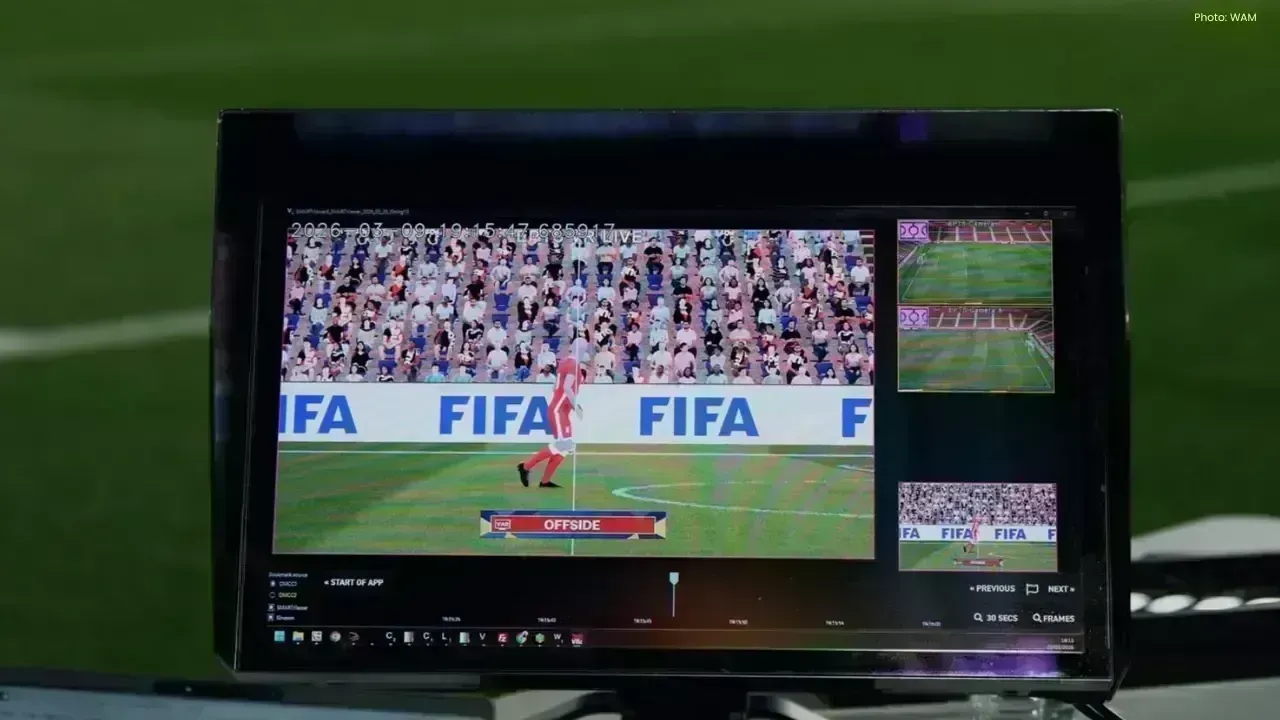
Among the most significant innovations is the implementation of Advanced Semi-Automated Offside Technology, marking a first for any FIFA World Cup.
FIFA stated that the new system will enable clear offside calls to be relayed directly to officials on the pitch, bypassing the need for prior review by the Video Assistant Referee (VAR). This advancement should expedite the identification of positional offsides by assistant referees, thus minimizing interruptions in play.
It's important to note that this technology is limited to positional offside situations; cases involving interference or play influence will still necessitate additional scrutiny by match officials.
For enhanced accuracy, every competitor at the FIFA World Cup 2026 is set to undergo a 3D scanning process. These scans will facilitate the creation of digital avatars, which will be integrated into the offside technology framework. The digital representations will also enhance the quality of 3D broadcast replays.
Additionally, FIFA is launching Football AI Pro, a new AI tool aimed at equipping all 48 participating teams with sophisticated match analysis functionalities.
This platform will enable teams to effectively analyze match data before and after games, ensuring all teams receive equal access to advanced football analytics, irrespective of their financial constraints or technical expertise.
Another notable enhancement is the introduction of referee body cameras. Initially tested in the FIFA Club World Cup 2025, these improved cameras minimize motion blur from quick movements, offering clearer first-person footage from referees during matches.
FIFA asserts that the upgraded footage will foster transparency, allowing fans to grasp refereeing decisions better and creating a more immersive viewing experience.
Moreover, each World Cup venue will be outfitted with 16 optical tracking cameras that will collect over 150 million tracking data points per match.
This data accumulation will empower FIFA to recreate matches in 3D, assist in VAR decision-making, provide cutting-edge content for media partners, and fuel the Football AI Pro analytics system.
Through these innovations, FIFA is committed to making the 2026 World Cup the most technologically sophisticated tournament in football's history, enhancing officiating accuracy and enriching the experience for teams, broadcasters, and supporters alike.


 English