Post by : Saif
Al-Najjar
For millennia, the fertile lands between the Tigris and Euphrates rivers have nourished civilizations. Today, these same lands struggle to produce sufficient wheat as Iraq endures one of its most significant water crises. Hopes for wheat self-sufficiency are diminishing rapidly, impacted by drought, climate change, and declining river levels affecting farmers.
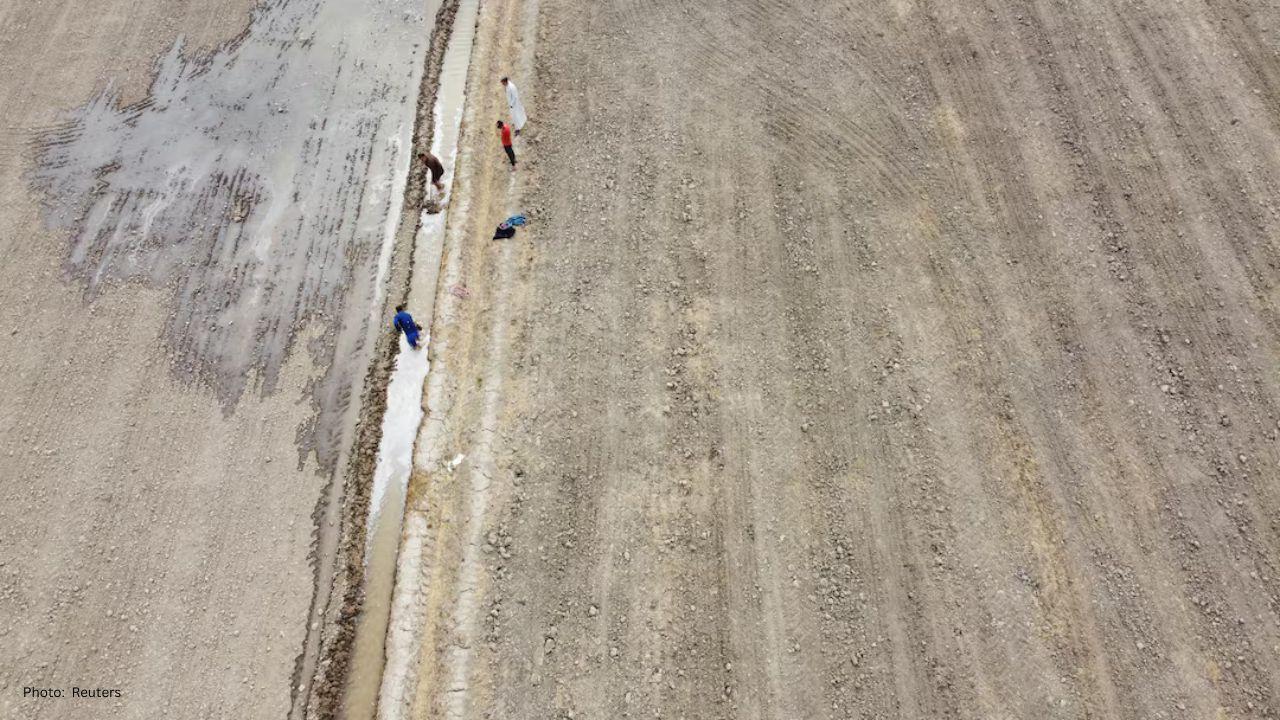
Close to the revered city of Najaf, wheat grower Ma’am al-Fatlawi stands among parched canals and barren soil. His fields, historically reliant on the Euphrates River, have received minimal water this year. Attempts to drill wells have failed, as underground water sources are excessively salty for agriculture. Consequently, he has severely limited his wheat planting and reduced his workforce significantly.
Iraq had previously achieved notable success in agricultural production. Once heavily dependent on wheat imports, the nation enjoyed three consecutive years of surplus due to robust governmental support, providing farmers with high-yield seeds, advanced tools, and substantial subsidies. The state even paid significantly above global prices for locally produced wheat, resulting in stocked reserves overflowing its storage facilities.
However, this positive trend is now under profound threat. This year marks the driest period Iraq has experienced in decades, with record low water levels in the Tigris and Euphrates. The United Nations Food and Agriculture Organization predicts production could plummet by up to 50% this season. The country’s total water reserves have dwindled dramatically, shrinking from approximately 60 billion cubic meters in 2020 to less than 4 billion today.
Climate change significantly contributes to this predicament. Positioned among the world’s most climate-vulnerable nations, Iraq faces rising temperatures, declining rainfall, and more frequent heatwaves. Additionally, around 70% of Iraq's water resources originate from external sources, and upstream dam projects in Turkey and Iran have sharply curtailed water flow to Iraqi farms.
The implications extend beyond agriculture. In response to reduced water availability, Baghdad has implemented rationing measures. The government has limited river-irrigated wheat planting to half of last season’s figures and imposed a nationwide ban on rice farming due to its high water usage. Farmers must now adopt modern irrigation techniques such as drip and sprinkler systems instead of wasteful flood irrigation methods. Meanwhile, desert farming, which relies on groundwater, has expanded, though it requires expensive equipment and meticulous management.
Experts caution that over-reliance on wells could exacerbate issues. It takes over a thousand cubic meters of water to produce just one ton of wheat. Unregulated pumping may deplete underground reserves, with groundwater levels in southern Iraq already diminishing by several meters. For many rural households, the financial burden of new irrigation systems is prohibitively high.
As domestic production declines, wheat imports are anticipated to rise again, with the FAO predicting Iraq may need to bring in around 2.4 million tons in the upcoming season. Despite current low global wheat prices, dependence on imports leaves Iraq vulnerable to sudden price fluctuations and fiscal pressures. Analysts warn that shortages related to food and water could incite social unrest and pose security challenges.
The human toll is already apparent, with approximately 170,000 individuals displaced from rural communities due to water scarcity. For families dependent on agriculture, this crisis transcends food insecurity; it threatens their very survival and dignity.
Iraq’s current plight illustrates how water scarcity may erase years of progress in food security. Without urgent cooperation for regional water sharing, enhanced climate adaptation strategies, and robust support for farmers, the nation’s historic status as an agricultural cornerstone may continue to decline.


 English