Post by : Meena
Hassan
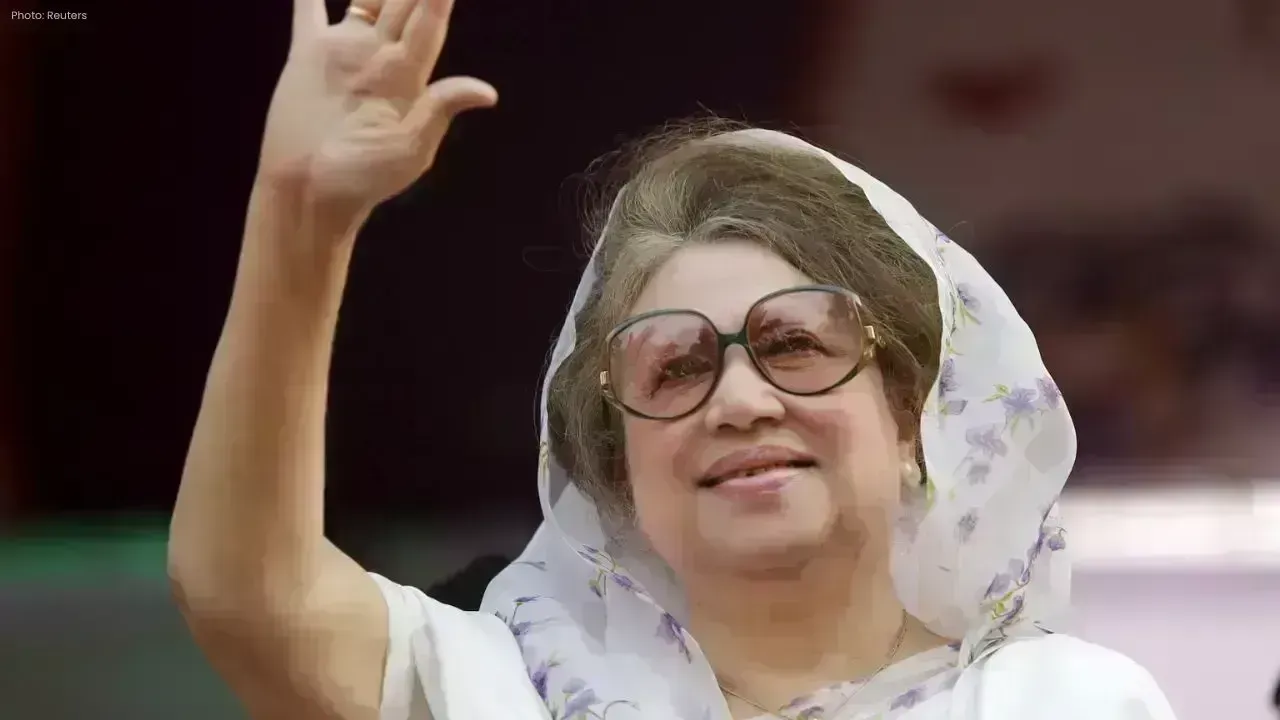
Khaleda Zia, the pioneering female prime minister of Bangladesh, has passed away at 80 years old following a lengthy battle with serious health issues. She was hospitalized for several weeks due to severe conditions including kidney failure, heart disease, and pneumonia. Despite extensive medical interventions and life support, her condition steadily worsened.
Zia's entrance into politics came after the tragic assassination of her husband, former President Ziaur Rahman, in a military coup in 1981. Rising to leadership in the Bangladesh Nationalist Party (BNP), she transitioned from the background of being a president's spouse to becoming a formidable political force.
In 1991, Khaleda Zia made history as the first female prime minister of Bangladesh, a landmark achievement following her party's victory in the first democratic elections in two decades. Her leadership was a significant breakthrough in Bangladesh's traditionally male-dominated political arena, inspiring countless women across the country.
Zia's political journey was closely linked with that of her rival, Sheikh Hasina of the Awami League. The two women dominated Bangladeshi politics for years, with alternating power that often led to national polarization but strengthened a multi-party democracy.
During her tenure, Zia championed women’s education and social development, and focused on reinforcing parliamentary democracy through bipartisan efforts and constitutional reforms. These actions were vital in stabilizing democratic institutions after a history of military rule.
However, Zia’s time in office was not without its challenges. Her second term in 1996 was marred by an election controversy, and she faced corruption allegations that she vehemently denied, labeling them as politically motivated assaults on her party.
Despite such difficulties, Zia stood as a central figure in opposition politics in Bangladesh. Even amid her health struggles and legal issues, she remained a powerful symbol of resistance against the Awami League government, ensuring that the BNP maintained its national relevance.
Recently, her son, Tarique Rahman, returned to Bangladesh after nearly two decades in self-imposed exile, bringing renewed hope for the BNP's resurgence under his potential leadership.
In her final moments, Khaleda Zia was surrounded by family members, including Tarique Rahman, his wife, and daughter. Tributes from supporters and allies reflect her impact as a groundbreaking female leader and advocate for democracy in the nation.
Political figures and citizens nationwide have shared their condolences, honoring Khaleda Zia as a “great guardian” of democracy whose contributions to the political landscape will always be remembered.


 English