Post by : Mariam
Al-Faris
A very strong earthquake measuring 8.8 in magnitude hit early Tuesday morning near the Kamchatka Peninsula, located in eastern Russia. The shaking happened under the sea, at a depth of about 19 kilometers, which is considered shallow for such a large earthquake. This made it more likely to cause a tsunami, according to experts from the United States Geological Survey (USGS).
The earthquake was so powerful that it is now listed among the six strongest earthquakes in history, tying with major earthquakes from Chile in 2010 and Ecuador in 1906.
Russia Reports Tsunami Waves and Local Damage
In the Russian Far East, the Ministry of Emergency Situations (EMERCOM) reported waves as high as 4.2 meters in the town of Severo-Kurilsk. This town is located on the Kuril Islands, which are close to the earthquake’s center.
Local buildings, including homes, a kindergarten, and an airport terminal, were damaged. Authorities quickly began evacuating people from coastal areas that were at risk. Tsunami warning sirens were turned on just minutes after the earthquake.
Some injuries have been reported, but no deaths have been confirmed yet.
Japan Responds with Large-Scale Evacuations
The Japan Meteorological Agency (JMA) quickly reacted by issuing tsunami warnings for several northern areas of Japan. These included the coasts of Hokkaido, Aomori, Iwate, and Fukushima.
More than 900,000 people in 133 towns and cities were told to leave their homes and move to higher ground. Although early waves were small (0.4 meters in Hokkaido), the JMA warned that stronger waves may come later.
A JMA official said, “The danger has not passed. Tsunamis often arrive in several waves.” Thankfully, no damage was reported at nuclear power plants, and the Nuclear Regulation Authority said all plants remain safe and active.
Hawaii and U.S. West Coast on Alert
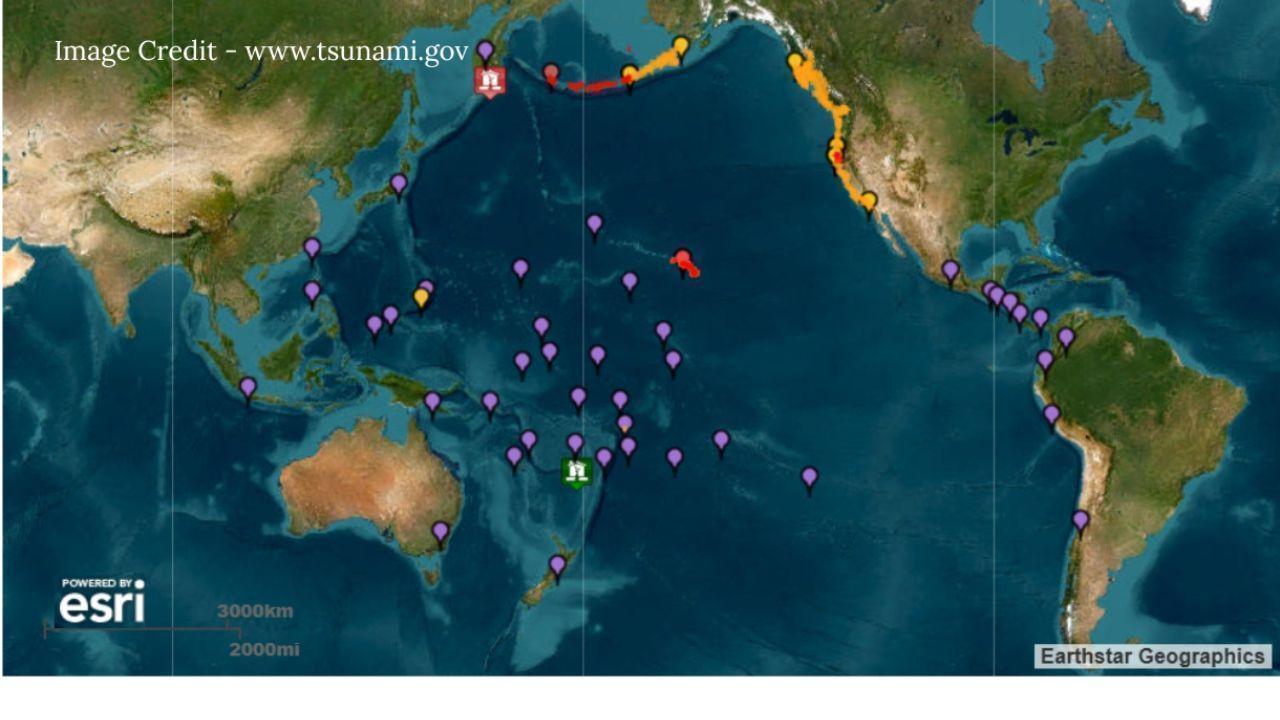
The Pacific Tsunami Warning Center (PTWC), part of the U.S. National Oceanic and Atmospheric Administration (NOAA), sent out tsunami warnings for Hawaii. They predicted that tsunami waves could reach the islands between 7:17 PM and 8:45 PM local time.
In Honolulu, people living near the shore were told to evacuate immediately. Emergency shelters were opened, and buses and cars were redirected away from the coast.
Meanwhile, the National Weather Service (NWS) gave tsunami advisories for the states of California, Oregon, Washington, and Alaska. Waves of up to 1.6 meters were expected, especially near Crescent City, California, an area known for tsunami risk. As a result, beaches and ports were closed, and people were warned to stay away from the sea for at least 12 hours.
Pacific Countries Also Issue Alerts
The earthquake's effects were felt far across the Pacific Ocean. Several countries issued coastal warnings or marine advisories as a safety measure:
- Australia: The Bureau of Meteorology (BoM) expected wave activity of 0.3 to 1.0 meters along the eastern coast.
- New Zealand: The National Emergency Management Agency (NEMA) warned people to be careful near the water but said no unusual waves were seen.
- Other countries like the Philippines, Taiwan, Indonesia, Papua New Guinea, Peru, and Ecuador also issued alerts and began monitoring their coastlines for any tsunami effects.
These steps were taken even in places where high waves were not expected, just to be safe.
Global Warning Systems in Action
The Pacific Tsunami Warning Center confirmed that the tsunami waves were moving across the entire Pacific Ocean. This means that even faraway regions could be affected, especially by strong water currents or sea level changes.
Dr. Michael Lowenstein, a top scientist at PTWC, explained, “This is a basin-wide event, and advisories are needed even in areas not expecting big waves.” He also stressed the importance of being alert for dangerous rip currents and unusual tides.
The United Nations Office for Disaster Risk Reduction (UNDRR) is closely working with local and regional groups to keep checking how bad the damage might be and what further action may be needed.
What People Should Do
Authorities across all affected countries have shared some important safety advice for people living in or near coastal zones:
- Follow official alerts and do what emergency teams say.
- Stay away from the beach, harbors, rivers, and low-lying areas.
- Remember that more waves may come even hours after the first one.
Get your updates only from official websites and news sources, such as:
- www.tsunami.gov (NOAA/PTWC)
- www.jma.go.jp (Japan Meteorological Agency)
- www.bom.gov.au (Australia BoM)
People should not rely on social media rumors or guesswork during such times. Only official sources provide accurate and timely information.
Preparedness Has Helped Limit the Damage
This earthquake is a reminder of how dangerous the Pacific “Ring of Fire” can be. This area is known for strong earthquakes and volcanoes and is responsible for 90% of the world’s earthquakes.
Thanks to international cooperation, early warning systems, and well-practiced evacuation plans, the number of injuries and damage has been kept very low so far. However, officials are still checking and responding to reports, so things may change.
So far, no deaths have been reported, but emergency services are still on high alert.
Watch Continues as Situation Develops
As of now, the situation is still ongoing. The tsunami waves could continue to affect some places for the next few hours. Local governments, international groups, and emergency workers are all watching carefully and helping people stay safe.
A Global Response to a Major Earthquake
The 8.8 magnitude earthquake off the coast of Russia’s Kamchatka Peninsula has shown how connected the world is when it comes to natural disasters. From Russia to Hawaii, Japan, and Australia, countries acted quickly to warn and protect their people.
The damage has been limited so far, but vigilance is still needed. This event also reminds everyone that preparedness saves lives. Thanks to early alerts, clear instructions, and well-practiced emergency plans, many people were able to reach safety in time.
As waves continue to spread across the Pacific, everyone near the coast is urged to remain cautious, patient, and informed.


 English