Post by : Mariam
Al-Faris
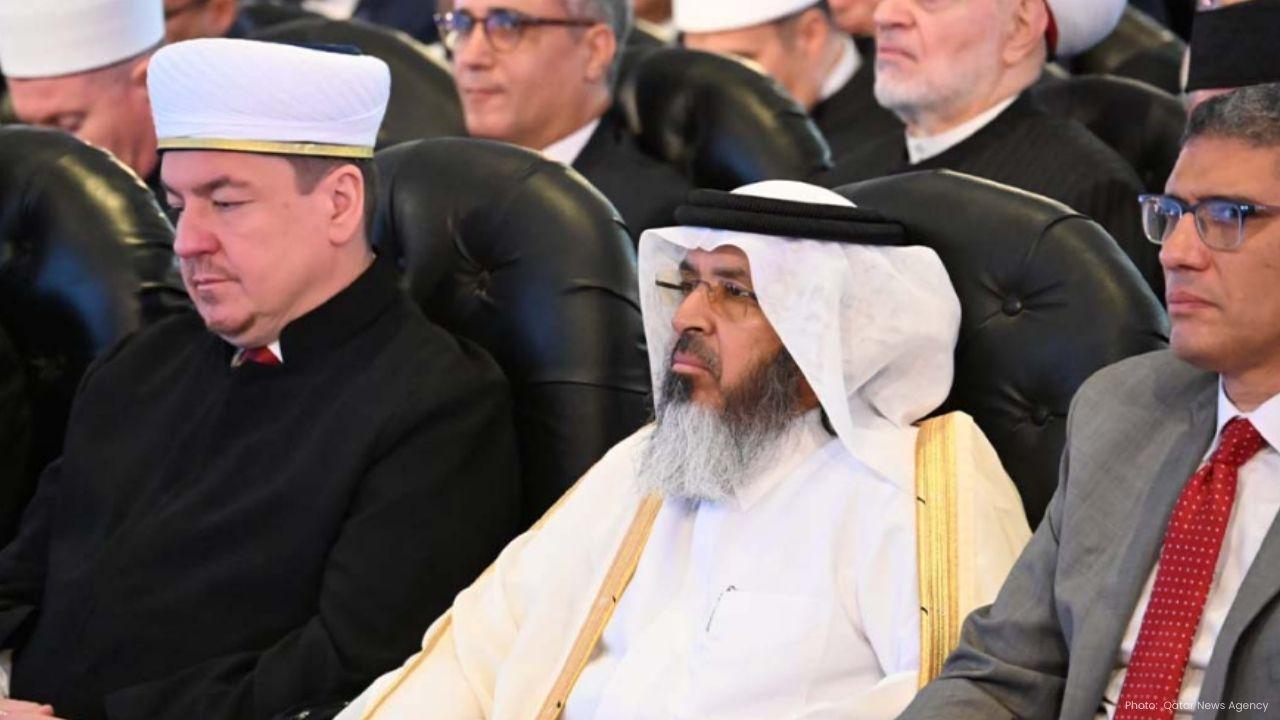
The State of Qatar participated in the 10th International Fatwa Conference, which started on Tuesday in Cairo, Egypt, and will run for two days. The theme of the conference is “The Making of the Competent Mufti in the Age of Artificial Intelligence.”
Qatar sent a high-level delegation led by Khalid bin Shaheen Al Ghanim, Assistant Undersecretary for Islamic Affairs at the Ministry. The team also included Jassim Abdullah Al Ali, Director of the Department of Da’wah and Religious Guidance, and Abdul Salam Mohamed Al Rajhi, Head of the Islamic Network Division at the same department.
Purpose of the Conference
The conference is hosted by Egypt’s Dar Al Ifta and the General Secretariat for Fatwa Authorities Worldwide. Its main purpose is to discuss how Islamic Fatwas can adapt to modern technological developments. Religious scholars and experts from around the world gather to share knowledge and experience.
One of the main goals is to establish clear frameworks and standards for Muftis. These standards aim to combine deep understanding of Islamic law with knowledge of modern digital technologies. This helps Muftis face challenges and make the most of opportunities offered by artificial intelligence.
Main Themes of the Conference
The conference focuses on five main themes. The first is “forming the modern, rational Mufti,” which explores how religious leaders can balance Islamic knowledge with awareness of technology.
The second theme is “Fatwa in the age of AI,” which looks at how artificial intelligence affects religious guidance. The third, “rational Mufti facing the challenges of AI,” studies how Muftis can respond to changes and problems caused by AI in society.
The fourth theme, “AI and the development of institutional Fatwa work,” highlights how technology can make Fatwa institutions more efficient. The fifth theme, “experiences of Fatwa institutions in creating the rational Mufti in the Age of AI,” shares practical examples and lessons from different countries.
Global Participation and Cooperation
More than 70 countries are participating in this conference. Delegates exchange ideas, discuss challenges, and share successful experiences. This shows that many countries are interested in combining Islamic guidance with modern technology.
The conference also launches new initiatives, research projects, and training programs. These aim to improve the skills of Muftis, helping them integrate modern tools into their work without compromising Islamic teachings.
Combining Religion with Technology
The main focus is to prepare Muftis for a digital world. Religious leaders are expected to provide guidance that is both correct according to Islamic law and aware of technological developments.
Artificial intelligence affects many parts of daily life, from education to banking to social media. By learning about AI, Muftis can understand how technology influences society. This knowledge allows them to give guidance that is practical and relevant to modern life.
How AI Can Help Fatwa Work
Artificial intelligence can support Fatwa work in several ways. For example, AI can help Muftis quickly research previous Fatwas and Islamic texts to find accurate references for new questions. It can also assist in comparing different interpretations of Islamic law, helping Muftis make well-informed decisions.
AI chatbots can answer common questions from people, freeing Muftis to focus on complex cases. Machine learning tools can also analyze large amounts of data to identify new social trends, allowing Muftis to give guidance that addresses current issues.
Some Fatwa institutions have started using AI to organize Fatwas and create digital libraries. This makes it easier for scholars worldwide to access Islamic knowledge and provide guidance faster.
Training Programs for Muftis
The conference introduces several training programs to help Muftis learn how to use AI responsibly. These programs teach scholars about digital tools, data privacy, and the ethical use of technology.
Research projects launched during the conference will study how AI can enhance religious guidance while ensuring it stays accurate and aligned with Islamic principles. Training programs also focus on teaching Muftis how to engage with younger generations who are growing up in a technology-driven world.
Qatar’s Role in the Conference
Qatar actively participates in discussions and shares its experiences with other countries. The delegation contributes to building global standards for Muftis in the age of AI. Qatar’s involvement shows its commitment to integrating Islamic knowledge with modern technology.
By attending, Qatar strengthens its position as a country that promotes religious guidance adapted to contemporary life. It also learns from the experiences of other nations and shares best practices in using technology for Fatwa work.
Importance of the Conference
The 10th International Fatwa Conference is a key platform for religious leaders worldwide. It helps them understand the impact of technology, especially AI, on society and religion. Sharing knowledge ensures that Fatwa work remains practical and relevant.
The conference also promotes collaboration between countries, strengthening international understanding of Islamic law in the modern era. By preparing Muftis for AI challenges, the event ensures that communities receive guidance that is both accurate and technologically informed.
Future Goals and Initiatives
The conference plans to continue developing tools, programs, and research projects that combine Islamic law with modern technology. The aim is to create a new generation of Muftis who are competent in both areas.
These initiatives will help Muftis respond effectively to new questions and challenges. They will be able to provide guidance that considers both religious principles and modern societal changes. Over time, this will benefit communities globally, making religious guidance more relevant, accurate, and practical.
The International Fatwa Conference in Cairo shows how religion and technology can work together. By preparing Muftis for the digital world, countries like Qatar ensure that Islamic guidance remains meaningful in modern society.
Through AI tools, research, and training programs, Muftis can serve their communities better while keeping Islamic law intact. This conference demonstrates the importance of innovation in religious leadership and the value of global cooperation to address modern challenges.


 English