Post by : Bianca
Haleem
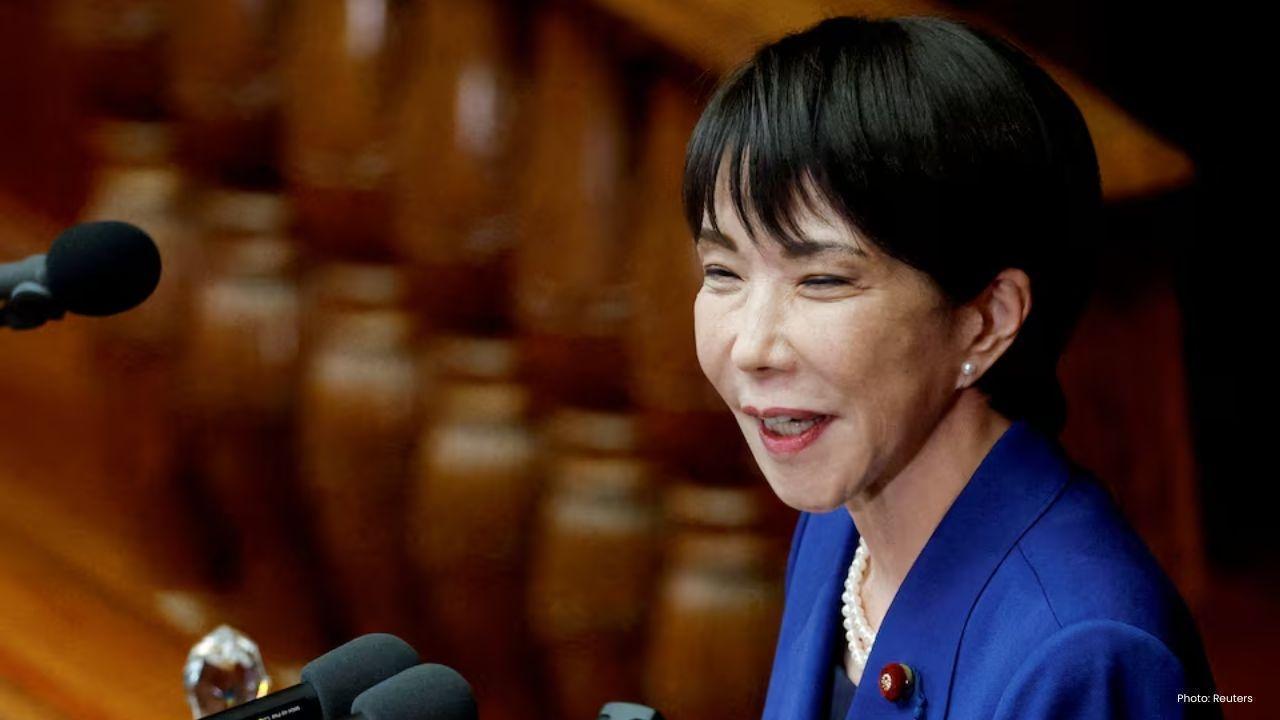
Tokyo and Beijing find themselves amid one of their most significant diplomatic crises in recent years, following Prime Minister Sanae Takaichi's warning regarding potential military involvement should China seek to invade Taiwan. This heated exchange has heightened anxieties throughout Asia and disrupted economic connections between two of the globe's foremost trading nations.
In her inaugural parliamentary speech since assuming office in October, Takaichi emphasized that an assault on Taiwan could pose a fundamental threat to Japan, sitting just 110 kilometers from the island's primary landmass. Although Japan's constitution has traditionally prohibited military force in international disputes, a 2015 law permits Tokyo to engage in collective self-defense under certain conditions—an approach recently emphasized by Takaichi’s administration.
China's Communist Party regards Taiwan as a breakaway province and insists on reunification, including the use of force if necessary. Takaichi's statements echo the assertive stance previously adopted by her mentor, Shinzo Abe, which has provoked swift backlash from Beijing. Chinese officials labeled her comments as a “military threat” and warned Japan against endorsing “Taiwan independence separatist forces.”
The dispute has also led to noticeable public confrontations. Beijing has issued travel advisory warnings to its citizens traveling to Japan due to unverified security concerns, while Chinese state media critiqued Takaichi’s comments as “dangerously provocative.” Concurrently, China’s coast guard ships approached the disputed Senkaku Islands and deployed drones beyond Japan’s western Yonaguni island, demonstrating their military capabilities.
Complicating matters further is the historical context. Taiwan was governed by Japan for nearly fifty years until it was transferred to the Republic of China post-World War II. Since then, China has maintained its claim over Taiwan, despite never having control of the land. Analysts argue that any military confrontation over Taiwan could draw in regional powers, including Japan, which hosts a substantial U.S. military presence.
The economic repercussions are already visible, with Chinese travel advisories impacting tourism and scholarly exchanges, affecting millions and threatening billions in economic transactions. Following Beijing's warnings, tourism and retail shares in Japan saw immediate declines.
While a full-scale military conflict remains unlikely, experts warn that ongoing naval and aerial operations in contested regions increase the likelihood of miscalculations. For the moment, both nations have recalled ambassadors, and Japan has sent a senior envoy to Beijing in an attempt to ease tensions, underscoring that diplomatic efforts will be crucial in the coming weeks.


 English