Post by : Shweta
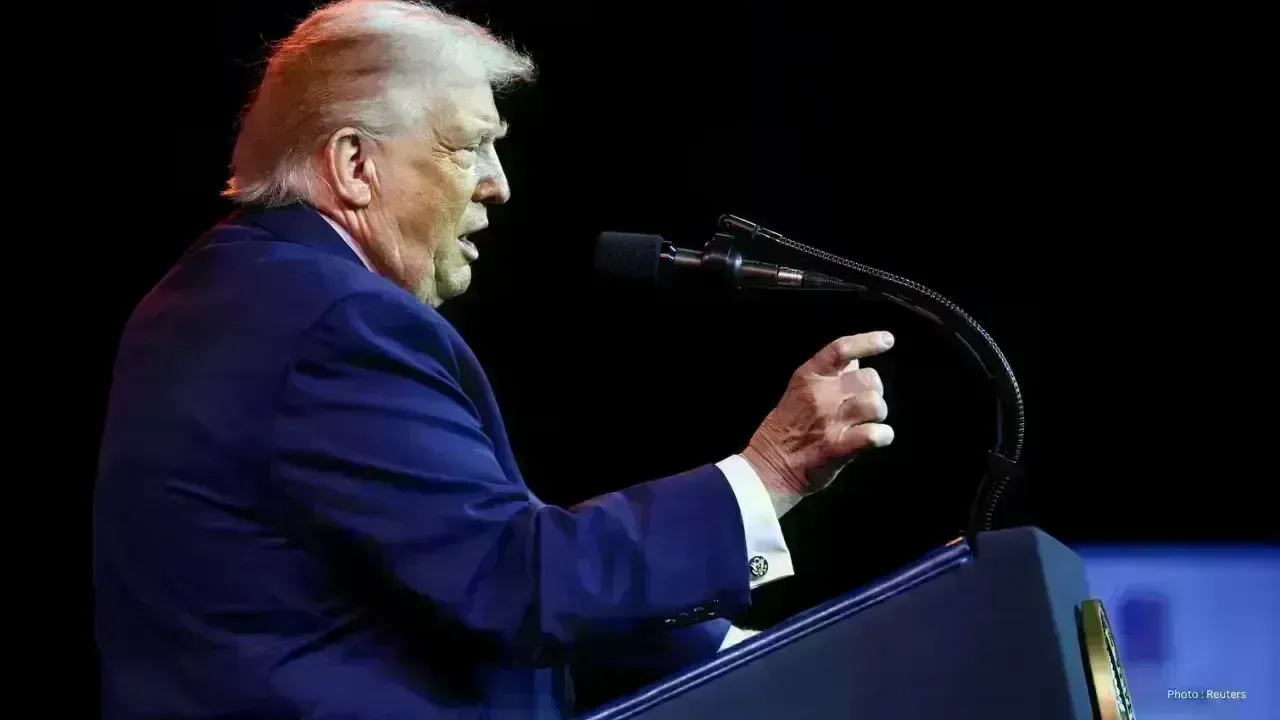
Donald J. Trump's recent initiative to elevate the U.S. defense budget to a staggering $1.5 trillion has ignited intense political discourse. If ratified, this would represent the largest military budget ever recorded in U.S. history, even when adjusted for inflation.
This proposal signals a considerable increase over past budgets, including those during Joe Biden's administration, which saw defense spending nearly touch the $1 trillion mark. Analysts indicate that such an abrupt hike of almost 50 percent in a single year prompts questions regarding the necessity and practicality of this escalation.
A significant portion of the budget is earmarked for weapon procurement and advancements in military technology. Funding for weapons is anticipated to surge, with additional allocations for research and development in cutting-edge areas like advanced systems, satellites, and artificial intelligence. Nevertheless, critics contend that much of this funding is still skewed towards traditional military assets such as warships and fighter jets.
Practical challenges cannot be overlooked, as various reports indicate that the U.S. may currently be ill-equipped in terms of industrial capacity and workforce to manufacture such vast amounts of military gear. Shipbuilding, in particular, is suffering from a shortage of skilled labor and complications in supply chains, which could delay or hinder the effective deployment of allocated funds.
Financial consequences are a major concern. To accommodate the increased defense spending, the proposal outlines cuts to essential domestic programs, including education, housing, healthcare, and agriculture. This aspect has raised the stakes politically, especially in an election year, where voters could disapprove of decreased social expenditure.
Some Republican lawmakers have begun expressing apprehensions about the expanding federal deficit. Despite suggested budget cuts, the considerable uptick in defense spending is likely to exert additional strain on government finances.
The discussion further extends into military strategy, with analysts questioning the appropriateness of the weaponry being prioritized, particularly amidst evolving warfare technologies like drones and cyber warfare systems. Concerns have been raised that high-cost systems may not guarantee effective results compared to more economical solutions deployed in recent conflicts.
Proponents of the proposal argue that augmented defense spending is vital in a landscape marked by global unpredictability and heightened geopolitical tensions. However, detractors caution that the absence of clear justification and strategic foresight may cultivate economic pressure and political backlash.
In summary, the proposed defense budget has emerged as a pivotal issue in U.S. politics, encapsulating divisions over national security priorities, fiscal allocation, and long-term strategic planning.


 English