Post by : Saif
Al-Najjar
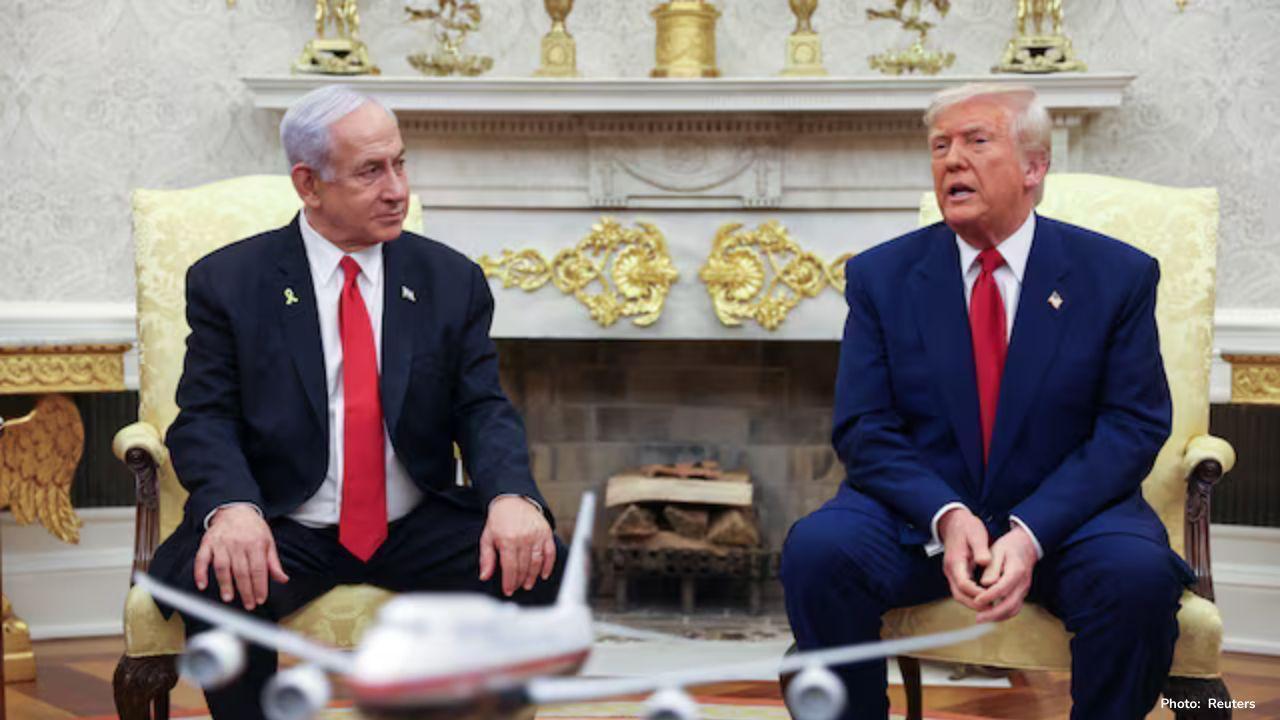
U.S. President Donald Trump is hosting Israeli Prime Minister Benjamin Netanyahu at the White House on Monday, aiming to push a new proposal for peace in Gaza and across the Middle East. This meeting comes as Israel faces growing international isolation, especially after several Western countries recognized Palestinian statehood in defiance of both American and Israeli opposition.
For Netanyahu, this visit is an opportunity to strengthen ties with the United States, Israel’s closest ally. Nearly two years into Israel’s war against Hamas in Gaza, the country faces criticism for its military actions, and Netanyahu is under pressure from hostages’ families and a war-weary public. Trump hopes to secure an agreement that will end the Gaza conflict, release hostages, and set the stage for broader peace in the region.
Background to the Talks
The Gaza war has caused humanitarian devastation, with local health officials reporting over 65,000 deaths in Gaza. The conflict began after Hamas attacks in October 2023 killed more than 1,200 people in Israel. Israel’s response has drawn global criticism and a warrant from the International Criminal Court against Netanyahu for alleged war crimes, though Israel rejects the court’s authority.
Recent Western moves to recognize Palestinian independence have angered Israel. Netanyahu described these actions as a “disgraceful decision” and warned that some world leaders were rewarding violence. Trump, however, has positioned himself as a mediator, warning against further escalation and hoping to bring both sides to a negotiated settlement.
Key Points of the Peace Proposal
According to officials, the plan circulated on the sidelines of the United Nations includes:
Release of all hostages, living or deceased.
No further Israeli attacks on Qatar, following criticism of recent strikes there.
Renewed dialogue between Israel and Palestinians to achieve peaceful coexistence.
Trump emphasizes that the plan is not just about Gaza but aims for a broader peace in the Middle East, involving countries like Saudi Arabia, Qatar, UAE, Jordan, and Egypt. The goal is to address the wider regional conflict while protecting Israel’s security and respecting Palestinian rights.
Challenges Ahead
Despite Trump’s efforts, there are significant obstacles:
Political Hardliners in Israel – Some ministers want to annex parts of the West Bank, which could block Palestinian statehood and threaten the peace plan.
Humanitarian Crisis in Gaza – With widespread hunger, destroyed homes, and a broken healthcare system, peace talks must also address immediate human needs.
International Pressure – The U.S. and its allies want a two-state solution, but balancing international demands with domestic Israeli politics is complex.
Hamas and Palestinian Unity – Hamas remains a major force in Gaza, and any agreement must include negotiations that involve Palestinian leadership.
Analysts also warn that annexation of the West Bank could undermine previous agreements, including the Abraham Accords, which normalized Israel’s relations with several Arab countries. Trump has reportedly told Netanyahu that annexation would not be allowed under his plan.
Editorial Perspective
This White House meeting is more than a routine diplomatic visit. It reflects the urgency and complexity of Middle East peace efforts. Trump’s approach shows a desire to mediate directly, leveraging his relationships with Israel and Arab countries to find a resolution.
For Israel, agreeing to a framework could reduce isolation, gain international support, and address the urgent issue of hostages. For Palestinians, recognition and dialogue could provide a path to sovereignty and an end to the ongoing humanitarian crisis.
However, the success of any proposal depends on political will, compromise, and trust, all of which have been in short supply in previous peace efforts. Both sides have experienced decades of conflict, and achieving peace will require careful negotiation, concrete actions, and international support.
In conclusion, the Trump-Netanyahu talks represent a critical opportunity to move the Middle East toward peace. While the path will be difficult, a successful agreement could save lives, reduce suffering, and build a foundation for lasting stability in the region.


 English