Post by : Saif
Al-Najjar
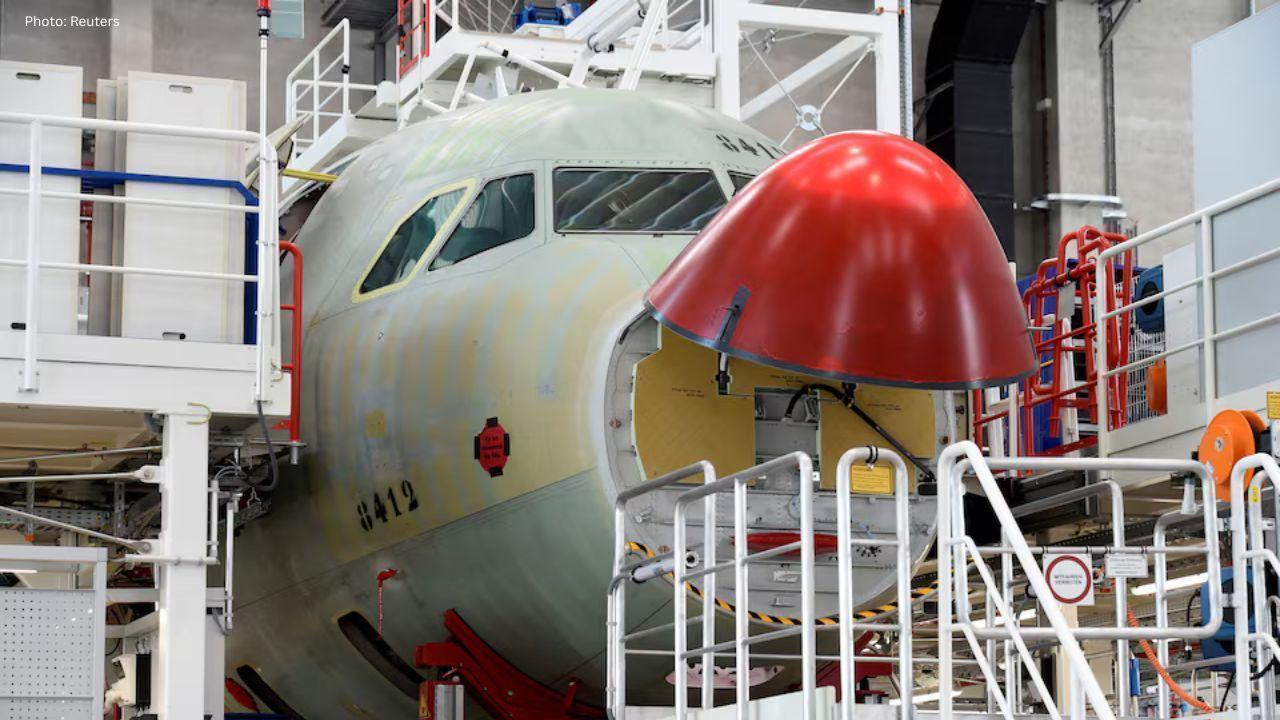
This week has proven challenging for Airbus as the company was compelled to recall numerous A320 aircraft due to a software glitch. Shortly after, it faced a reduction in delivery targets because of defective metal components, underscoring a critical issue: Airbus's heavy reliance on the A320 aircraft family.
The A320 series, which includes the well-regarded A321, is extensively utilized by airlines for short to medium-haul flights and stands as a major revenue generator for Airbus. However, any malfunction within this singular aircraft type rapidly cascades into broader repercussions.
The initial complication arose from an unexpected factor, namely space. Airbus advised airlines to revert to an earlier software version for the flight computer managing the plane's nose angle. This decision followed an incident involving a JetBlue flight, which experienced a sharp downward tilt, causing injuries to approximately a dozen passengers. Airbus attributed the anomaly to cosmic radiation, like solar flares, potentially disrupting the system. Dubbed the Icarus bug, this situation drew attention due to its relationship with solar activity.
Despite Airbus's quick action regarding the software issues, another challenge emerged. It was discovered that there were defects in the metal fuselage panels used in select A320 aircraft. These panels play a critical role in aircraft structure, leading Airbus to downgrade its delivery estimates and admit to delays in aircraft deliveries.
Such consecutive difficulties have rattled investor confidence, resulting in a decline in Airbus's stock prices throughout the week. Analysts assert that this scenario emphasizes the risk associated with placing too much reliance on one specific aircraft model. When the A320 encounters setbacks, the entire company feels the strain.
Underlying these challenges are more profound issues. Airbus has been pressing its suppliers to ramp up production to meet heightened global flight demand. Some suppliers are struggling to maintain quality, leading to issues such as the faulty panels manufactured by a Spanish supplier. These components, once incorporated, cannot easily be replaced, making early-stage errors particularly troublesome.
Airbus insists that the metal panel issues do not pose a safety threat. However, skepticism remains among several airlines, prompting reluctance to accept any new aircraft until they receive stronger assurances regarding quality. Simultaneously, official investigators have been requesting additional details from Airbus concerning the software glitch.
A modern aviation technology concern underscores the increasing reliance on electronic systems and chips in aircraft. For years, experts have cautioned that cosmic radiation from space could hinder these systems. As aircraft become increasingly digital and software-dependent, this risk continues to rise.
Nevertheless, despite these hurdles, Airbus still holds a competitive edge over many rivals. The A320 family recently achieved the status of the most delivered passenger jet in history, surpassing the Boeing 737 MAX. Yet, the fragility of success is evident; an overreliance on a single product means that minor issues can lead to significant consequences.
This crisis serves as a poignant reminder for both Airbus and the broader aviation sector. Prioritizing safety over speed, quality over quantity, and ensuring technology is complemented by thorough testing is vital.
Trust is the foundation of passenger air travel. Travelers depend on the safety of planes, while airlines rely on manufacturers for sturdy, dependable aircraft. When trust falters, the repercussions resonate throughout the industry.


 English