Post by : Saif
Al-Najjar
Airlines worldwide encountered significant challenges over the weekend as Airbus issued an urgent recall of 6,000 A320-family jets due to a critical software malfunction. This massive recall, one of the largest in the history of Airbus, resulted in extensive flight delays and cancellations throughout Asia and Europe, raising alarms about potential travel disruptions in the U.S. during a peak travel weekend.
This recall affects over half of the A320 aircraft delivered globally, coming in the wake of the model recently surpassing Boeing’s 737 as the most frequently delivered jet. The swift grounding required airlines to mobilize quickly to reprogram or replace the faulty software so the planes could resume service.
Aviation regulators around the globe issued urgent directives for airlines to rectify the issue before resuming flights. While this rapid action mitigated the fallout, many travelers still faced numerous delays and cancellations.
Independent analysts noted the situation, while not chaotic, posed significant operational challenges for airlines, especially given ongoing difficulties with spare parts and qualified technicians at many carriers.
The resolution process is relatively straightforward, involving a rollback of the aircraft software to a previous version, requiring meticulous work from certified engineers. Airbus has indicated that fewer aircraft may need hardware fixes than initially anticipated, potentially easing long-term disruptions.
In Europe, Wizz Air confirmed it successfully updated the software on all its affected aircraft by Saturday morning, sidestepping further delays. Flight trackers indicated moderate disruption levels at most airports.
In Asia, AirAsia reported its teams were diligently working to complete repairs within 48 hours. Indian carriers faced notable impact, with 338 jets grounded. IndiGo announced it had repaired 160 of its 200 affected planes, whereas Air India managed to address 42 of its 113 affected jets, both advising passengers to expect delays.
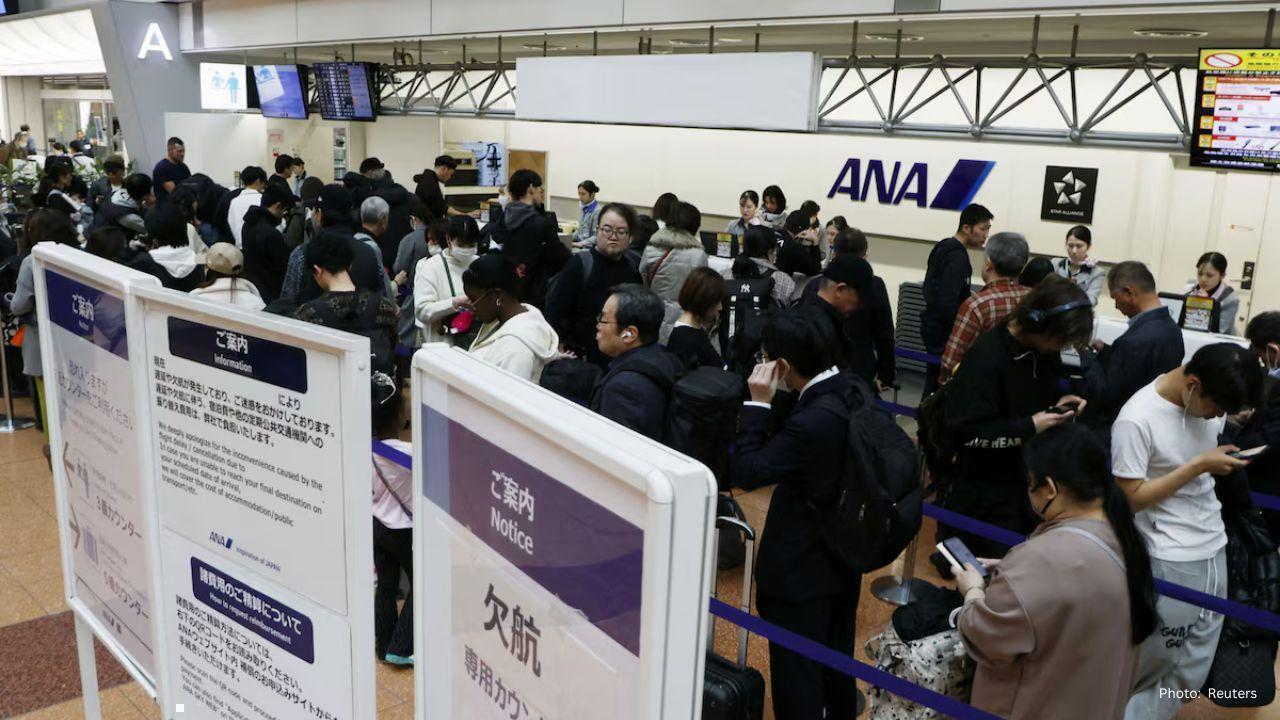
Taiwan's aviation authorities noted that approximately two-thirds of their A320 and A321 aircraft were impacted. In Japan, ANA, the largest airline, had to cancel 95 flights affecting 13,500 travelers, while Japan Airlines faced fewer complications due to its predominately Boeing fleet.
The recall was instigated by an October 30 incident involving a JetBlue flight from Cancun to Newark that experienced a significant altitude drop linked to the software issue, injuring several passengers. Once aware of the flaw, Airbus and global safety organizations acted promptly to avert further incidents.
The recall's repercussions extended to airlines in Australia, South Korea, Hong Kong, the Middle East, and South America. American Airlines, the largest A320 operator, reported that 209 of its 480 aircraft required attention. Delta, JetBlue, and United also noted considerable numbers of affected jets. Notably, Avianca stated that over 70% of its fleet was impacted and halted ticket sales until December 8 to manage the resultant operational stress.
While this has created immediate challenges, airlines are optimistic that quick repairs will avert prolonged instability. Nonetheless, the recall has compounded pressures on an industry already contending with soaring travel demand, workforce shortages, and tight maintenance timelines.


 English