Post by : Bianca
Haleem
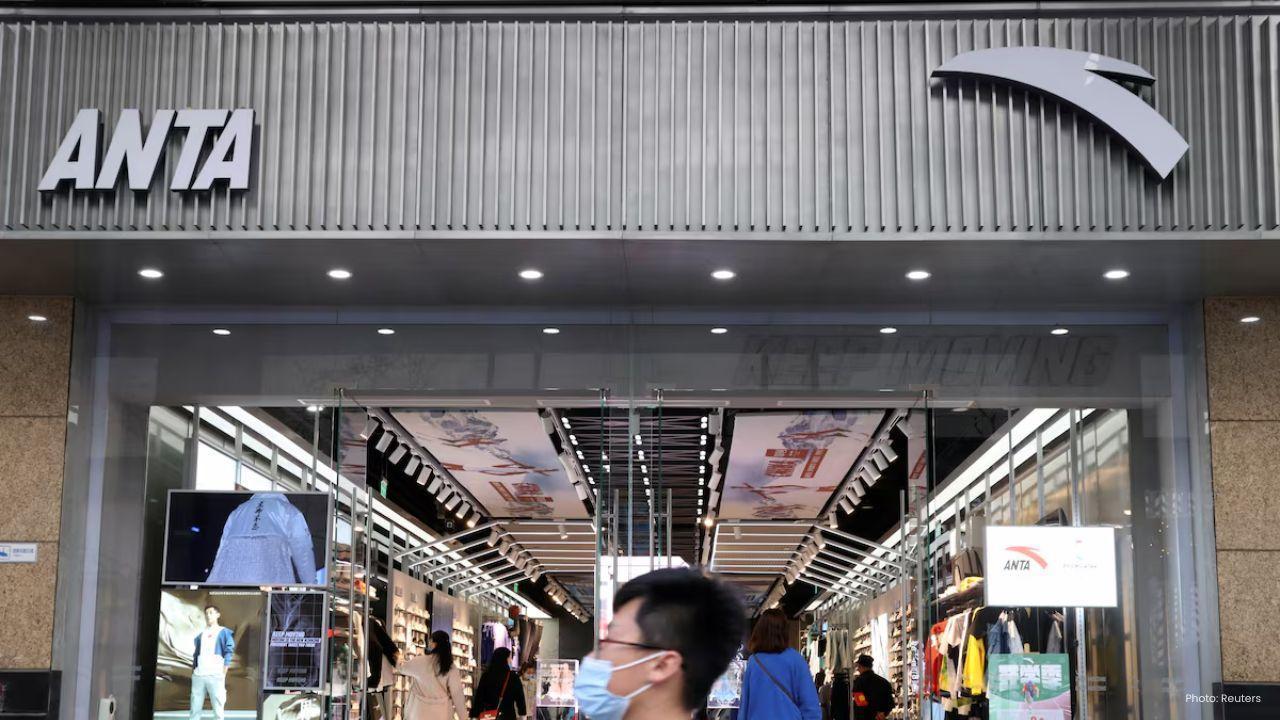
China’s largest sportswear company, Anta Sports, is rapidly transforming from a domestic success story into a powerful global contender. Known in China for offering reliable, affordable athletic wear at prices often far below international giants, the company has spent more than a decade building a wide portfolio of brands across multiple price ranges and sports categories. Its latest move — a $1.8 billion purchase of a 29% stake in Germany’s Puma — signals a clear intention to compete on the world stage rather than remain a regional leader.
From Local Value Brand to Market Leader
Anta built its early reputation by selling solid, good-value sports shoes and clothing that appealed to everyday consumers. While global brands like Nike and Adidas focused on premium pricing, Anta positioned itself as a more accessible option. This strategy allowed the company to capture a large portion of China’s growing middle-class market.
Between 2022 and 2025, the competitive landscape of China’s sportswear industry shifted significantly. Anta climbed to the top position with roughly 23% market share, overtaking long-time leaders Nike and Adidas. This achievement marked a turning point not only for the company but also for China’s domestic fashion and retail sector, showing that local brands could outperform global competitors in their home market.
As of 2025, Anta’s market valuation stands near $28 billion, placing it among the top sportswear companies worldwide. Yet its founder and chairman, Ding Shizong, has made it clear that domestic dominance is not enough. His ambition is to build the world’s largest sportswear conglomerate — not simply “the Nike of China,” but “the Anta of the world.”
A Strategy Built on Acquisitions
Unlike many competitors that rely on a single flagship brand, Anta has adopted a multi-brand strategy. This approach allows it to reach different consumer segments without diluting brand identity. Over the years, the company has acquired or partnered with several international and regional labels, each targeting a specific niche.
Its portfolio now includes premium outdoor gear, women’s activewear, sneakers, tennis equipment, and lifestyle fashion. By operating across various price points, Anta can serve both budget-conscious shoppers and high-end customers looking for specialized performance wear. Investors have largely supported this diversified strategy, especially when compared to companies that depend on one brand for all revenue streams.
The Puma Deal: A Global Signal
The recent purchase of a 29% stake in Puma represents more than a financial investment. It is a strategic move designed to fill a gap in Anta’s international reach. Puma is already well-established in Europe and the United States — two regions where Anta’s own brand recognition remains limited. By aligning with Puma, Anta gains access to stronger distribution networks, brand visibility, and global consumer trust.
Industry analysts view the deal as part of a long-term plan rather than a one-time expansion. Sources familiar with Anta’s acquisition approach suggest that the company is likely to continue exploring similar opportunities if the right conditions arise. The Puma partnership gives Anta exposure to mass-market global consumers while still allowing it to maintain its multi-brand ecosystem.
Humble Beginnings in Fujian
Anta’s story began in 1986 in China’s southeastern Fujian province. Founder Ding Shizong, then a high-school dropout, borrowed a modest sum from his father to buy 600 pairs of shoes from a relative’s factory. After successfully selling them in Beijing, he reinvested the profits into a small workshop. Initially, the business focused on manufacturing products for international labels, gaining technical knowledge and production expertise.
By 1991, Ding launched the Anta brand, recognizing that owning a label would generate higher margins than contract manufacturing. The early years were challenging, especially as foreign sportswear giants entered the Chinese market in the 2000s. However, instead of competing head-to-head on branding alone, Anta gradually built strength through partnerships and acquisitions.
The Amer Sports Turning Point
A major milestone came in 2018 when Anta led a consortium to acquire Amer Sports for $6.29 billion. This purchase gave Anta control over globally respected brands such as Arc’teryx, Salomon, and Wilson. These brands brought premium positioning and strong international credibility, especially in outdoor and performance gear.
Since Amer Sports re-listed in early 2024, its growth in Greater China has been particularly impressive, posting consistent year-on-year increases above 40%. The expansion has been driven by direct-to-consumer sales channels and high-quality retail stores that elevate brand image. Even during periods of slower consumer spending in China, these brands continued to attract loyal customers seeking specialized products.
Opportunities and Challenges Abroad
While Anta dominates in China with thousands of retail outlets, domestic saturation has become a concern. The company is now turning its attention toward Southeast Asia, where it plans to open hundreds of new stores over the next few years. It is also testing the waters in Western markets, including flagship store openings designed to increase visibility.
However, gaining strong recognition in the United States and Europe remains a challenge for any Chinese consumer brand. Cultural differences, brand loyalty, and competitive saturation all present hurdles. This is precisely where the Puma partnership becomes crucial. Puma’s existing popularity and retail presence can serve as a bridge, allowing Anta to build influence without starting from zero.
A Calculated Path Forward
Anta’s rise reflects a blend of patience, calculated investment, and strategic diversification. Rather than chasing rapid expansion with a single identity, the company has steadily assembled a collection of brands that complement each other. The Puma stake adds a missing piece — global mass-market scale — while the Amer Sports acquisition continues to deliver premium growth.
China’s sportswear market may be growing more slowly than in past years, but it still expands faster than the global average. At the same time, international opportunities remain vast for companies willing to adapt and invest. Anta’s journey from a small Fujian workshop to a global sportswear powerhouse illustrates how disciplined planning and long-term vision can reshape an entire industry.


 English