Post by : Bianca
Haleem
The Dubai Electricity and Water Authority (DEWA) is solidifying its status as a premier global utility in energy and water services. Over its 30-plus years, DEWA has evolved from a local provider into a renowned benchmark for sustainability and technological advancement.
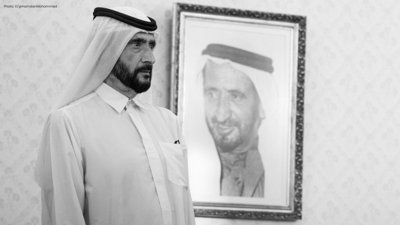
Founded on January 1, 1992, through a decree by the late Sheikh Maktoum bin Rashid Al Maktoum, DEWA emerged from the merger of the Dubai Electricity Company and the Dubai Water Department, which were established in 1959 under the late Sheikh Rashid bin Saeed Al Maktoum. This unification created a robust utility framework focusing on future planning and efficient governance.
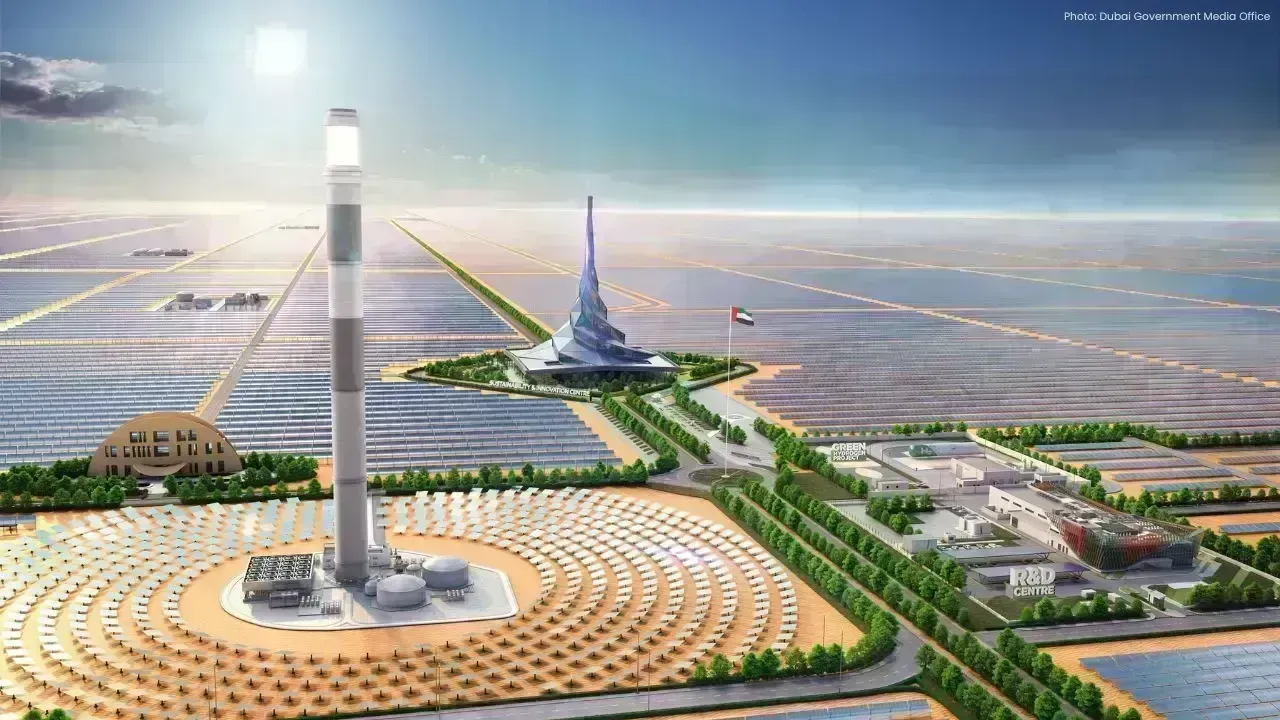
Currently, guided by HH Sheikh Mohammed bin Rashid Al Maktoum, DEWA is expanding its energy and water services to keep pace with Dubai's rapid urbanization and economic growth. It operates state-of-the-art power and desalination plants, including record-setting facilities such as the tallest concentrated solar power tower worldwide (exceeding 263 meters) and the largest solar energy storage in the Mohammed bin Rashid Al Maktoum Solar Park Phase IV.
DEWA's power generation capacity now stands at approximately 18 gigawatts (GW), with plans to elevate it to 23 GW by 2030, catering to the increasing demand while promoting economic sustainability and enhancing Dubai's global stature.
A significant aspect of DEWA's strategy involves investments in clean energy. The Mohammed bin Rashid Al Maktoum Solar Park is among the largest single-site solar facilities, generating 3,860 MW while harnessing cutting-edge technologies to enhance operational efficiency, including automated cleaning of PV panels and energy forecasting.
To address renewable energy variability, DEWA implements sophisticated storage technologies, including battery systems, pumped-storage hydroelectric power, and green hydrogen exploration, with the Hatta Pumped-Storage Hydroelectric Power Plant being a critical component of this strategy.
These initiatives are aligned with the Dubai Clean Energy Strategy 2050, which aims for a complete clean energy mix and net-zero emissions by 2050. Presently, clean energy constitutes 21% of Dubai’s total energy mix, with ambitions to upscale it to over 36% by 2030 as solar capacity surpasses 8,000 MW.
In summary, DEWA’s evolution signifies a transition from basic infrastructure projects to an innovative utility model centered on sustainability, efficiency, and long-term climate objectives, reinforcing Dubai's position as a global frontrunner in clean energy and high quality of life.


 English