Post by : Saif
Al-Najjar
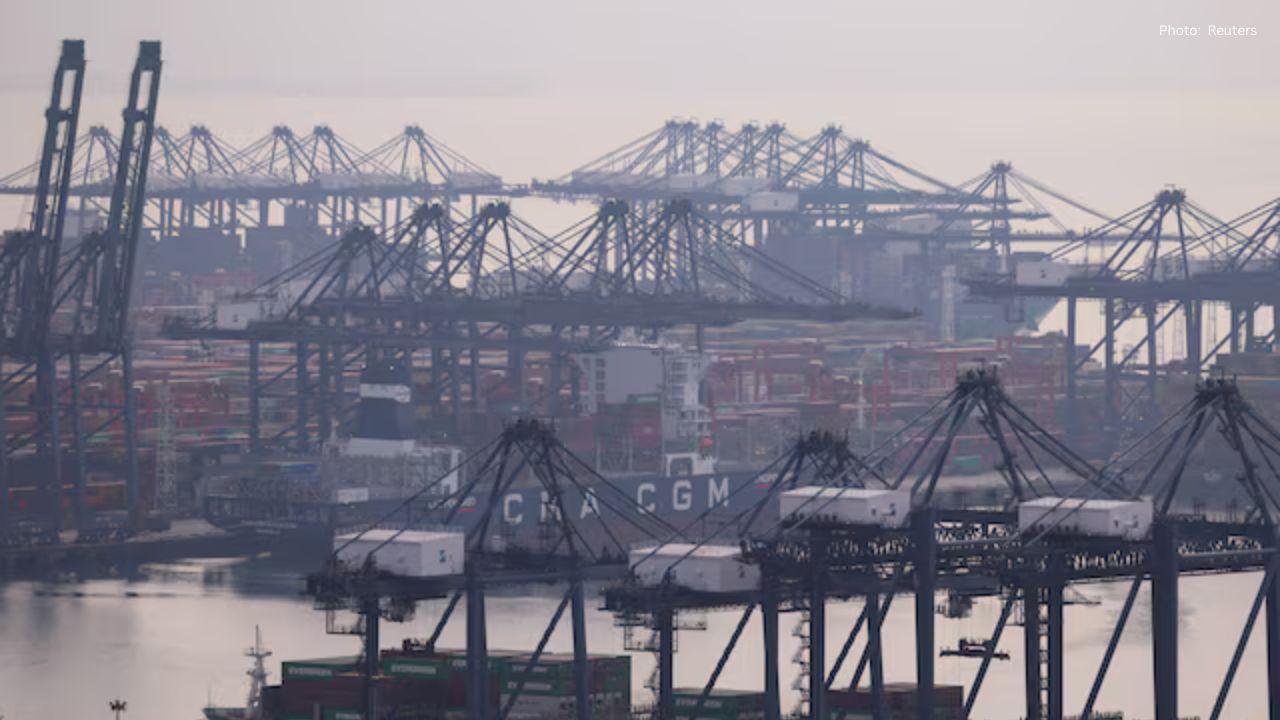
The increasing enforcement of export controls by China is driving many European companies to reassess their supply chain strategies. A recent survey conducted by the European Union Chamber of Commerce in China indicates that these new regulations are resulting in delays, heightened uncertainty, and the potential for abrupt disruptions, prompting firms to seek safer alternatives beyond China. The implications of the survey suggest a notable shift in the perspectives of European businesses regarding their future in the world's second-largest economy, particularly amid the ongoing trade tensions between Beijing and Washington.
The survey highlights that approximately one-third of European firms are contemplating relocating their sourcing efforts away from China due to protracted delays in export licence approvals. The findings reveal that 40% of companies believe that the Chinese commerce ministry is now taking longer to process these licences than previously promised. This prolonged timeline contributes to worries about potential production lags or unexpected shutdowns, which are particularly detrimental for sectors relying on a consistent supply chain.
Jens Eskelund, the chamber’s president, stated that these export controls have heightened uncertainty for enterprises still conducting business in China. Many organizations are concerned that access to vital materials or components could be abruptly interrupted. He noted that these fresh regulations are adding pressure to an already strained global trading system, which has been adversely affected by the lingering U.S.-China trade conflict.
The survey encompassed over 130 businesses, featuring renowned European names like BMW, Volkswagen, Nokia, and TotalEnergies. Their anxieties are associated with Beijing's recent moves, including an announcement in October that hinted at stricter export controls on rare earth elements. These minerals play a critical role in manufacturing electric vehicles, defense systems, electronic gadgets, and renewable energy technologies. Earlier this year, China halted exports of several rare earth products, triggering global shortages and even pushing some European car manufacturers to pause production.
This backdrop renders the survey's outcomes particularly alarming for the business sector. Despite the recent U.S.-China summit in Busan offering a brief respite and prospects for examination, analysts caution that uncertainty persists. Alfredo Montufar-Helu of Ankura Consulting commented that many firms remain skeptical of the optimism following the summit. The details of the agreements between the two nations are still under negotiation, and Europe is intensely advocating for inclusion, indicating that significant policy changes will unfold gradually. During this transition, global supply chains continue to face challenges.
Nearly 70% of companies surveyed reported that their international manufacturing operations depend on Chinese components that are impacted by export controls. Half of the exporters indicated that either their suppliers or clients are grappling with products anticipated to face restrictions soon. A majority also expressed frustration over the lack of transparency in the licence application process, which is perceived as lengthy and risky, sometimes requiring sensitive information disclosure that raises alarms about potential intellectual property theft.
Some participants in the survey reported suffering substantial financial setbacks. One firm predicted that delays attributable to export controls could result in a 20% decline in its global revenue this year. Another anticipated losses exceeding 250 million euros. Such figures illustrate the profound impact these export regulations can have on multinational operations.
Nonetheless, not every firm is affected to the same degree. More than 50 companies indicated that the new regulations would not impact them, implying that certain sectors remain insulated or less reliant on the restricted materials.
This evolving situation underscores a swiftly transforming business landscape. As China leverages export controls to enhance its bargaining power in trade discussions, foreign enterprises are compelled to consider future scenarios where China may not serve as the most dependable supply hub globally. With trade tensions likely to persist between Beijing and Washington, European companies are striving to mitigate the risk of sudden interruptions by diversifying their supply chains, potentially diminishing China’s pivotal role in global manufacturing.
For the time being, European businesses are adopting a cautious stance, weighing their reliance on China's extensive industrial framework against the increasing need to safeguard their operations from unpredictable political developments. The upcoming months will illuminate whether these firms initiate a significant migration of production out of China or continue to bide their time while awaiting clarity in international trade agreements.


 English