Post by : Saif
Al-Najjar
Greenland is now a pivotal center in global political discussions following the arrival of European troops aimed at aiding Denmark. This development occurs amidst ongoing negotiations between Denmark, Greenland, and the United States, highlighting significant disagreements regarding the island's future. Central to this conflict is President Donald Trump’s recent assertion that Greenland ought to fall under American jurisdiction.
As a self-governed territory of Denmark, Greenland maintains its own local government while Denmark oversees defense and foreign policies. Despite its relatively small population, the island holds strategic value due to its Arctic location and abundant natural resources. Melting ice due to climate change has led to increased global interest in discovering new maritime routes and accessing its minerals.
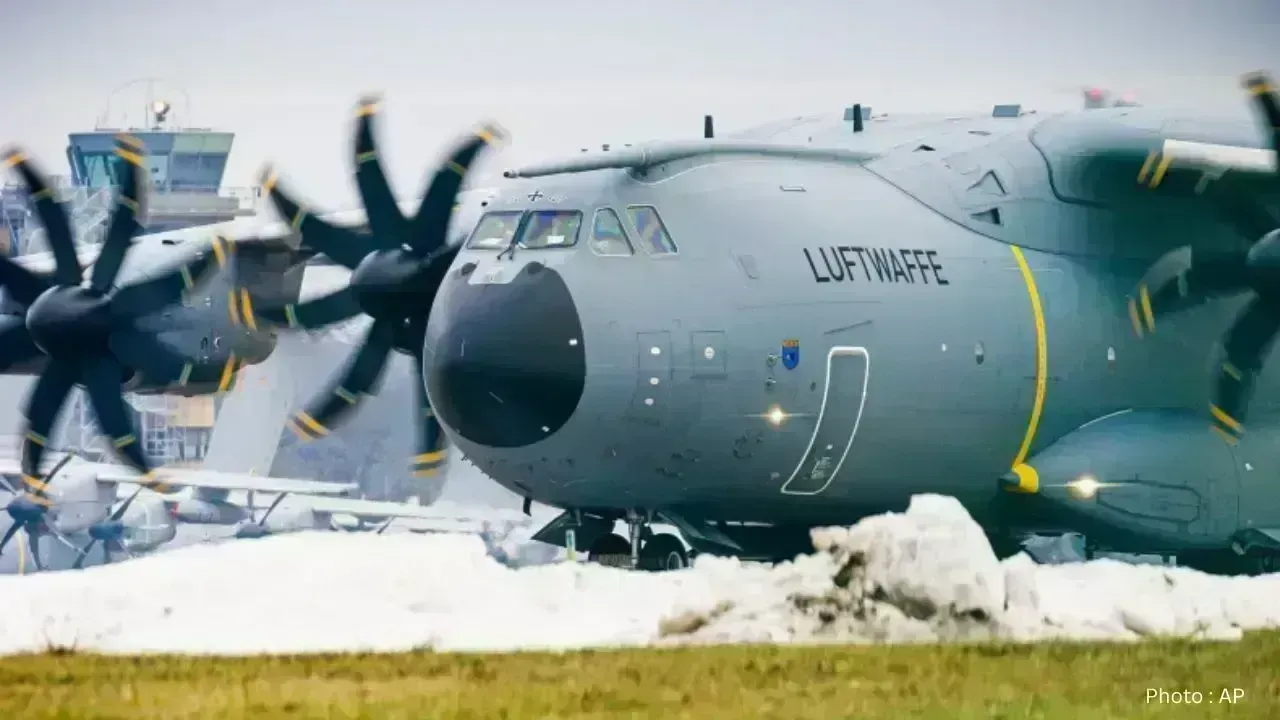
Before engaging in discussions with high-ranking U.S. officials in Washington, Denmark declared plans to enhance its military capability in Greenland. Following this, several European NATO partners—including France, Germany, the UK, Norway, Sweden, and the Netherlands—either dispatched troops or committed to sending personnel. These limited deployments serve to demonstrate European solidarity and affirm that Greenland's security can be bolstered through NATO collaboration without altering its political status.
European leaders indicated that the troop presence aims to foster stability as Russian and Chinese interests in the area heighten. French officials confirmed the arrival of soldiers for military drills in Greenland, while Germany announced it was sending a small reconnaissance unit. Denmark also intends to establish a more enduring military footprint with NATO forces rotating through the island.
While European nations pushed for unity, U.S. communication caused concern among Danish and Greenlandic officials. The White House referred to upcoming discussions as negotiations for an “acquisition agreement,” implying a U.S. intent to assert control over Greenland—a notion Denmark rejected outright. Danish Foreign Minister Lars Løkke Rasmussen stressed that discussions should focus on security enhancement and collaboration, rather than ownership.
Rasmussen noted a “fundamental disagreement” with President Trump, emphasizing that the U.S. president persists in his ambition to assert control over Greenland—something Denmark firmly opposes. Danish officials insist that Greenlanders themselves should determine the territory's future, free from external pressures.
Leaders from Greenland have voiced their stance even more clearly. Prime Minister Jens-Frederik Nielsen asserted that Greenland does not wish to be sold or governed by the United States. His remarks resonate with prevalent sentiments among residents, many of whom fear that foreign dominance could jeopardize their autonomy, culture, and traditional way of life.
In Nuuk, Greenland's capital, residents expressed varied opinions. Some felt reassured by the ongoing discussions and the public display of support from European allies. Others, however, remained apprehensive, noting that no definitive resolution has arisen. Many believe the contention extends beyond security, encompassing Greenland’s pristine reserves of oil, gas, and minerals.
Some locals remarked that the presence of European troops provides a sense of safety. While they don’t anticipate military confrontation with the United States, they view the European involvement as a safeguard against political grievances. For them, backing from Nordic and European nations signals a clear message that Greenland is not isolated.
NATO officials classified these military movements as standard alliance cooperation, with Denmark keeping NATO informed about its Greenland exercises. Alliance leaders agree that the Arctic is critical for transatlantic security, highlighting the need for reinforced defenses in a precarious world.
Russia has strongly criticized these developments, with its embassy accusing Western nations of crafting fictitious threats and pursuing a hostile agenda in the Arctic. Moscow advocates for a peaceful and collaborative approach in the region, opposing military rivalry. This reaction illustrates how Greenland’s situation intersects with broader global contests for influence in the Arctic.
The implications for Greenland extend well beyond the island itself. It presents a significant test of sovereignty, diplomatic relations, and allies' cohesion. With Denmark and Greenland maintaining a strong front, European partners demonstrating solidarity, and the United States insisting on a contentious claim, tensions are escalating.
As discussions progress and troops cycle through the island, Greenland’s prospects remain ambiguous. However, it is clear that the island's voice is rapidly gaining prominence. Emerging from its status as a remote Arctic territory, Greenland is now a vital symbol of how security, resources, and global power dynamics are reshaping contemporary international relations.


 English