Post by : Saif
Al-Najjar
President Donald Trump's Gaza ceasefire initiative has entered a pivotal second stage, stirring a mix of hope and uncertainty. According to the White House, this phase could redefine Gaza's landscape and possibly impact the broader Middle East, yet the absence of detailed information raises questions about the plan's viability.
Trump’s Middle East envoy, Steve Witkoff, announced that this new stage aims to establish a transitional governing body for Palestinians, initiate reconstruction efforts, and tackle the challenging task of disarming Hamas. While these ambitions are grand, the specifics on execution, enforcement, and timelines remain vague.
The ceasefire framework, which comprises 20 points and received backing from the U.N. Security Council, is designed to dismantle Hamas' control in Gaza and transition it to a non-militarized area supervised by international forces. Success could lead to Gaza's reconstruction, improved ties between Israel and Arab nations, and foster pathways to Palestinian self-determination. Conversely, failure could result in an enduring cycle of instability in Gaza.
Despite the ceasefire commencing in October and halting two years of intense conflict, the initial phase remains incomplete, with both Israel and Hamas accusing each other of breaches. Since the truce began, Israeli military actions have resulted in the deaths of hundreds of Palestinians, according to health officials in Gaza. Israel claims its actions were in response to provocations, while Palestinian sources argue that civilians were targeted. Moreover, Hamas still retains the remains of the final Israeli hostage, prompting Prime Minister Benjamin Netanyahu to express that progress may be slow until their return.
Netanyahu has downplayed the significance of this new phase, suggesting the establishment of a Palestinian governing committee is merely a symbolic gesture, raising concerns about Israel's commitment to future progression.
The proposed committee is set to manage the daily functions of Gaza under U.S. oversight, with an expectation of including independent Palestinian professionals instead of political figures. However, the details regarding its composition and authority remain murky. Mediation countries speculate that Ali Shaath, a former Palestine Authority official, might lead this committee, though gaining public trust could be challenging if it appears ineffectual or overly influenced by external forces.
Hamas has indicated it will dissolve its civil government once the committee is established, but there are no indications of its disarmament. This refusal poses a significant threat to the overall plan, as Hamas' unwillingness to relinquish its military wing may hinder reconstruction efforts, delay Israeli troop withdrawals, and heighten the risks of renewed conflict.
Oversight of this process will be managed by a newly formed “Board of Peace,” comprised of global leaders under Trump's direction. This board’s role will be to oversee ceasefire implementation, reconstruction, and reforms within the Palestinian Authority. However, the complete membership of this board remains undisclosed, leaving uncertainty about its capacity to balance the various interests of Israel, Hamas, aid agencies, and regional actors.
Trump's initiative also proposes creating an International Stabilization Force to ensure security and train Palestinian law enforcement. Yet, the formation status of this force, alongside its leadership structure, operational rules, and willingness to collaborate with Hamas, are still unresolved. Hamas has already stated it would oppose any disarmament efforts, while Israel remains wary of foreign troops impacting its security.
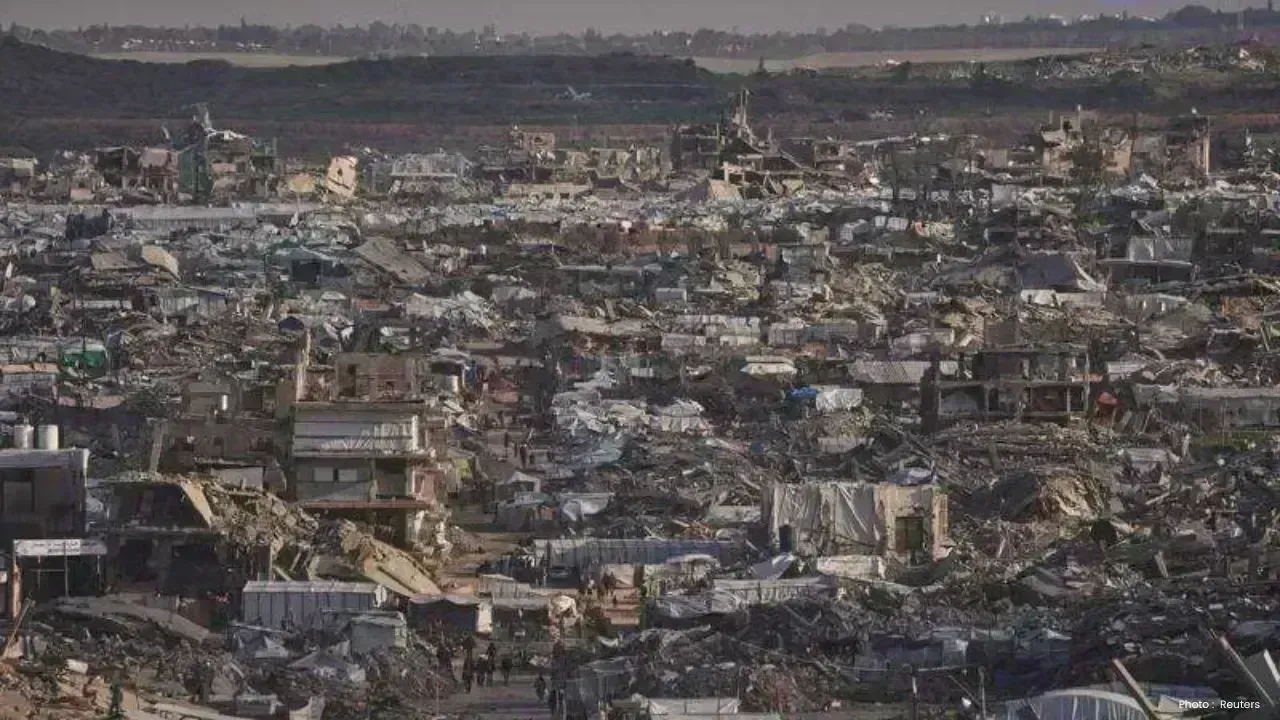
The pathway to rebuild Gaza remains daunting. The region has suffered extensive destruction, with millions displaced and rampant unemployment. The United Nations has estimated reconstruction costs to be around $70 billion, yet an explicit funding strategy is missing, casting doubts on the timeline for recovery.
Additionally, the timing of Israeli withdrawals is uncertain. Israel controls a significant portion of Gaza and asserts that future troop pullbacks will hinge on advancements in demilitarization. Without set timelines, Israel may be reluctant to proceed with further withdrawals if it perceives persistent security threats.
The plan calls for restructuring the Palestinian Authority and paving the way toward eventual statehood for Palestinians. Palestinian officials claim reform processes are underway, yet Israel strongly resists the notion of a Palestinian state and opposes any role for the authority in Gaza. Without a tangible political vision, Palestinian public backing for this initiative could swiftly diminish.
While Trump’s ceasefire initiative lays a broad foundation, mere vision without concrete timelines, definitive commitments, and mutual trust risks causing the second phase to stagnate or falter. The future of Gaza hinges on whether diplomatic endeavors can surmount decades of strife, skepticism, and unfulfilled expectations.
As developments continue, the upcoming weeks will be vital in determining if this initiative leads to sustained peace and recuperation or if Gaza will once again descend into tumult, adversity, and violence.


 English