Post by : Saif
Al-Najjar
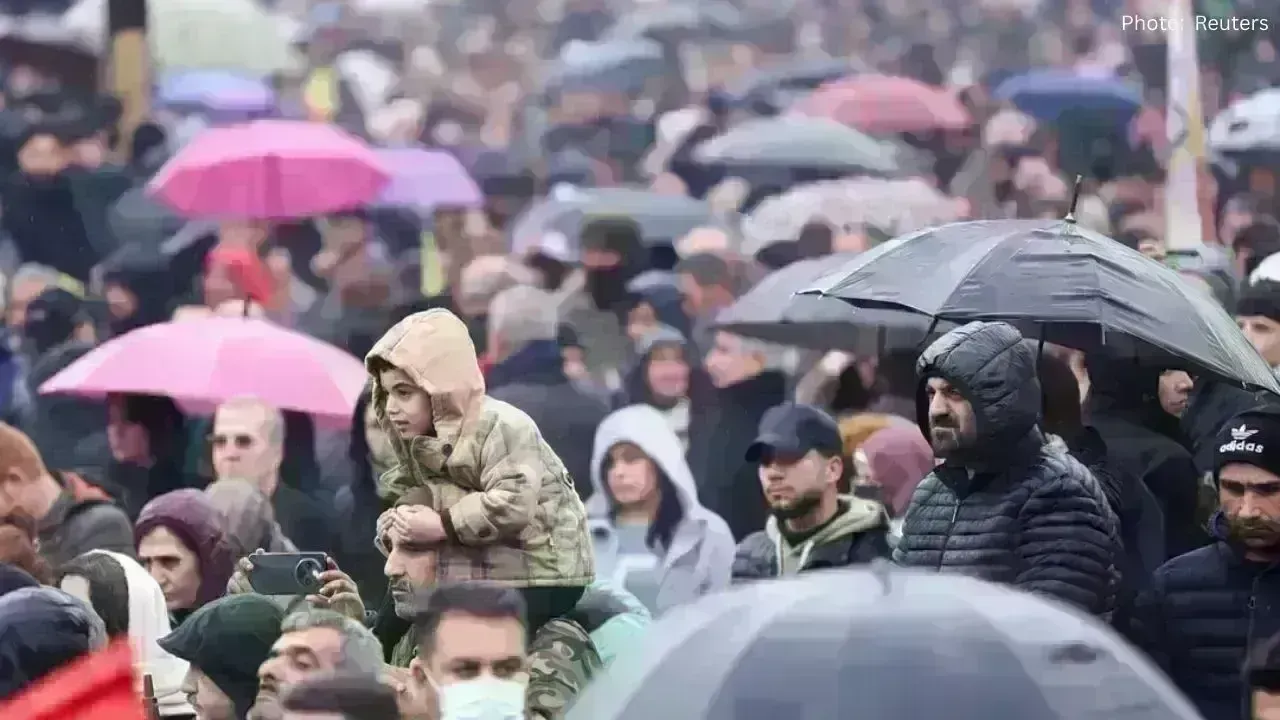
In a powerful display of unity, thousands of Syrian Kurds took to the streets this week in Qamishli, protesting the recent outbreak of violence in Aleppo. With mounting fear that Syria might be on the brink of another wave of unrest, demonstrators braved harsh weather to express their anger, sorrow, and anxiety over the escalating conflict.
The protests were ignited by violent clashes in Aleppo, which led to the withdrawal of Kurdish fighters from territories they had held for over a decade. Many participants carried photographs of fallen fighters while others brandished banners advocating for justice and the safeguarding of Kurdish rights. For these families, the march represented not just a reaction to the violence in Aleppo but a plea for their future in Syria.
Lasting nearly five days, the chaos in Aleppo resulted in numerous casualties, according to reports from Syrian authorities and Kurdish leaders. Thousands of residents were displaced from neighborhoods like Sheikh Maksoud and Ashrafiya, fleeing the violence with no certainty of return.
Following a ceasefire, the last of the Kurdish-led Syrian Democratic Forces exited Aleppo on January 11, marking the end of Kurdish dominance in certain sectors of the city that had persisted since the onset of the Syrian conflict in 2011. Although the ceasefire ceased fighting momentarily, it has done little to quell the underlying anxieties of the Kurdish populace.
Many Kurds interpret the recent turmoil as indicative of the frail state of peace in Syria. President Ahmed al-Sharaa, who ascended to power after the ousting of Bashar al-Assad in late 2024, has vowed to unify the nation after years of strife. Nonetheless, Kurdish leaders remain skeptical following the recent violence.
In northeastern Syria, Kurds maintain a semi-autonomous region and have long sought acknowledgement of their political and cultural entitlements. A pact signed in March 2025 aimed at incorporating Kurdish governance into the national framework, but tangible progress has been disappointingly slow. In light of the clashes in Aleppo, Kurdish official Ilham Ahmad cautioned that the agreement might collapse should government forces persist with military offensives against Kurdish territories.
Emotional expressions dominated the protests, with some banners depicting crossed-out images of Syria’s president and Turkey’s foreign minister, implicating them in Kurdish suffering. Turkey has frequently accused the Syrian Democratic Forces of affiliations with proscribed organizations, a claim Kurds vehemently contest.
Many demonstrators conveyed that the violence in Aleppo has intensified their skepticism towards the new administration. They voiced fears that the absence of robust legal protections could lead to further assaults on Kurdish communities. Community leaders underscored that genuine unity in Syria will remain elusive unless Kurdish rights are unequivocally enshrined in the constitution.
Amid rising tensions, Syria’s defense ministry has designated segments of eastern Aleppo as closed military zones, directing armed factions to withdraw eastward. This development has exacerbated concerns regarding the potential escalation of violence into other Kurdish-controlled areas.
For many Kurds, the recent events resonate with painful memories of past atrocities against minority communities in Syria. Some protest attendees cautioned that the current situation mirrors previous violence against Alawite and Druze populations, warning against repeating previous tragic missteps.
Protesters voiced that a full-blown conflict would exacerbate the hardships faced by ordinary citizens, deepening divisions and undermining peaceful coexistence among Syria’s diverse communities.
As international observers have called for restraint, the head of U.S. Central Command has implored all parties to embrace dialogue over violence, emphasizing the importance of negotiations. These appeals reflect a growing global apprehension regarding Syria’s precarious stability.
For families displaced by this turmoil, daily existence has become a precarious challenge. Many have lost their homes, jobs, and access to educational institutions. The impact on children, in particular, has been profound, as they navigate a world filled with anxiety as their parents seek refuge.
Syria is at a crucial juncture; hopes for peace after more than a decade of conflict now hang in the balance. The clashes in Aleppo serve as a stark reminder of how rapidly tensions can resurface in the absence of trust.
The resolute protests by Syrian Kurds send an unmistakable message: they seek safety, dignity, and a significant role in steering Syria’s future. The direction Syria takes—whether toward peace or back into conflict—will be determined by the pivotal decisions made in the immediate future. Dialogue, respect for minority rights, and restraint remain vital for sustainable stability.


 English