Post by : Bianca
Haleem
Global oil prices were largely unchanged on Thursday morning as investors balanced growing optimism over a possible diplomatic agreement between the United States and Iran with continued uncertainty surrounding the reopening of the Strait of Hormuz, the world's most important route for oil shipments.
At around 9:54 a.m. Tokyo time on Thursday, August 6, Brent crude was trading at $79.38 per barrel, down 7 cents (0.09%), while West Texas Intermediate (WTI) stood at $75.01 per barrel, down 21 cents (0.28%).
Oil Prices Remain Stable After Earlier Sharp Decline
The market showed limited movement after a significant drop earlier this week. Prices fell sharply after Qatar confirmed that draft proposals for a possible agreement between the United States and Iran were being circulated among negotiators.
On Tuesday, Brent crude declined 5.3% to settle at $79.36 per barrel, while WTI dropped 5.7% to $75.77 per barrel, marking the lowest settlement for both benchmarks in three weeks.
The latest trading suggests that investors are increasingly expecting a diplomatic breakthrough, although they are not yet treating the situation as fully resolved.
Qatar Reports Progress in US-Iran Negotiations
Qatar said on Wednesday that diplomatic efforts to restart negotiations between Washington and Tehran were advancing, with draft agreement language being shared among mediators.
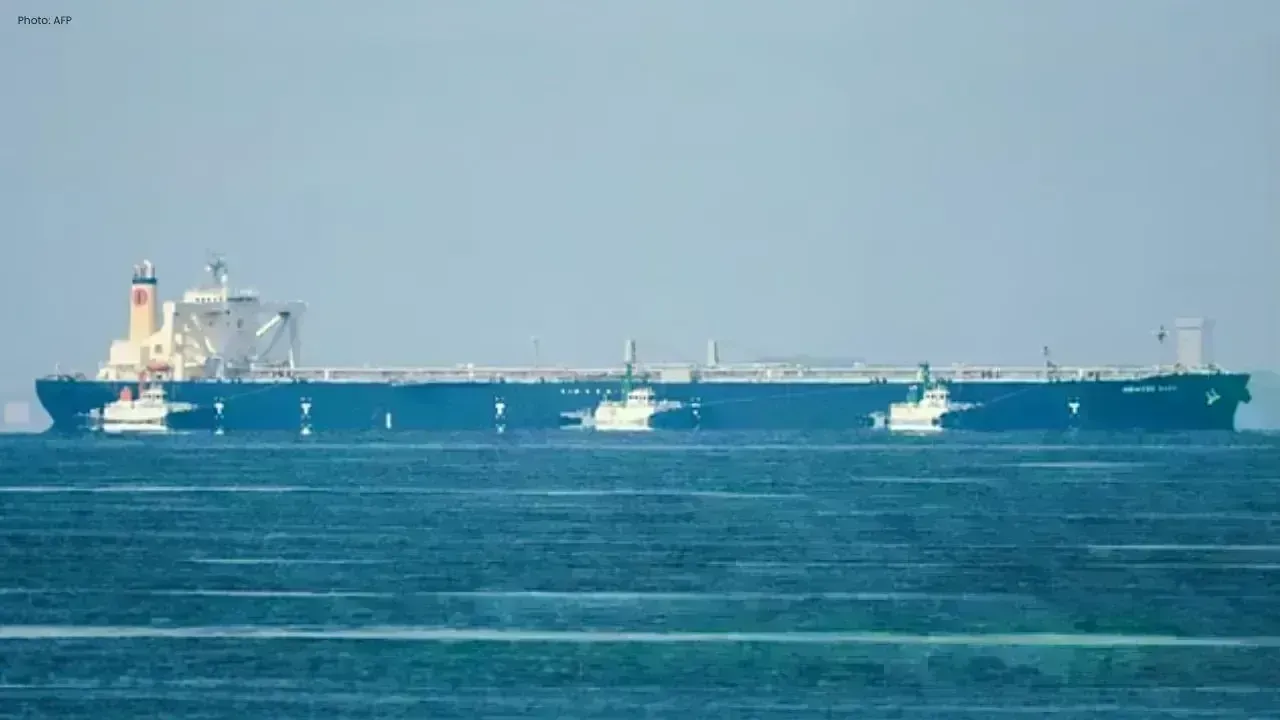
The proposed agreement is closely linked to plans for restoring commercial shipping through the Strait of Hormuz, a strategic waterway that handles a significant share of the world's seaborne crude oil and liquefied natural gas (LNG) exports.
Read More: Houthis Claim Attack on Saudi Oil Tanker Near Yanbu in Red Sea
A successful agreement that allows shipping to resume could increase global oil supplies and reduce the geopolitical risk premium that has supported higher crude prices.
Strait of Hormuz Continues to Drive Oil Market
The future of the Strait of Hormuz remains the biggest factor influencing oil prices.
Earlier this week, optimism surrounding a possible diplomatic solution pushed crude prices sharply lower. According to OilPrice.com, Brent later stabilised around the $80 per barrel level as traders evaluated the chances of a lasting agreement.
However, negotiations have not yet been finalised.
According to the Associated Press (AP), Washington and Tehran appear to be moving closer to an arrangement regarding Hormuz, but important differences remain unresolved.
One proposal reportedly involves Iran overseeing inbound shipping while Oman manages outbound traffic. Washington has opposed these terms, leaving negotiations incomplete.
Market Balances Two Possible Outcomes
Oil traders are currently weighing two possible scenarios: a successful diplomatic agreement or a breakdown in negotiations.
The recent fall in oil prices mainly reflects a reduction in geopolitical risk rather than a complete recovery in physical oil supplies.
During the conflict, tanker movements through the Strait of Hormuz declined sharply, helping push Brent crude above $100 per barrel at the height of supply concerns.
As a result, oil markets remain highly sensitive to developments from Washington, Tehran, Doha, and Muscat, with every diplomatic update capable of influencing prices.
Impact on Consumers and Global Energy Markets
If commercial shipping through the Strait of Hormuz resumes consistently, countries that rely heavily on imported oil, particularly across Asia, could eventually benefit from lower import costs and reduced fuel price pressure.
However, the impact may not be immediate. Refiners, traders, and shipping companies are expected to wait for stable and reliable shipping operations before making significant adjustments to supply chains.
Oil Market Focus Shifts Toward Diplomacy
Oil prices have shifted from being driven mainly by war-related supply concerns to being influenced by expectations of a diplomatic solution.
Brent crude is currently trading near $79 per barrel, significantly below the triple-digit prices seen during the most intense phase of the crisis. Reuters also reported that Tuesday's Brent settlement was the lowest since July 13.
Despite the recent decline, market volatility remains possible.
If the draft US-Iran agreement leads to a ceasefire and a practical plan to fully reopen the Strait of Hormuz, oil prices could face additional downward pressure. However, if negotiations fail or shipping disruptions continue, geopolitical risks could quickly push prices higher again.
For now, the $80 per barrel level remains an important psychological point for the market, with diplomatic developments carrying greater influence than routine supply and inventory data.


 English