Post by : Mikhael
Al-Saeed
Restricted Locations in India: 6 Places Indians Can’t Access, Including 3 in Tamil Nadu
India boasts diverse cultural experiences and popular travel spots, attracting visitors to its mountains, beaches, and historic landmarks. However, often overlooked is the fact that there are specific regions within India that even citizens cannot freely access, with entry requiring special permission.
These access limitations are instituted for numerous reasons, primarily to safeguard national security, wildlife, sensitive locations, tribal communities, and the environment. Surprisingly, three of these restricted areas are situated in Tamil Nadu, a state renowned for its tourism and heritage.
Here’s a detailed overview of six locations in India that are off-limits to Indian citizens, including the reasoning behind these restrictions.
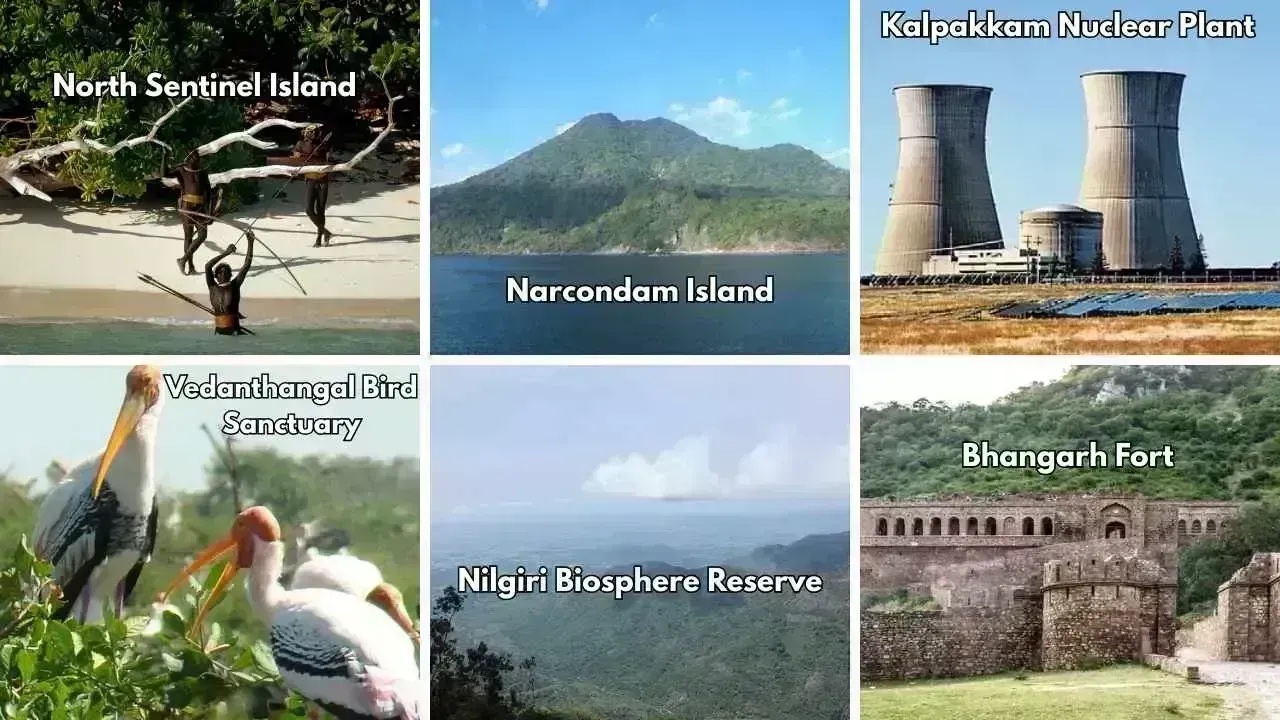
1. North Sentinel Island (Andaman & Nicobar Islands)
North Sentinel Island holds one of the most severe protection statuses in India. No one, including Indian or foreign citizens, is permitted to visit it under any circumstances.
This island is inhabited by the Sentinelese tribe, one of the last groups living untouched by modern civilization. The government prohibits all contact to shield the tribe from external diseases and honor their traditional lifestyle. Even minor interactions could prove jeopardizing for them.
Entry is forbidden by law, with serious repercussions for those attempting to approach North Sentinel Island.
2. Narcondam Island (Andaman & Nicobar Islands)
Narcondam Island is another site that requires special permissions for access. This wildlife sanctuary is home to the uncommon Narcondam Hornbill.
The local environment is delicate and needs protection. Consequently, only scientists, researchers, and authorized personnel may enter, while tourists are prohibited.
Such limitations ensure the island remains undisturbed.
3. Kalpakkam Nuclear Plant (Tamil Nadu)
Kalpakkam hosts one of India’s crucial nuclear power installations, marking it as a high-security area.
Residents are barred from entering restricted zones without official approval; only designated scientists, employees, and government officials are allowed access. Tours, photography, and public visitation are strictly prohibited.
Rules are enforced to ensure safety and national security.
4. Vedanthangal Bird Sanctuary – Restricted Zones (Tamil Nadu)
Vedanthangal, among India's oldest bird sanctuaries, welcomes visitors, yet certain sections are strictly off-limits to even Indian nationals.
During the breeding and nesting seasons, central areas are shut off to protect young birds and eggs. Activities such as noise, crowds, and photography can disturb their natural habitat.
These limitations aim to conserve the migratory bird population that frequents the sanctuary annually.
5. Nilgiri Biosphere Reserve – Core Forest Areas (Tamil Nadu)
The Nilgiri Biosphere Reserve stretches across Tamil Nadu, Kerala, and Karnataka. Although some sections are open to tourists, core forest areas in Tamil Nadu are completely restricted.
Without special clearance from the forest department, Indians aren't allowed in these zones, which host endangered species, rare plants, and tribal communities.
These rules help sustain wildlife and maintain ecological balance.
6. Bhangarh Fort – After Sunset (Rajasthan)
Bhangarh Fort, a well-known historical destination in Rajasthan, allows visitors during daylight hours, but entry is strictly forbidden after sunset and before sunrise.
This regulation, implemented by the Archaeological Survey of India, aims to ensure safety; the area can become hazardous after dark due to wildlife, uneven walking paths, and insufficient lighting.
Clear warning signs are posted, and nighttime entry into the fort is treated as illegal.
Reasons Behind These Restrictions
Access to particular places is restricted for several essential reasons:
-
National security considerations
-
Safety around nuclear or defense locations
-
Wildlife and forest protection
-
Respect for indigenous communities
-
Environmental preservation
These limitations aim to safeguard individuals, nature, and India's cultural heritage, rather than inhibit tourism unnecessarily.
While India offers numerous places to explore, a few remain off-limits even to its citizens. Understanding these restrictions promotes safety, security, and conservation. Awareness of such locations aids travelers in avoiding legal complications and honors the regulations designed to protect sensitive areas.
Travel is not solely about visiting new destinations; it also involves understanding limits and behaving responsibly. Recognizing places not to visit is equally as crucial as knowing where you can go.
Disclaimer
This article is provided solely for informational purposes. Access rules and restrictions can evolve based on governmental decisions, security necessities, environmental concerns, or local laws. Readers are strongly encouraged to check the latest updates from official government websites, local authorities, or pertinent agencies before engaging in any travel. This content should not be viewed as legal, travel, or official guidance. The publisher holds no accountability for updates or changes made after the publication.


 English