Post by : Mariam
Al-Faris
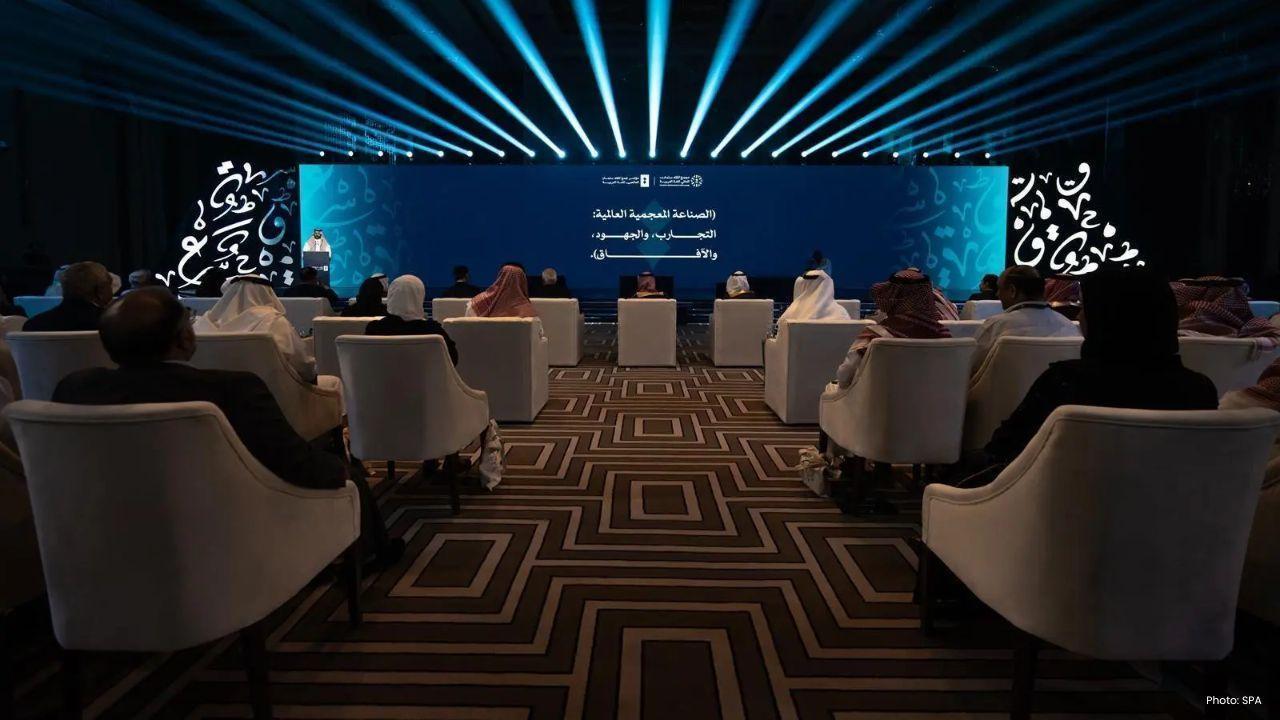
The King Salman Global Academy for Arabic Language (KSGAAL) concluded its fourth annual international conference in Riyadh, bringing together over 50 experts from 30 countries. The two-day event aimed to strengthen international collaboration in promoting and advancing the Arabic language. Participants included linguists, lexicographers, and scholars, all focused on sharing knowledge and exploring innovative strategies for the future of Arabic language studies.
Exploring Modern Trends in Lexicography
Across 10 scientific sessions, the conference highlighted modern trends in lexicographic construction and the impact of digital technology. Speakers discussed how artificial intelligence, computational tools, and linguistic databases are transforming the way dictionaries and lexical resources are created and maintained. The sessions offered insights into how modern methodologies can make Arabic language resources more accessible and comprehensive for global users.
Institutional Cooperation and Knowledge Exchange
A central theme of the conference was fostering cooperation among Arabic language institutions worldwide. Experts emphasized the importance of shared projects, partnerships, and networks to strengthen research and educational programs. Such collaboration ensures that the Arabic language maintains its relevance in global academic, technological, and cultural contexts, allowing scholars and students to benefit from a unified approach to language preservation and development.
Saudi Support for Arabic Language Leadership
KSGAAL Secretary-General Dr. Abdullah Al-Washmi highlighted that the conference reflects Saudi Arabia’s commitment to promoting the Arabic language globally. He noted that the kingdom’s leadership actively supports initiatives that enhance the language’s influence, encourage innovation in linguistic studies, and integrate technology in modern lexicography. The academy’s projects aim to secure Arabic as a vital language of education, research, and cultural identity worldwide.
Integrating Technology and AI in Language Studies
A significant focus of the conference was the integration of artificial intelligence and digital solutions in Arabic language research. Participants explored the potential of AI to automate dictionary construction, improve language learning applications, and support translation and semantic analysis. These technological advances are seen as essential for making the Arabic language more adaptable in the digital age and ensuring its accessibility to future generations.
The conference concluded with a discussion on the future of Arabic language initiatives, encouraging international collaboration and innovation. Participants agreed that continued research, institutional partnerships, and the application of emerging technologies would help sustain and enhance the global prominence of Arabic. The KSGAAL conference has become a key platform for uniting global efforts to preserve, modernize, and promote the language on a worldwide scale.


 English