Post by : Saif
Al-Najjar
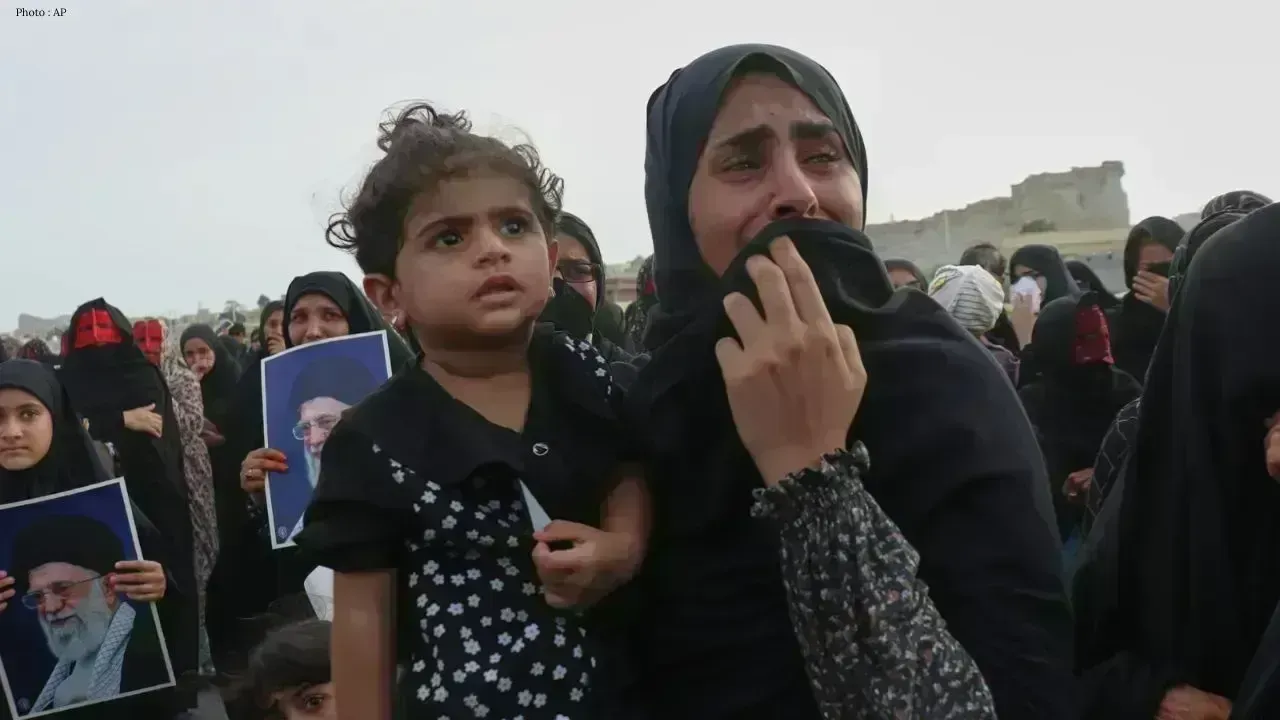
Amid escalating protests in Iran, discussions in the U.S. focus on Washington's possible responses. Although President Trump hasn’t dismissed military options, numerous senators are advising restraint, fearing that force may have counterproductive effects.
Iran is witnessing its most significant protests in years, with leadership attributing the unrest to foreign interference while vowing to uphold the current regime. Trump has hinted at possible U.S. intervention but remains vague on specifics.
On Sunday, two influential senators shared their reservations against hasty military action. Republican Senator Rand Paul cautioned that military strikes might not yield the desired outcomes, asserting that such actions could empower the Iranian administration by redirecting public frustration toward external foes.
Democratic Senator Mark Warner echoed similar sentiments. He indicated that attacks could inadvertently unite the Iranian populace against the U.S., counteracting efforts already in play by the Iranian government. He revisited U.S. historical involvement in Iran’s 1953 coup as a precursor to ongoing instability and the emergence of the current Islamic regime.
Warner proposed focusing on diplomatic initiatives and enhancing collaboration with allies, emphasizing that international support is vital for influencing Iran without inflicting further damage.
Current reports indicate that U.S. military and diplomatic entities are readying options for Trump’s review, encompassing cyber actions and military strikes. Meanwhile, Iran has cautioned that it would target U.S. military posts should attacks occur, raising alarms about a broader conflict.
Contrastingly, some legislators, like Republican Senator Lindsey Graham, advocate for a firmer approach. Graham insists on robust support for Iranian demonstrators and strong admonitions against Iranian leadership, asserting that immediate measures are essential to safeguard civilians and promote change.
Adding complexity, Reza Pahlavi, son of Iran’s last shah, has declared his willingness to return to Iran to guide a transition toward democracy. Speaking from the U.S., he emphasized that the Iranian people deserve elections free from intimidation.
From an editorial lens, this discourse underscores a persistent challenge in U.S. foreign policy. While military action can yield quick results, it also bears substantial risks and long-lasting effects. Historical interventions in Iran haven’t reliably fostered stability or democracy.
Conversely, inaction involves its own risks, especially amid rising violence and oppression. The pressing issue for the U.S. is how to uphold human rights and democratic principles without escalating a domestic issue into an international crisis.
The perspectives shared by senators hint at a wide awareness of these challenges in Washington. As Iran navigates this turmoil, prudent judgement, international collaboration, and alignment with the aspirations of the Iranian people are paramount.
The decisions made in the forthcoming days could define U.S. relations with Iran for years to come. Leaders' choices between restraint and aggression will have profound ramifications, extending well beyond the immediate region.


 English