Post by : Saif
Al-Najjar
Venezuela finds itself at a pivotal moment as interim president Delcy Rodriguez unveils significant proposals to modify the nation’s oil legislation. This initiative aims to draw foreign investments and rejuvenate its beleaguered energy industry, amidst ongoing political upheaval following the ousting of former leader Nicolas Maduro, influenced by U.S. actions concerning oil revenue.
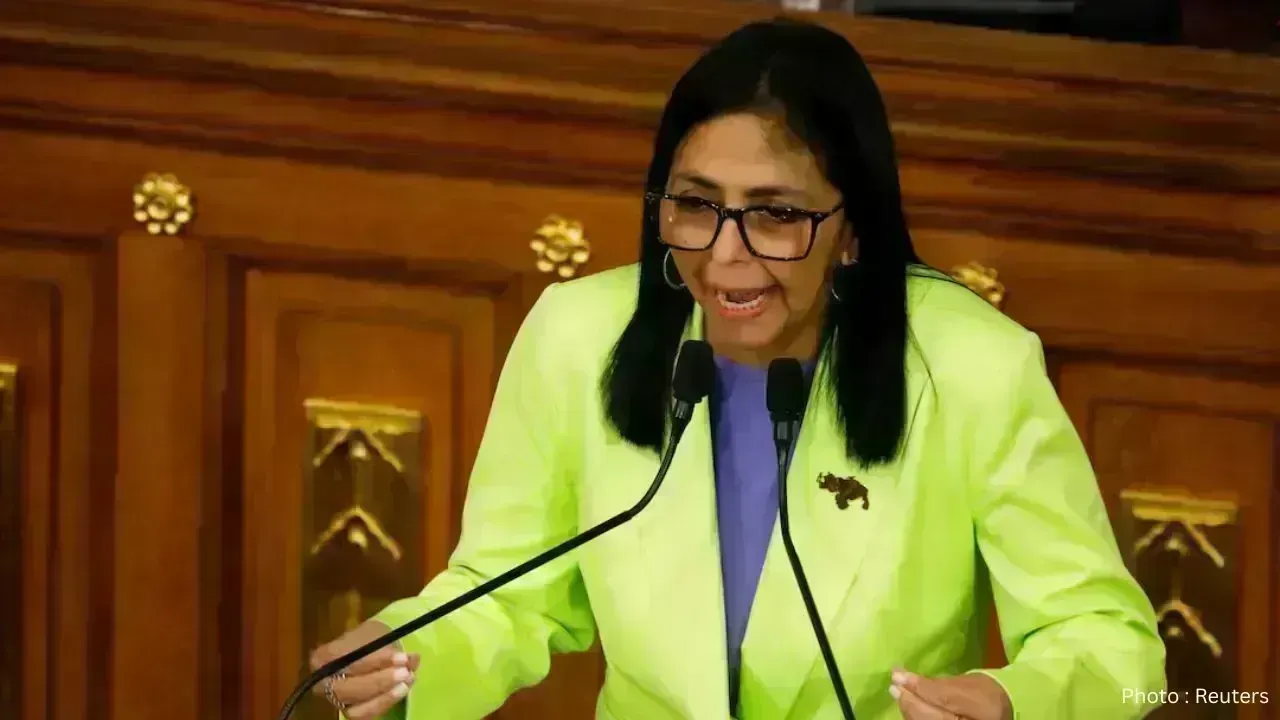
During her inaugural address to the National Assembly, Rodriguez outlined her plans to revise the country’s longstanding hydrocarbon regulations. Her intentions are to facilitate the flow of investments into underdeveloped oil fields that are currently lacking sufficient infrastructure. Venezuela is endowed with some of the largest oil reserves globally; however, persistent mismanagement, sanctions, and political discord have led to production levels significantly below potential.
Under existing regulations, international firms are required to collaborate with the state-run oil entity, PDVSA, which must maintain a majority stake in any venture. Investors, particularly from the U.S., have expressed dissatisfaction with this arrangement, asserting that it hampers efficiency and dissuades new capital. Although Rodriguez did not detail specific changes to the law, her comments hinted at increased flexibility for international partners.
This reform push arises as the United States intensifies its oversight of Venezuela’s oil sector. Washington claims that approximately $500 million has already originated from Venezuelan oil transactions under a new agreement, with those funds secured in U.S.-controlled bank accounts, primarily in Qatar. The former Trump administration had also proposed an extensive reconstruction plan for Venezuela, valued at around $100 billion, reflecting a desire for sustained American involvement in the country's energy sector.
Rodriguez assured that oil income would be allocated for the workforce and public amenities, aiming to alleviate public anxiety and cultivate trust. Many in Venezuela have endured prolonged hardships due to economic decline, scarcity of food and medical supplies, and inadequate public services, despite the nation’s abundant natural resources.
Taking office just ten days prior after the dramatic apprehension of Maduro and his spouse, transported to the U.S. over drug-related allegations, Rodriguez is striving to present herself as a unifying force. She has called for diplomatic engagements with Washington with a promise to approach discussions honorably.
On the same day of her address, U.S. authorities seized yet another oil vessel associated with Venezuela, part of a broader effort that contributed to Maduro’s ouster. Following this, President Trump indicated that the U.S. intends to maintain control over Venezuela’s oil resources indefinitely, prompting significant concerns regarding the nation’s sovereignty.
Meanwhile, opposition figure Maria Corina Machado met with Trump in Washington. Although Trump commended Rodriguez for her cooperation and capability, his administration regards Machado as an unrealistic alternative. U.S. representatives also highlighted the absence of a clear election timeline for Venezuela, further complicating the nation's democratic prospects.
Nonetheless, Machado cautioned that political oppression remains prevalent under Rodriguez. Addressing U.S. legislators, she raised alarms about ongoing arrests and limitations, contending that fewer political detainees have been released than the government claims. Human rights advocates within Venezuela have echoed her assertions.
The proposed changes to the oil law are being scrutinized both domestically and internationally. For investors, this could represent a shift towards a more open and feasible strategy for revitalizing Venezuela’s oil sector, while ordinary citizens hope that oil fortunes may finally translate into improvements in their daily lives. However, apprehensions linger that increased foreign involvement, especially from the U.S., might jeopardize Venezuela’s autonomy.
Currently, Venezuela stands at a crossroads. If navigated correctly, oil reform may provide a lifeline to the economy and attract essential investments. However, without transparent procedures for elections and robust safeguards for national interests, the risk of exchanging one form of control for another looms large.
As Delcy Rodriguez speaks of a renewed political trajectory looking towards 2026, the international community will keenly monitor whether her declarations can transform into tangible revitalization, or if Venezuela’s oil wealth will persist in fueling strife and foreign intervention rather than fostering internal recovery.


 English