Post by : Shweta
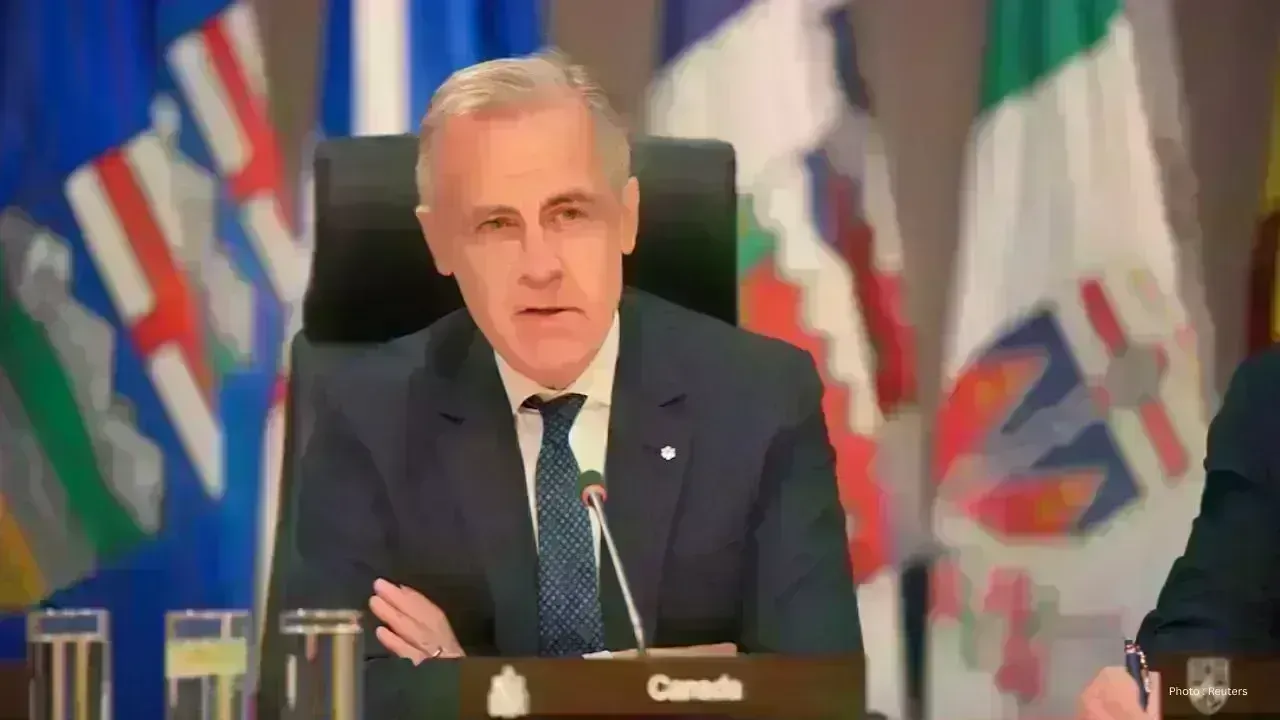
During a business event in Vancouver, Canadian Prime Minister Mark Carney robustly supported his government's initiatives regarding new trade corridors and potential pipeline expansions. He urged that the focus should shift towards solutions and economic growth instead of the ongoing dissent. Addressing an audience from the Greater Vancouver Board of Trade, Carney highlighted the necessity of enhancing infrastructure and trade routes to diminish reliance on the U.S. and to bolster exports globally.
As he responded to increasing backlash from environmental advocates and political critics concerning a proposed oil pipeline that would link Alberta's energy sector to British Columbia's coastline, Carney remarked that Canadians are inundated with opposition rather than support. He underlined the urgency for actionable development strategies to generate employment, elevate trade, and fortify economic resilience.
Carney pointed out that Canada is lagging in terms of port efficiency and transportation frameworks. He noted that delays at ports and inadequate rail links hamper the distribution of goods throughout the nation. The Prime Minister emphasized that the enhancement of these trade corridors is a national priority, aspiring to diversify exports past the U.S. market by implementing significant investments in transportation, shipping, and energy infrastructure by 2035.
Recently, the prospective pipeline project has surfaced as a prominent political contention in Canada. Reports indicate that it could facilitate the transport of over a million barrels of Alberta oil daily to global markets through the Pacific coast. Carney mentioned that federal backing for the initiative would only proceed under specific stipulations such as investments in carbon capture, consultations with Indigenous groups, and equitable economic compensation for British Columbia.
Nonetheless, strong opposition persists from environmental groups and various political figures. Detractors contend that heightened oil tanker traffic and pipeline development pose threats to marine biodiversity, potentially endangering species like southern resident orcas. Conservation advocates caution that diminishing environmental assessments for significant infrastructure projects may lead to lasting environmental repercussions.
In spite of the backlash, Carney's administration continues to frame the pipeline discussion as a critical component of a broader strategy aimed at fostering Canada's economy and enhancing national trade autonomy. Proponents argue that the project could open avenues to burgeoning Asian energy markets while minimizing dependence on U.S. trade routes; however, opponents insist that safeguarding environmental integrity and Indigenous rights must take precedence before any approvals are considered.


 English