Post by : Saif
Al-Najjar
In a strategic move before the forthcoming NATO summit, European leaders have come together, showcasing a commitment to collaboration in defense and reaffirming the importance of the transatlantic alliance amid recent tensions with U.S. President Donald Trump. The integral message originating from Berlin is that Europe is united in its desire to bolster its defense capabilities and maintain strong ties with the United States during these uncertain times.
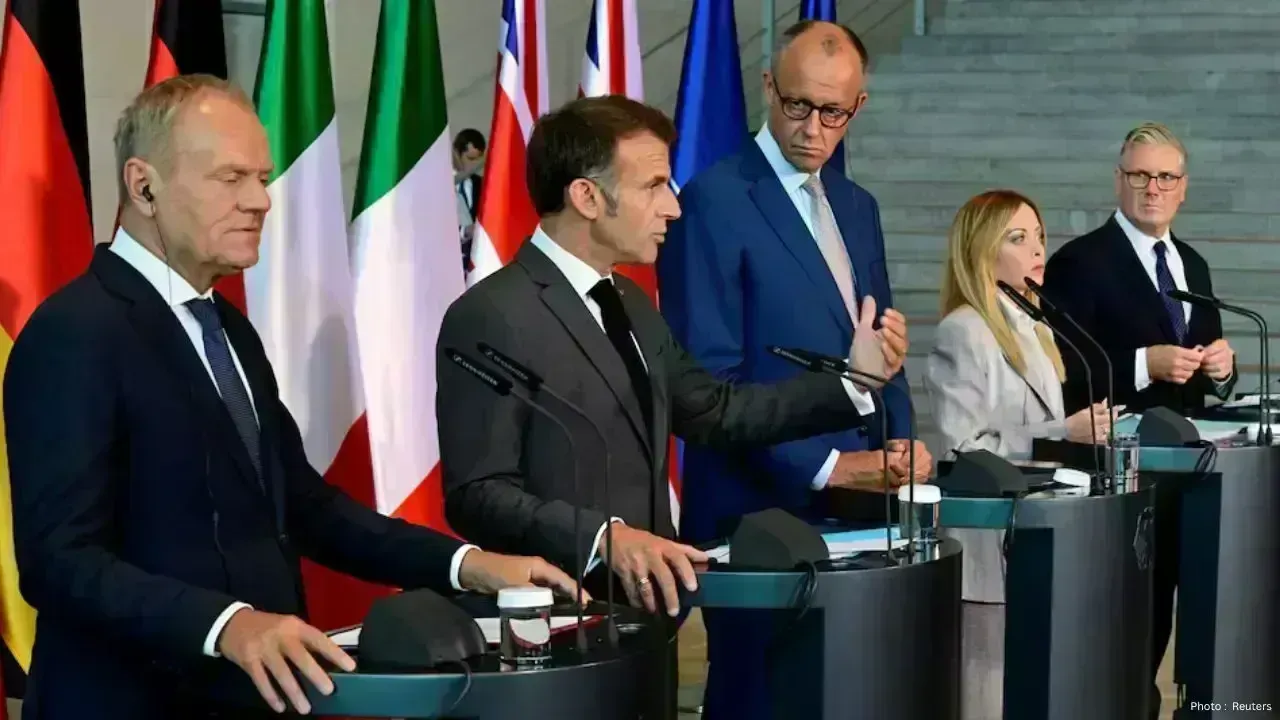
Hosted by German Chancellor Friedrich Merz, discussions involved leaders from the UK, France, Italy, and Poland, significantly focusing on security, military collaboration, and the evolution of European defense. This meeting, leading up to the vital summit set for July 7-8 in Ankara, comes during a delicate period as various disagreements hint at fractures within Europe’s major powers, particularly regarding defense initiatives and the relationship with the U.S.
The Significance of the Berlin Meeting
The gathering in Berlin served more than just diplomatic purposes; it was a declaration that Europe recognizes the complex challenges it faces, from supporting Ukraine to adjusting to the uncertain outlook of U.S. military involvement. It is also a response to Trump's ongoing pressures for increased defense spending.
With this meeting, European leaders aimed to present a united front at the NATO summit, emphasizing that internal disputes cannot hinder the alliance’s strength as they work towards a more assertive European defense policy. Chancellor Merz underscored the opportunity presented by Ankara to assert Europe’s commitment to being a stronger defense partner.
The Underlying Tensions of Unity
Despite the public show of unity, the Berlin meeting followed a history of disagreements that raise questions about Europe’s security coordination. A notable complication was the collapse of the long-anticipated Franco-German FCAS (Future Combat Air System) project, reflecting the difficulties countries face in establishing collaborative defense efforts.
Political differences regarding responses to global conflicts, including the U.S.-Israeli tensions with Iran, have also added strain to NATO’s unity. Critics within Europe have voiced concerns of being sidelined in discussions dominated by key players like Germany, France, and the UK, complicating the mission to develop a cohesive security policy.
Trump’s Influence on NATO Dynamics
Trump's influence looms large over European leaders' need to project solidarity. His critical stance on NATO and pressure for heightened defense spending have compelled Europe to reconsider its military strategy. While NATO remains reliant on American military strength, leaders acknowledge the importance of enhancing Europe's own defense mechanisms.
NATO Secretary General Mark Rutte continues to address rising tensions before the summit, highlighting the internal dynamics at play in managing relationships with Trump amidst persistent concerns regarding military commitments.
Aspirations for a Stronger Defense Strategy
The Berlin discussions underscored Europe’s desire for a more substantial role in defense, influenced largely by the shifting security landscape due to Russia’s actions. Increased military budgets and heightened arms production signify a commitment to prepare for an unpredictable future.
Yet, transitioning from this desire to reality presents challenges. Concerns over defense collaboration and varying national interests complicate the achievement of a unified military structure across Europe.
NATO Summit: A Crucial Test for Europe
The upcoming NATO summit in Ankara represents a pivotal moment for European leaders, providing an opportunity to advocate for elevated defense spending and enhanced military cooperation. Success hinges not just on presenting a unified stance but managing relations with Trump effectively without devolving into disagreement over defense allocations.
For Europe, the stakes are substantial. A divided approach could reinforce perceptions of dependency on the U.S., while a coherent message may strengthen its voice within NATO.
Support for Ukraine is also on the line, with European governments keen to demonstrate sustained commitment amid the ongoing conflict with Russia, wary of any signs of internal division that might embolden adversaries.
Moving Beyond Symbolism
While the Berlin meeting marks a critical development, European leaders must translate this unity into actionable policy beyond mere rhetoric. Progress demands resolution of disputes impeding collaborative defense initiatives and ensuring inclusive strategic dialogue.
The current geopolitical landscape mandates that Europe fortify its defense capabilities independently of U.S. support. Trump’s return to power has catalyzed necessary introspection for Europe, presenting both challenges and opportunities for greater alignment and readiness in defense cooperation.
Future Actions Post-Summit
European leaders have committed to displaying unity, recognizing the critical phase NATO is entering, marked by Trump’s influence and ongoing strife in Ukraine. The Berlin meeting was designed to affirm Europe’s capability to collaborate, augment NATO’s European framework, and uphold transatlantic relationships.
For this message to bear fruit, tangible commitments must follow. Europe faces the pressing task of becoming more self-reliant and organized while retaining the foundational alliance that has ensured its security over the decades. The Ankara summit will be a litmus test to gauge if Europe is making true strides in this direction or merely masking underlying fractures with diplomatic language.


 English