Post by : Shweta
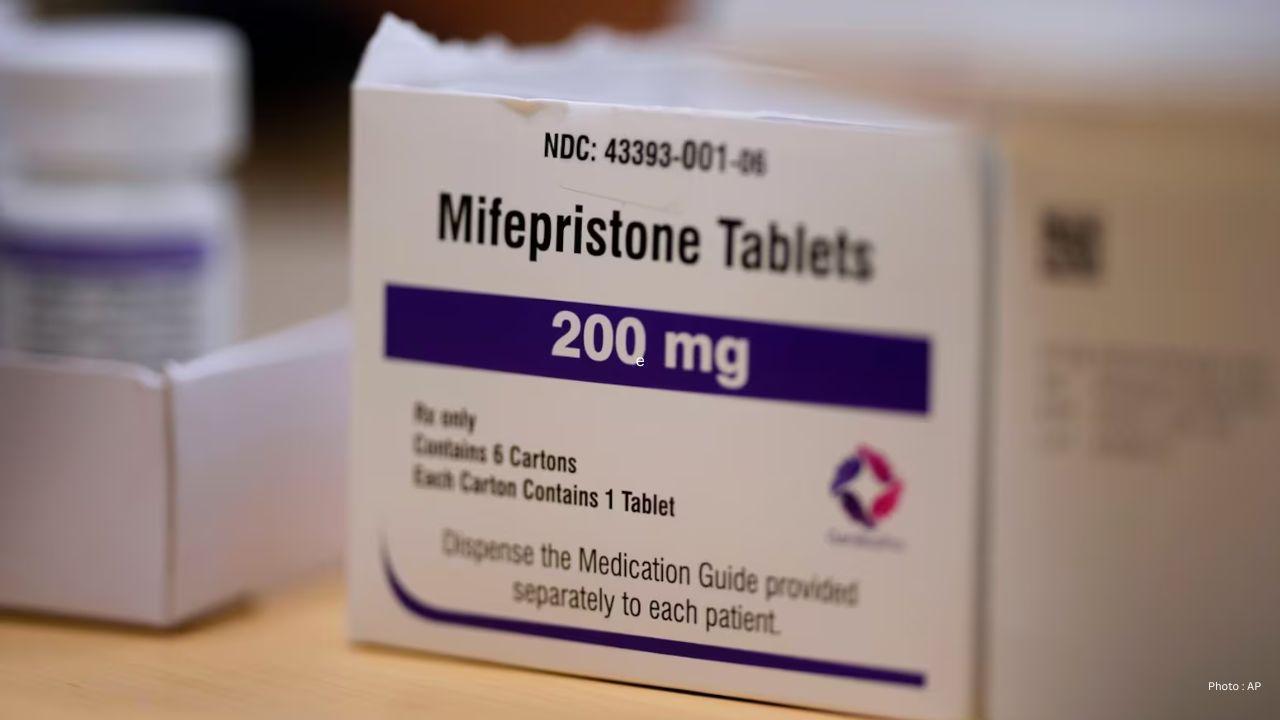
A significant ruling from a federal appeals court has imposed limitations on access to abortion pills by prohibiting the mailing of prescriptions for mifepristone, one of the most prevalent abortion medications in the U.S. This decision marks a critical moment in the ongoing abortion discourse, following the Supreme Court's annulment of Roe v. Wade in 2022.
The verdict was delivered by a panel of three judges from the 5th U.S. Circuit Court of Appeals based in New Orleans. The court mandated that prescriptions for mifepristone must be dispensed in person at clinics or medical centers, effectively halting federal regulations set by the Food and Drug Administration (FDA) that had previously broadened access via telehealth and mail.
As part of a two-drug regimen used for medication-induced abortions, mifepristone received FDA approval in 2000. Its accessibility had been expanded during the COVID-19 pandemic when the FDA permitted certified healthcare professionals to prescribe and distribute the drug remotely without in-person consultations. Since the overturning of Roe v. Wade, mail-delivered abortion pills emerged as a primary resource for women seeking reproductive services, particularly in states imposing stringent abortion bans.
The legal challenge that led to this ruling was initiated by Louisiana and anti-abortion groups, asserting that the FDA did not adequately justify its relaxed stance on the abortion pill. In its ruling, the appeals court maintained that mailing these medications contravened Louisiana's abortion laws and public policy. The judges expressed concern about whether the FDA sufficiently assessed potential medical risks associated with broader access to mifepristone.
Organizations advocating for abortion rights have vehemently criticized the ruling, warning that it could impose substantial obstacles for women seeking reproductive healthcare nationwide. Medical professionals and advocacy groups emphasized that mifepristone has been safely used for over 20 years, with serious complications being notably rare. Detractors of the ruling argued that the requirement for in-person visits could disproportionately affect women in rural areas or states with already restricted abortion options.
This ruling also poses a challenge to telehealth abortion services, which significantly expanded after the Supreme Court’s Dobbs decision permitted states to impose their own abortion regulations. Numerous Democratic-led states enacted “shield laws” to safeguard healthcare providers who prescribe abortion medications across state borders via virtual consultations and mail. The recent court order could complicate these frameworks and spark increased legal disputes among states concerning abortion access.
In reaction to the ruling, pharmaceutical firms involved in mifepristone's production, including Danco Laboratories and GenBioPro, voiced criticism and raised concerns about potential confusion among pharmacies, doctors, and patients. Legal teams from these companies are expected to pursue emergency appeals to the U.S. Supreme Court to prevent the restrictions from becoming permanent.
Previously, the Biden-era FDA's policies allowing the mailing of abortion medications had faced legal challenges. In 2024, the U.S. Supreme Court rejected a significant lawsuit regarding mifepristone due to the plaintiffs lacking legal standing; however, it did not make a judgment on the drug's safety or legality, leaving space for ongoing litigation similar to the current case.
Political responses to this ruling have sharply divided factions. Conservative lawmakers and anti-abortion groups hailed the decision as a triumph for states seeking to impose stricter abortion regulations. Conversely, reproductive rights advocates accused the court of undermining medical practice and restricting healthcare access through legislative maneuvers. Social media reactions further revealed a strong public divide on this contentious issue.
Legal analysts predict that this case is likely to be escalated back to the Supreme Court due to its expansive implications on reproductive health and federal drug governance. In the interim, uncertainty lingers for healthcare providers, pharmacies, and countless women across the U.S. depending on telehealth and mail-order abortion services.


 English