Post by : Mariam
Al-Faris
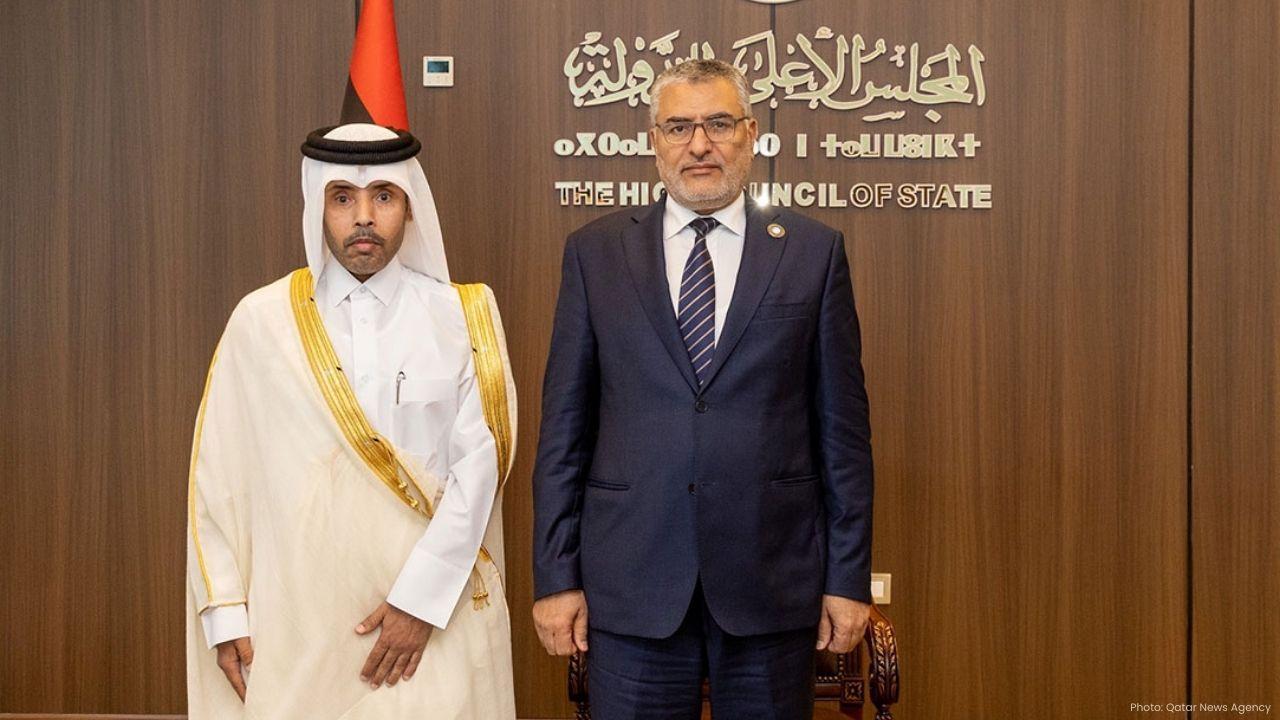
In Tripoli, the capital of Libya, an important diplomatic meeting took place on Thursday. The President of the High Council of State of Libya, Dr. Mohammed Muftah Takala, held talks with the Ambassador of the State of Qatar to Libya, Dr. Khalid bin Mohammed Zabin Al Dosari. The meeting brought together two leaders who are key figures in strengthening ties between their countries.
Purpose Of The Meeting
The main goal of the meeting was to review and strengthen the bilateral relations between Libya and Qatar. Both sides have long shared diplomatic connections, but this discussion was meant to highlight areas where cooperation can be improved further. From economic matters to cultural exchanges, the leaders looked at ways to build a stronger partnership.
Role Of The High Council Of State
The High Council of State of Libya plays a significant role in the country’s political system. As its President, Dr. Takala is responsible for leading discussions that affect Libya’s relations with other countries. By meeting the Qatari Ambassador, he demonstrated Libya’s openness to international cooperation and its interest in engaging with regional partners.
Role Of Qatar’s Ambassador
Dr. Khalid bin Mohammed Zabin Al Dosari represents the State of Qatar in Libya. As Ambassador, his duty is to maintain good relations, protect Qatar’s interests, and work closely with Libyan officials. His meeting with Dr. Takala reflects Qatar’s continuing commitment to supporting dialogue and cooperation with Libya, especially during a period when Libya is seeking stability and development.
Bilateral Relations Explained
Bilateral relations refer to the official and practical ties between two countries. In this case, Libya and Qatar are exploring how they can strengthen their cooperation across multiple areas. These include politics, security, trade, investment, education, and culture. Strengthening bilateral relations helps both countries achieve mutual benefits and creates opportunities for their people.
Historical Background Of Relations
Libya and Qatar have had long-standing relations as part of the Arab and regional community. Over the years, their relationship has seen both strong cooperation and occasional challenges, depending on regional political situations. However, meetings like this show that both countries are interested in keeping communication open and building mutual trust for the future.
Importance Of Diplomatic Dialogue
Diplomatic meetings such as this one are important because they provide a platform for open conversation. Leaders can discuss sensitive issues, share perspectives, and find common ground. Dialogue helps reduce misunderstandings and builds stronger foundations for cooperation. For Libya and Qatar, this meeting was a chance to strengthen trust and confirm their commitment to supporting one another.
Areas Of Possible Cooperation
While the official statement highlighted “bilateral cooperation relations,” it is clear that this can cover a wide range of sectors. For example, Qatar may explore investment opportunities in Libyan infrastructure, energy, and services. Libya, on the other hand, can benefit from Qatar’s financial support, expertise, and international connections. Both countries may also expand cooperation in education, culture, and humanitarian support.
Economic Development Opportunities
Libya is currently working on rebuilding its economy after years of instability. In this process, partnerships with countries like Qatar can play a big role. Investments in oil, gas, renewable energy, and construction are areas where Qatar has strong experience. By cooperating, Libya can attract financial resources while Qatar can expand its role as an economic partner in North Africa.
Political Support And Stability
Another key area of cooperation is political support. Qatar has played a role in regional diplomacy and has often acted as a mediator in different conflicts. By strengthening ties with Qatar, Libya can benefit from its support in international forums and regional discussions. This helps Libya present its case on global platforms and work toward greater stability.
Cultural And Educational Links
Beyond politics and economics, cultural and educational exchanges are also important. Libya and Qatar share Arab culture, language, and traditions, which makes cooperation easier. Programs for student exchanges, cultural events, and academic cooperation can help build stronger ties between the people of both nations. These types of partnerships create long-term goodwill beyond just government discussions.
Regional Context Of The Meeting
The meeting between Dr. Takala and Dr. Al Dosari also reflects the broader regional situation. The Middle East and North Africa region has faced many challenges, including conflicts, economic shifts, and calls for reforms. By keeping strong relations, Libya and Qatar position themselves to better handle regional challenges together. Cooperation between countries in the region is seen as essential for long-term peace and development.
The Symbolism Of The Meeting
While the meeting itself was short, its symbolism is powerful. It shows that Libya is reaching out to its partners and that Qatar is responding positively. Diplomatic gestures like this send a message to the international community that both countries value partnership and want to build constructive relations.
Building Trust Through Engagement
Trust between nations is built through continuous engagement. By holding regular meetings, Libya and Qatar can create a foundation of reliability and predictability in their relationship. Such trust is important for long-term projects, joint initiatives, and cooperation in sensitive areas like security and political reform.
Benefits For The People
Ultimately, the purpose of strengthening bilateral ties is to benefit the people of both countries. Stronger relations can mean more investment, better education opportunities, improved services, and cultural exchanges. By working together, Libya and Qatar can create opportunities that improve daily life for citizens on both sides.
Diplomatic Future Outlook
Looking to the future, this meeting may be just one of many steps toward a deeper partnership. Both countries are expected to hold more talks, sign agreements, and possibly launch joint projects. The continued dialogue will help create stronger and more balanced relations, adding stability to both nations’ positions in the region.
The meeting between Dr. Mohammed Muftah Takala, President of the High Council of State of Libya, and Dr. Khalid bin Mohammed Zabin Al Dosari, Ambassador of Qatar to Libya, was a step toward greater cooperation. Both leaders expressed interest in improving bilateral relations and working together in multiple areas. The meeting reflects the importance of diplomacy, dialogue, and partnership in today’s world.


 English