Post by : Saif
Al-Najjar
The Bangko Sentral ng Pilipinas has announced a decision to maintain existing interest rates for the foreseeable future, as inflation trends upward and economic growth appears to decelerate. This move is seen as a measure to balance the dual objectives of price stability and economic support.
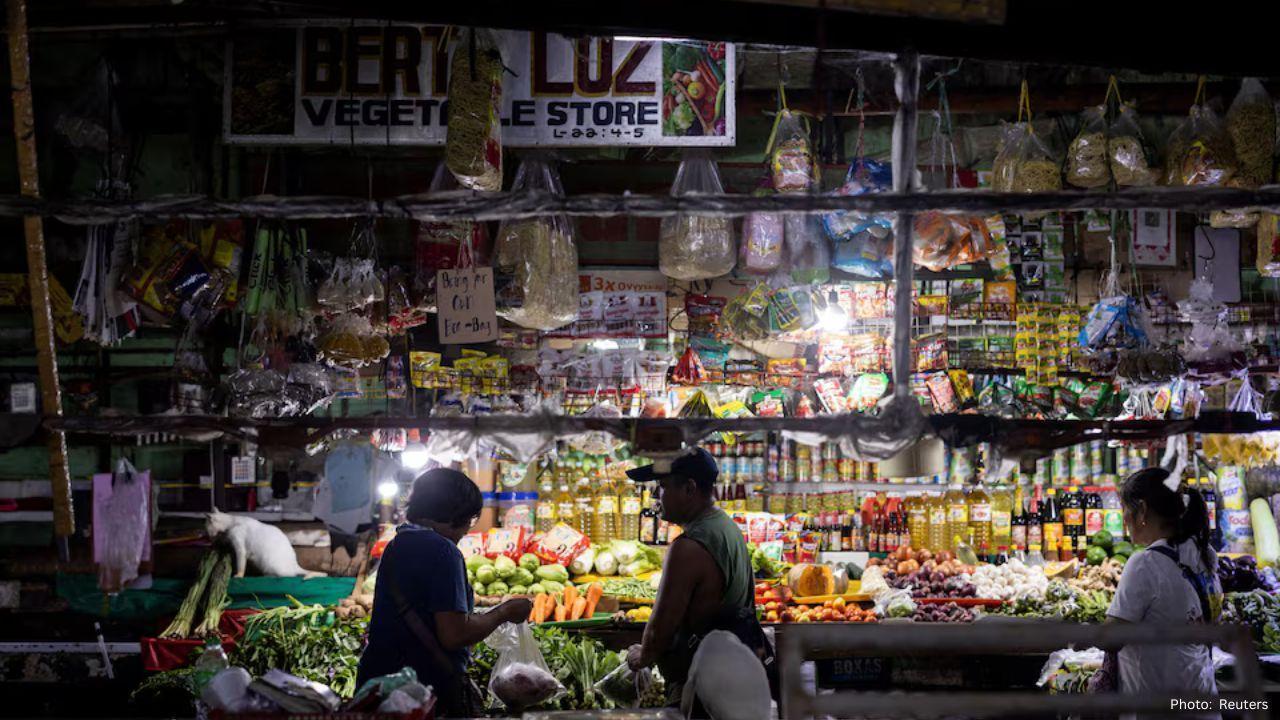
Recent statistics reveal that inflation reached 1.8% in December, marking the highest level in nine months and an increase from 1.5% in November. The uptick has been attributed primarily to surging food and clothing prices, significantly impacting everyday expenses for households. Monthly, prices surged by 0.9% in December, representing the most substantial jump in over a year.
Despite this increase, the annual average inflation for 2025 stood at 1.7%, the lowest since 2016, indicating mild price pressures throughout most of the year, though costs escalated as the year concluded.
On the economic front, growth projections have been adjusted downward. The central bank estimates a growth rate of approximately 4.6% for 2025, a dip from 5.7% in the previous year, below initial government targets. This slowdown mirrors the challenges posed by a sluggish global economy and reduced trade activities.
Governor Eli Remolona of Bangko Sentral ng Pilipinas noted that current market conditions do not warrant further interest rate reductions at this moment. He mentioned that rates are already nearing his bank's optimal level. While minor adjustments remain a possibility, any future decisions will hinge on inflation and economic performance trends over the next few months.
Throughout the past year, the central bank has taken decisive steps to bolster economic activity, reducing interest rates in five consecutive meetings, leading to a benchmark rate of 4.5%, the lowest in three years. Since August 2024, cumulative cuts total 200 basis points, with officials indicating that this easing trend may be nearing its end.
The government has adjusted its growth projections for the coming years, citing potential risks stemming from global economic challenges. Concerns about slower growth in major economies and sustained uncertainty in international markets are prevalent.
Officials from the central bank reiterated that any future easing will be carefully measured and data-driven. If growth underperforms significantly, further support measures could be contemplated. For now, however, escalating inflation has prompted a cautious stance in policymaking.
Ultimately, the central bank has conveyed a clear stance: interest rates will remain stable as they closely track both inflation and economic dynamics. Their commitment lies in controlling inflation while allowing the economy the necessary space for gradual recovery going forward.


 English