Post by : Sami
Al-Rahmani
Rethinking Recruitment: The Shift from Degrees to Skills in Global Hiring
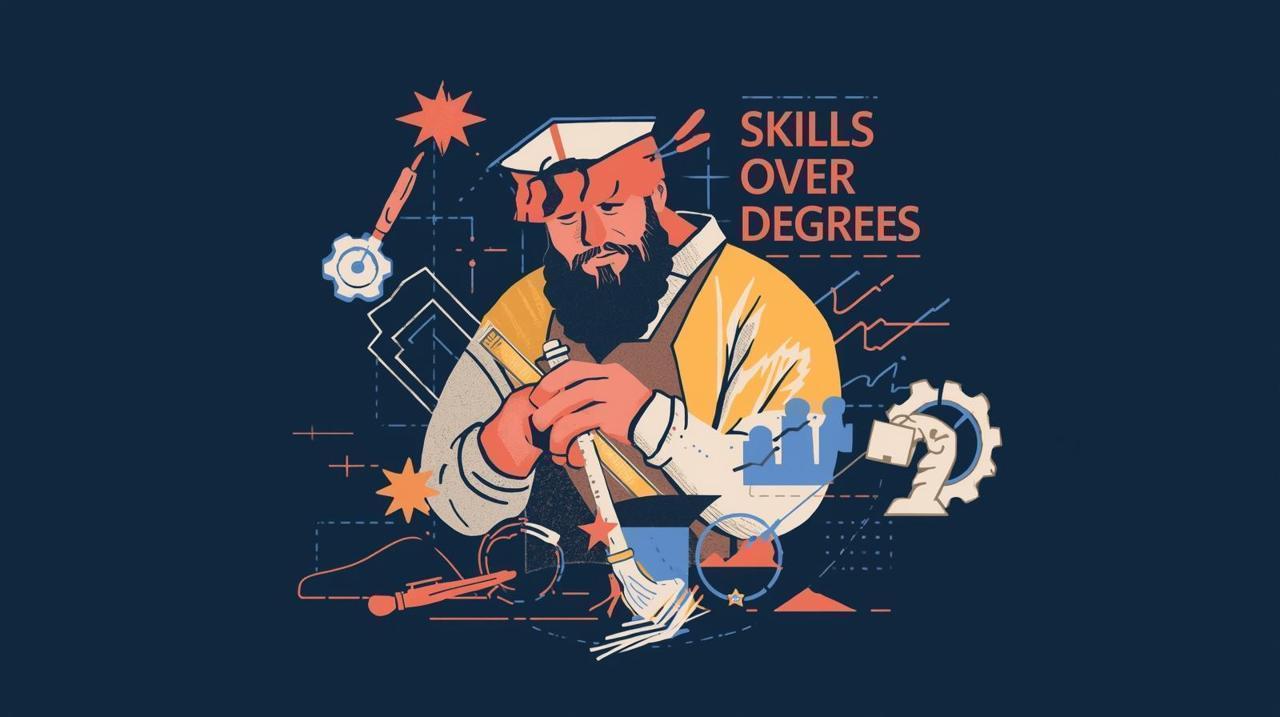
The global job landscape is changing significantly. Historically, a college degree was the gold standard for employment qualifications. However, the emergence of digital innovation, telecommuting, and performance-based assessments has altered this view. Nowadays, employers seek candidates who excel in problem-solving, efficiency, and adaptability, valuing skills more than formal educational credentials. This article delves into the implications of the skills-first recruitment trend, the key competencies in demand for 2026, and strategies for job seekers to remain competitive.
Employers Favoring Skills Over Degrees
Businesses are navigating rapidly evolving markets that often outpace traditional education systems. A degree obtained years ago may not align with current industry needs. Employers require talent proficient in AI, coding, system management, or content creation, making the notion of finding the ideal degree obsolete.
Factors Influencing This Shift
As industries undergo rapid transformation, university programs struggle to keep up. With increasing skill shortages, recruiters focus on tangible performance. Skills can be effectively evaluated through tests, portfolios, and task-oriented interviews. Degrees alone cannot adequately gauge one's ability to work autonomously, communicate effectively, or address real-world challenges.
Consequently, companies are prioritizing hands-on competence over academic credentials.
Tech Pioneers of the Skills-First Approach
Technology firms were early adopters in rejecting degree requirements. Major global corporations such as IBM, Google, Tesla, and Accenture have openly stated that formal qualifications are non-essential for numerous roles.
How Technology Influences This Shift
Fields like coding, data analytics, cybersecurity, and AI operations prioritize practical experience. Skills can be mastered online at a speed that traditional universities cannot match. Portfolios and practical projects provide a better indication of capability than academic scores.
This paradigm is gaining traction across various sectors.
Emergence of Portfolio-Centric Hiring
Today’s employers demand tangible proof of competencies, not mere diplomas.
Hiring Managers’ Preferences
A comprehensive digital portfolio that illustrates real projects. Developers with active GitHub accounts. Creatives showcasing a design portfolio. Marketers presenting case studies. Demonstrated impact instills employers' confidence in a candidate's readiness to contribute.
As a result, portfolio-centric assessments are increasingly favored over traditional degree evaluations.
Remote Work Broadens Talent Accessibility
The rise of remote work has unlocked the global job market, enabling companies to recruit from an expansive talent pool.
Impact on Degree Significance
This expanded reach encompasses individuals who gained skills through alternate pathways outside formal education. Organizations are now more concerned with performance than with possessing degrees. When teams operate remotely and are internationally distributed, demonstrable skills become paramount.
As firms recognize that high performance can emanate from anywhere, the significance of degrees continues to wane.
The Growing Importance of Soft Skills
Soft skills, once seen as peripheral, are now indispensable. Key attributes include communication, time management, adaptability, problem-solving, and critical thinking.
Why Employers Emphasize These Qualities
These abilities dramatically influence workplace efficiency compared to academic success. Remote teams need effective communicators capable of resolving problems independently. Leaders must demonstrate creativity to overcome market uncertainties.
Many of these skills are often cultivated through work experience rather than academic programs.
AI and Automation Heighten Learnability Demand
The introduction of AI has automated repetitive tasks, making "learnability" a crucial contemporary skill.
Defining Learnability
The swift acquisition of new tools, the ability to adapt to changing processes, and staying current with industry developments are all part of learnability.
Employers are seeking individuals who can grow alongside technological advancements, not just those with traditional academic qualifications.
Industries That Have Fully Embraced Skills-First Hiring
Examples Include
Software engineering. Digital marketing. UI/UX design. E-commerce. Cybersecurity. Data analysis. Content production. Customer service. Virtual assistance.
In these domains, proven skill is considered more valuable than possession of a degree.
Industries Gradually Adopting Skills-First Models
Some fields still lean toward degrees but are increasingly implementing skill evaluations.
Examples Include
Banking, where knowledge of compliance tools is key, healthcare administration, education technology positions, and engineering management.
These sectors are adopting tests and scenario-based interviews to effectively evaluate candidates.
Remaining Relevance of Degrees in Specific Roles
Though many sectors are diminishing the emphasis on degrees, certain positions still legally require them.
Examples Include
Medical practitioners. Attorneys. Civil engineers. Certified public accountants. Aviation pilots.
These professions involve regulations, licenses, or life-critical responsibilities.
Staying Competitive in a Skills-Centric Market
Job seekers are encouraged to concentrate on developing high-level skills and demonstrable effectiveness rather than solely relying on degrees.
Key Strategies
Enhance your skills through online courses, internships, and hands-on projects. Develop a portfolio that showcases your work. Cultivate strong digital communication. Familiarize yourself with industry-specific tools. Keep pace with AI advancements and automation trends.
By implementing these practices, candidates can enhance their value compared to those who depend primarily on academic qualifications.
Advantages of Skills-First Hiring for Employers
Organizations that prioritize skills see accelerated onboarding, improved performance, and minimized hiring-related risks.
Benefits Include
Less training time for new hires. Enhanced productivity. Broader and more diverse recruitment sources. Better cultural alignment due to clearer expectations.
This method is efficient, cost-effective, and focused on results.
Concluding Thoughts
The global recruitment landscape is evolving towards a focus on skills, adaptability, and demonstrated competence. While degrees maintain some value, they are increasingly losing their position as the universal credential for employment. Employers are now seeking candidates who can deliver results immediately. By honing practical abilities, engaging in real-world projects, and developing robust soft skills, job seekers can thrive in an ever-changing professional environment. Skills-first hiring is not just a passing trend; it's the future of work globally.
Disclaimer
This article provides general information only and should not be construed as professional career, educational, or legal advice. Hiring practices vary widely across different industries, countries, and companies, so readers should evaluate their specific career ambitions or consult with qualified professionals prior to making decisions based on this information.


 English