Post by : Anis
Al-Rashid
Why Winter Skies Vary Day by Day
Winter transforms the sky into an unpredictable canvas. While some mornings are refreshingly cool and overcast, others bring an acrid scent with sharp air. On certain days, visibility can plummet, causing familiar buildings to fade into impenetrable grey.
Terms like mist, haze, and smog are often mishandled. However, they originate from different processes, present unique health risks, and can significantly affect your day.
Being aware of what is in the air isn't mere curiosity; it's essential for personal safety.
Not every chilly morning carries the same threat, yet they all provide important cues.
Mist: The Gentle Winter Apparition
Understanding Mist
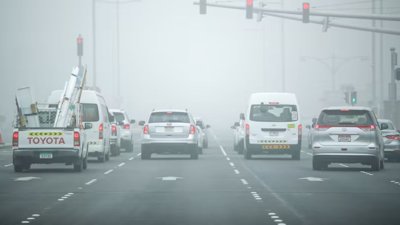
Mist appears as nature's fog resting close to the ground.
It occurs when warm air encounters cold temperatures, leading to condensation of water vapor into minuscule droplets. These droplets form a soft, white veil on crisp winter mornings.
Mist comprises water, devoid of pollutants.
It’s a weather phenomenon, not a situation of poor air quality.
The Impact of Mist on Daily Life
While mist can limit visibility, it does not pose risks to lung health or trigger serious medical issues.
Its primary effects are blurring vision and increasing humidity.
Drivers may find visibility challenging, and morning joggers might feel moisture on their clothing. Nonetheless, the health dangers from pure mist are minimal.
Mist won’t irritate your eyes.
Mist won’t make breathing difficult.
Mist carries no odor.
It dissipates quickly as the sun warms the atmosphere.
When Mist Signals Caution
Although mist itself is benign, its presence with pollution is concerning.
If the air feels heavy, is thick, or triggers coughing, it’s likely more than just mist.
It has evolved into something more troublesome.
Haze: The Unseen Pollutant
Understanding Haze
Haze is the result of fine particles of dust, smoke, vehicle exhaust, and industrial emissions suspended in the atmosphere.
Contrary to mist, haze contains no water.
It is a dry form of pollution lingering over urban areas.
Haze creates a washed-out landscape, diminishes visibility, and lends a dull, yellow or grey tint to the sky.
Why Haze Worsens in Winter
Cold temperatures tend to trap pollutants close to the ground.
During winter:
-
Wind speed decreases
-
Warm pollutants cease to rise
-
Cold air keeps particles grounded
-
Road vehicles emit more when traffic is congested
-
Burning crop residue is frequent
-
Dust from construction remains airborne
Haze doesn’t rise but settles deep into the lungs.
The Health Impact of Haze
Though haze may appear lighter than smog, it still poses health risks.
Common symptoms include:
Individuals with allergies or asthma will experience effects immediately.
Others may notice gradual impacts.
Identifying Haze
Look for:
-
a bluish-grey sky during daylight
-
no fog visible at ground level
-
objects in the distance fading to grey
-
the sun appearing pale rather than orange
-
chest discomfort after outdoor activities
No droplets of water will be found on surfaces during a haze event.
That’s key to identification.
Smog: The Winter Threat
Understanding Smog
Unlike mist, smog isn’t a weather phenomenon.
Smog is a combination of pollution and mist.
It consists of:
Think of smog as pollutants enclosed in moisture.
That’s why it:
Smog doesn’t float; it presses down.
The Harms of Smog
Embedded in smog are tiny particles that can be fatal.
These particles:
-
settle deeply in the lungs
-
enter the bloodstream
-
irritate brain nerves
-
strain the cardiovascular system
-
weaken the body's defenses
-
trigger respiratory issues
-
exacerbate cough and bronchitis conditions
Smog stealthily affects bodily organs.
The effects may not be immediate; the threat is substantial.
Why Winter Invites Smog
Smog flourishes when:
-
cold air traps warm pollutants
-
winds fail to disperse smoke
-
crop burning meshes with fog
-
visibility shrinks and pollution accumulates
Once smog settles, it does not retreat easily.
Unlike mist, it won’t disappear by midday.
How to Quickly Identify Smog
If you have unpleasant experiences like:
What you’re dealing with isn’t just weather.
It's pollution, specifically, smog.
Understanding the Differences
Confusion arises because all three contribute to reduced visibility.
However, their impacts are vastly distinct.
| Type of Weather |
Harm Level |
Content |
Duration |
| Mist |
Low |
Water |
Short |
| Haze |
Medium |
Dust |
Days |
| Smog |
High |
Toxic Mixture |
Weeks |
Mist fades with sunlight.
Haze lingers loosely.
Smog clings tightly.
Consequences for Transportation
Driving in Mist
Visibility may be impaired, but can be managed with fog lights and cautious speed.
Road safety is typically not a major concern with mere mist.
Driving in Haze
Distances can be misleading.
Vehicles may seem farther away than they actually are.
Fatigue sets in more easily.
Reaction times diminish.
Driving in Smog
Risks escalate dramatically.
Light scatters disallowing effective visibility.
Headlights reflect oddly.
Decision-making can falter.
Accidents become more common.
When smog is present, road conditions become highly unpredictable.
Health Implications for Individuals
Children
Children are more susceptible to the effects of smog and haze.
Due to their size, their lungs take in more air relative to body weight.
Breathing challenges may become more prevalent.
Their immune systems could be compromised.
Common cold symptoms may intensify.
Working Adults
Fatigue can occur more quickly.
Productivity might slump.
Eye strain may heighten.
Concentration levels can wane.
Elderly and Patients
Heart strain exacerbates.
Asthma events may rise.
Blood pressure can fluctuate.
Days of smog can silently escalate hospital visits.
Precautions to Take in Different Conditions
During Mist
During Haze
During Smog
-
Limit outdoor exposure
-
Wear protective masks if you must go out
-
Avoid outdoor exercise
-
Close doors and windows tightly
-
Prevent external air circulation indoors
-
Shower after outdoor activities
-
Stay well-hydrated
-
Utilize indoor plants
-
Regularly monitor your breathing
Combating smog requires lifestyle changes—not mere acceptance.
Why Indoor Air Quality Matters
Smog can easily infiltrate homes.
Once inside, it can:
-
linger in drapes
-
settle in carpets
-
contaminate furniture
-
hide in corners
-
accumulate in mattresses
Sealing homes during smog isn’t paranoia; it’s prudent.
Why Children Need to Stay Inside on Smog Days
Exposure during growth stages can harm lung development.
Chronic wheezing may develop early.
Their defenses weaken.
Parents should view smog exposure as a health risk—not an inconvenience.
The Significance of Quality Masks
Thin cloth masks block dust but not small, dangerous particles present in smog.
Higher-quality masks can filter out harmful particulate matter.
However, even the best masks have their limits.
Exposure reduction should still be a priority.
The Long-Term Risks of Ignoring Smog
Smog is not a fleeting issue.
Repeated exposure can lead to:
These health challenges don’t appear suddenly; they accumulate gradually.
Day after day.
Why Vision Alone Isn’t Reliable
The sky might look pristine yet contain hidden dangers.
Pollution doesn’t necessitate a dense fog to exist.
Smog can be invisible.
Never assume you are safe based solely on appearance.
Pay attention to your body's cues:
Perception of Winter Pollution vs. Summer
Cold air traps pollution.
Sun cannot disperse it effectively.
Winds are less active.
Cities become confined areas of pollution.
Smog becomes a persistent presence.
Why Weather Apps Can Be Misleading
Weather indicators and air quality are not synonymous.
Temperature applications cannot discern pollution levels.
Always monitor air-quality alerts separately from the forecast.
Don't rely solely on visual cues; check air metrics and health indicators instead.
Simple Strategies for Polluted Winters
Everyday Precautions
Small adjustments can significantly lessen long-term damage.
Educating Children About Pollution
Children must grasp:
-
Why air feels heavy
-
The importance of staying indoors
-
Why masks provide protection
-
The reasons for timing outdoor activities
Awareness fosters resilience.
Conclusion: Assesing Different Hazy Mornings
Mist dampens your attire.
Haze frustrates your daily plans.
Smog jeopardizes your health.
The sky reveals what type of day is ahead.
Interpreting it correctly is key.
Breathing in clean air relies on knowledge.
Observe the sky.
Sniff the air.
Tune into your lungs.
Then step out with caution.
Disclaimer:
This article is intended for informational purposes only and is not a substitute for medical or environmental health advice. Those with pre-existing respiratory conditions are encouraged to heed guidance from healthcare professionals during times of poor air quality.


 English