Post by : Meena
Hassan
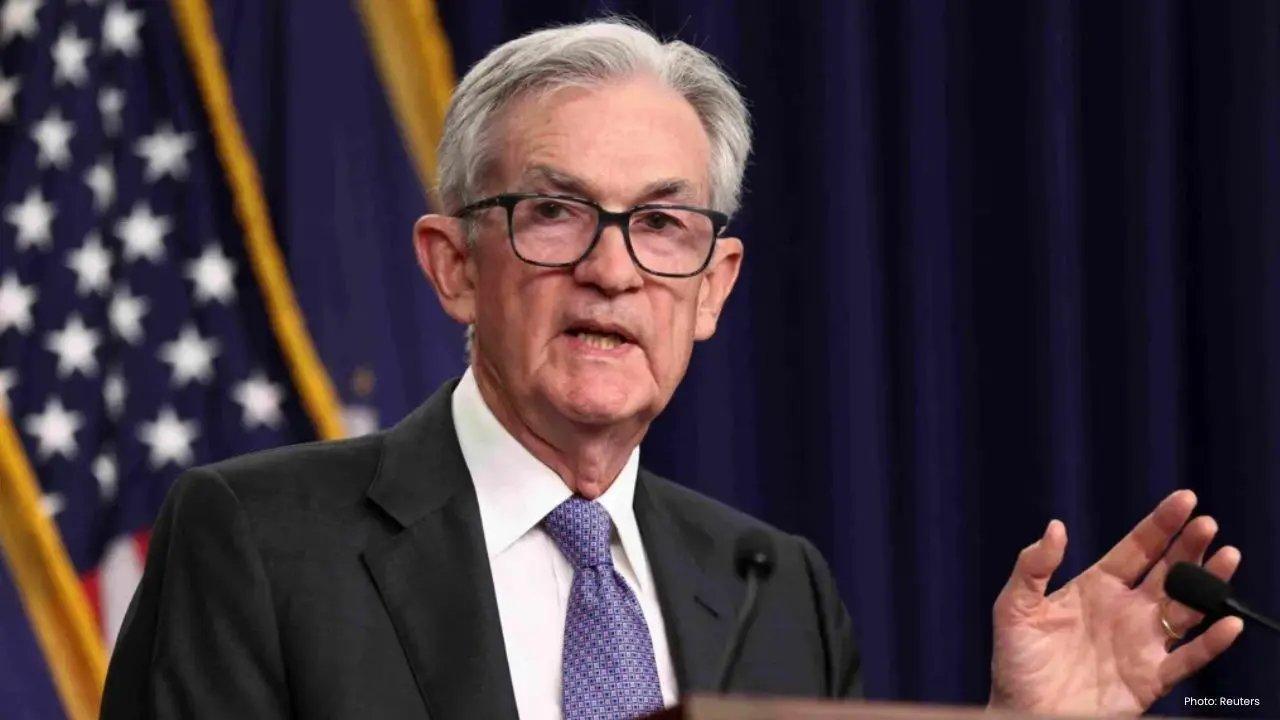
In a significant move, the US Federal Reserve has lowered its key interest rate for the third time this year, decreasing it by 0.25 percentage points to a range of 3.50%–3.75%. This marks the lowest rate seen in three years, reflecting internal conflicts within the central bank over how to navigate a sluggish job market alongside ongoing inflation concerns.
The recent economic assessments from the Fed suggest a likelihood of another rate cut in the upcoming year, although officials stress that future decisions will hinge on forthcoming economic indicators.
Jerome Powell, the Fed Chair, emphasized the need to monitor the effects of the previous reductions before determining the next steps. Powell noted, "We are well-positioned to wait and see how the economy evolves," insisting that the data will be pivotal ahead of the next meeting scheduled for January.
While there are calls from figures like former President Donald Trump for aggressive rate cuts, Powell acknowledged the dual challenges of managing inflation while tackling unemployment. He articulated that, "You can’t do two things at once."
The decision to cut rates was not reached unanimously, indicating increasing rifts within the Fed. Three members expressed dissent: Stephen Miran urged a larger cut of 0.5 percentage points, while Austan Goolsbee and Jeffrey Schmid advocated for maintaining current rates.
Post-announcement, Trump voiced that the Fed’s reduction should have been more substantial, claiming rates should be positioned as the lowest globally.
Challenges arising from the extended US government shutdown, concluded in November, have left some Fed officials with limited reliable economic data. Despite this, worries regarding a cooling labor market currently overshadow inflation worries.
Recent statistics indicated that the US unemployment rate edged up from 4.3% to 4.4% in September, highlighting a modest increase in joblessness. The rationale behind the rate cuts is to foster economic growth by making borrowing less expensive for consumers and businesses alike.
Inflation remains above the desired 2% target, registering at 3% in September—the highest level observed since January. Analysts note that while tariffs have escalated some prices, recent softer inflation metrics grant the Fed more leeway to support the job market.
Colleen McHugh, a consultant from Wealthify, remarked that the combination of elevated inflation and a struggling jobs market likely swayed the Fed's latest choice. She anticipates one or two additional rate drops next year contingent on economic shifts.
Powell acknowledged the heightened tensions within the Fed regarding its dual mandates of achieving price stability and maximizing employment. He stated, "When you have competing pressures, this is what you see," while maintaining that discussions around these issues were thorough and respectful.
Looking forward, data on the upcoming labor market and inflation trends in November could provide clearer insights into the future trajectory of interest rates. Analysts predict that signs of a further employment slow down may intensify demands for additional easing.
Adding to the uncertainty, Trump's search for a successor to Powell, whose term expires next May, looms on the horizon. Kevin Hassett, an economic adviser to Trump and former chair of the White House Council of Economic Advisers, emerges as a potential candidate, alongside other figures like Kevin Warsh and Treasury Secretary Scott Bessent.
Experts caution that the next Fed chair must maintain independence alongside credibility to prevent any perception of bias towards political influences, which could unsettle market stability. Thomas Hoenig of the Mercatus Center warned of significant market repercussions if the new chair appears politically inclined.
Responding to concerns on political influences impacting his approach, Powell firmly stated that such considerations do not sway his decision-making. "No," he replied when questioned about Trump's search for a new chair affecting his judgment.
As the Fed faces these conflicting pressures, market participants will closely monitor how its interest rate strategy adapts to evolving economic realities in the near future.


 English