Post by : Bianca
Haleem
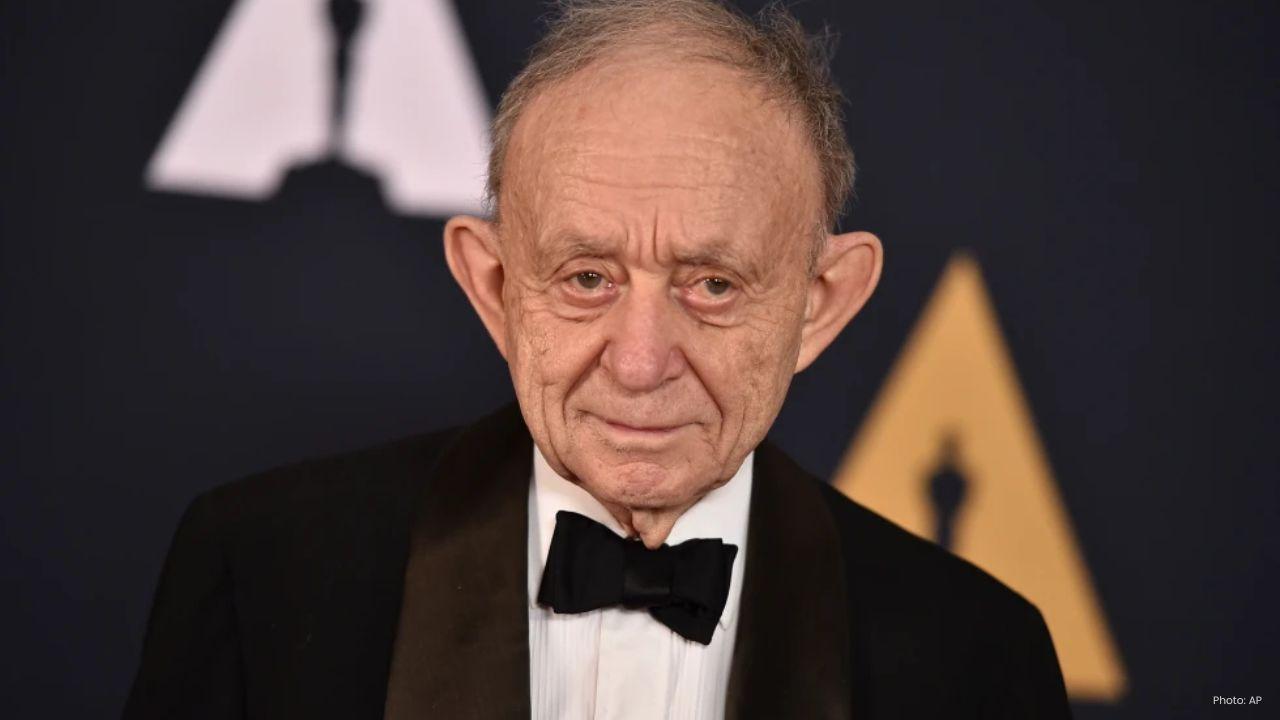
Frederick Wiseman, one of the world’s most respected documentary filmmakers and the director of the famous film “Titicut Follies,” has died at the age of 96. His death was confirmed on Monday through a joint statement released by his family and his production company, Zipporah Films. The statement did not share further details.
“He will be deeply missed by his family, friends, colleagues, and the countless filmmakers and audiences around the world whose lives and perspectives were shaped by his unique vision,” the statement said.
Wiseman was known for creating long, detailed, and realistic documentaries that offered a powerful look inside American institutions. Over his career, he completed more than 35 documentaries, many of them several hours long. His films were regularly shown on public television, screened at major film festivals, and praised by critics and filmmakers worldwide.
In 2016, Wiseman received an honorary Academy Award for his contribution to cinema. His work was also preserved by the Library of Congress, highlighting its cultural and historical importance.
Known for a Unique Documentary Style
Wiseman began filmmaking in his mid-30s but quickly became one of the most influential names in modern documentary history. He was often ranked alongside — and sometimes above — well-known documentary pioneers such as D.A. Pennebaker and Robert Drew.
He became famous for a simple and powerful filmmaking style. His documentaries did not include narration, background music, or title cards. Instead, he relied on real-life scenes and conversations to tell the story. He worked with a very small crew and even served as his own sound engineer.
Wiseman explained in a 2013 interview that he did not try to create controversy, but sometimes the reality shown in his films challenged public expectations.
“Titicut Follies” and Legal Controversy
Wiseman’s most controversial and widely discussed documentary was “Titicut Follies,” released in 1967. For the film, he recorded life inside Bridgewater State Hospital in Massachusetts, a facility for the criminally insane.
The documentary included disturbing footage, including nude inmates being mocked by guards and one prisoner being force-fed through a tube. The film caused public shock and embarrassment for state officials.
Massachusetts authorities later restricted the film’s release, saying it violated inmates’ privacy. For more than 20 years, Wiseman was only allowed to show the documentary in limited settings such as colleges and libraries.
In 1989, a judge ruled that the film could be released if faces were blurred. Later, in 1991, all restrictions were lifted completely.
“High School” and Other Major Works
After “Titicut Follies,” Wiseman released “High School” in 1968. The film captured daily life in a suburban Philadelphia school, showing strict rules, classroom culture, and student discipline.
Critics praised the documentary for its realism and emotional impact. Many considered it one of the most important films ever made about American education.
Wiseman continued his mission of documenting American life through films that often used direct, simple titles such as:
-
Hospital
-
Public Housing
-
Basic Training
-
Boxing Gym
He once explained that institutions were a way to observe human behavior under defined conditions.
Balanced View: Showing Both Cruelty and Kindness
Although some critics described his films as harsh, Wiseman insisted he was not a muckraker. He believed his work was subjective but fair and created through careful editing of hundreds of hours of footage.
He said it was equally important to document kindness and generosity, not just cruelty or indifference.
His later film “High School II,” made in the 1990s in East Harlem, showed a more hopeful side of education, focusing on committed teachers and supportive administrators.
Continued Filmmaking Into His 90s
Wiseman remained active even in his 80s and 90s. His later works included:
-
Crazy Horse (about a Paris dance revue)
-
At Berkeley (a four-hour documentary on the University of California)
-
Monrovia, Indiana (about a rural American community)
He also worked in theater for many years, staging plays by writers like Samuel Beckett and William Luce. He also adapted his documentary “Welfare” into an opera.
In 2025, he appeared briefly in two films — acting as a poet in “Jane Austen Wrecked My Life” and providing an off-screen voice role as a radio announcer in “Eephus.”
Early Life and Career
Wiseman was born in Boston. His father was a well-known attorney. His mother worked as an administrator at a children’s psychiatric ward and had an interest in acting.
He studied at Williams College and later earned a law degree from Yale Law School. Before filmmaking, he worked in legal and academic roles, including:
-
Massachusetts attorney general’s office
-
Court reporting in Fort Benning, Georgia and Philadelphia
-
Research work at Brandeis University
-
Teaching at Boston Law School
He was drafted into the U.S. Army in 1955 and was stationed in Paris. During that time, he gained practical filmmaking experience by shooting street scenes using a Super 8 camera.
He later said that advances in film technology, especially the ability to record synchronous sound, made it possible for him to begin documentary filmmaking.
Zipporah Films and Family
Most of Wiseman’s documentaries were produced through his company Zipporah Films, named after his wife. She died in 2021.
Frederick Wiseman is survived by his two children.


 English