Post by : Mariam
Al-Faris
Photo: AP
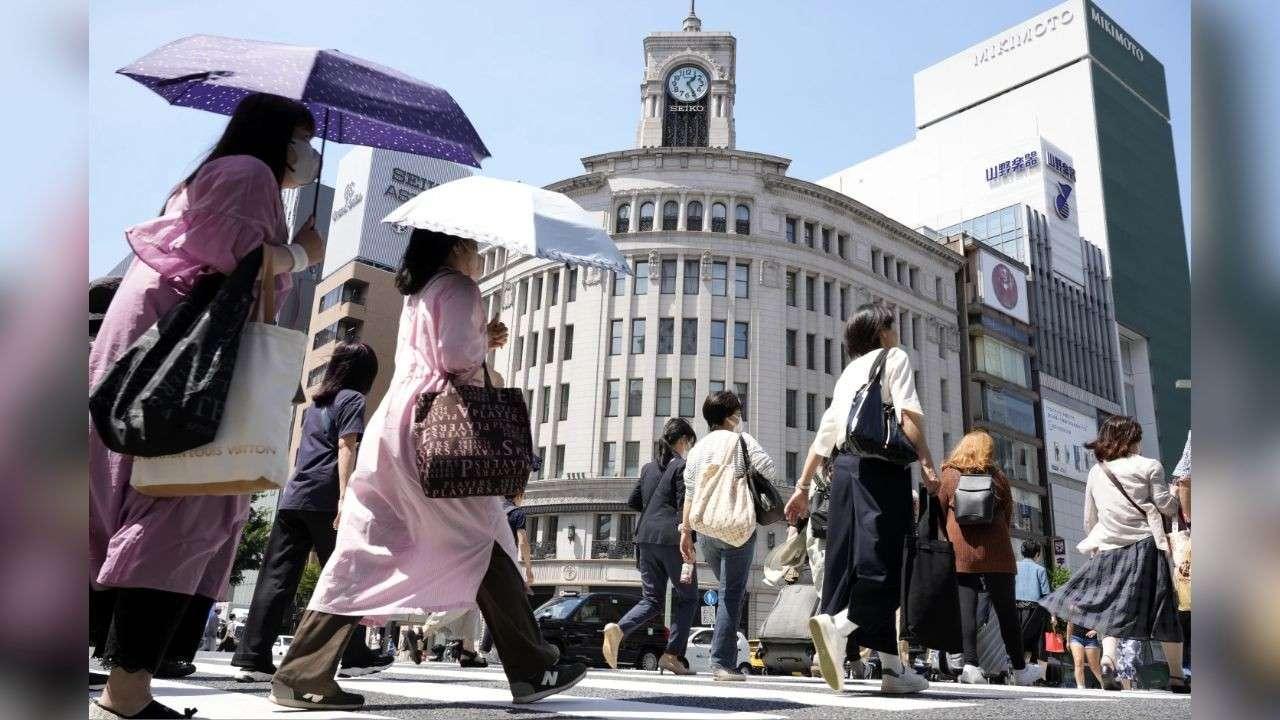
In Japan, many workers are finding it harder and harder to manage their day-to-day expenses. According to new government data released for May 2025, the real wages of workers—this means the money people actually feel they earn after accounting for price increases—fell by 2.9% compared to May last year. This is a bigger drop than April’s 2.0% fall, and it is also the worst decline since September 2023.
This marks the fifth month in a row that real wages have fallen. Simply put, for the past five months, people in Japan have been getting poorer in real terms, even if their salaries show a small increase. The money they are earning today just doesn’t stretch as far as it used to.
What Are Real Wages, and Why Are They Falling?
Real wages are different from the number you see on your paycheck. Real wages show how much your salary is worth after adjusting for inflation. Inflation is when the prices of everyday goods and services like food, rent, fuel, and electricity go up over time. So, if your salary goes up by 1%, but the price of goods goes up by 4%, you’re actually losing buying power.
In May, inflation in Japan stood at 4.0%, meaning that on average, prices were 4% higher than they were in May last year. But nominal wages—the amount written on paychecks—rose only by 1.0%, which is far less than the inflation rate. This means that even though workers are technically getting paid more, they can buy less with that money.
This situation is a problem for everyone. From young workers just starting their careers to families with children and elderly people who are still working, many are feeling the pressure of trying to make ends meet.
Food Prices Are One of the Biggest Problems
One of the biggest reasons people are struggling is that the cost of food in Japan has gone up a lot. Food is something people need every single day, so when prices go up, it immediately affects everyone’s budget.
Rice, in particular, has become more expensive. In Japan, rice is a key part of daily meals. It’s eaten at breakfast, lunch, and dinner in many homes. When something so basic becomes costly, it becomes much harder for families to manage their food budgets.
People are now thinking twice before buying things they used to purchase regularly. Some may cut back on snacks, imported fruits, or even meat and fish. Others are switching to cheaper alternatives or buying smaller quantities.
Salaries Are Increasing—But Not Fast Enough
Now, you may wonder, are wages at least going up? Yes, but not fast enough. According to official data:
-
Base salaries (the fixed part of your monthly pay) rose by 2.0%, which is the same as the previous month.
-
Overtime pay (the extra money earned for working beyond normal hours) went up by 1.0%.
-
However, special payments, which include bonuses and other one-time rewards, dropped sharply by 18.7% compared to last year.
That last part—special payments—makes a big difference. In Japan, many workers rely on seasonal bonuses to pay off debts, buy big-ticket items, or save money. So, when these bonuses are reduced, workers feel a big hit.
As a result, even though the regular parts of people’s salaries may have increased slightly, the overall income in many households has fallen. And when that income is adjusted for inflation, the real picture looks even worse.
41 Months of Nominal Wage Growth—But Still Not Enough
Here’s an interesting fact: Japan has seen 41 months in a row—that’s almost 3.5 years—of nominal wage increases. That means that for nearly every month since late 2021, average salaries in Japan have gone up on paper.
But despite this, inflation has been rising faster than wages. This makes the wage increases feel meaningless to ordinary people. It’s like trying to fill a leaky bucket. No matter how much water (money) you add, if the hole (inflation) is bigger, the bucket will never be full.
That’s what Japanese households are going through today. Their paychecks may be slightly larger than before, but prices are rising even faster, making everyday life more expensive and more stressful.
Why Haven’t Wages Caught Up Yet?
Government officials and economists say that this situation might improve in the future—but not immediately. One major reason is that not all wage increases have taken effect yet. In Japan, many companies hold spring labor negotiations every year where they talk about raises and working conditions.
Large companies with labor unions often raise wages soon after these talks. But small and medium-sized businesses, which make up most of Japan’s economy, do not always have unions. These businesses often take more time to increase salaries. Some are still working out how to make the changes, while others are struggling to afford pay raises at all.
That’s why the government believes that the wage data from May may not fully reflect the changes that were agreed upon earlier in the year.
How This Affects Japan’s Economy
The impact of falling real wages doesn’t just stop at households—it affects the entire country. When people have less money to spend, they start buying fewer things. They eat out less, shop less, cancel vacations, and delay big purchases like electronics or cars.
This reduction in spending is a big concern for businesses, especially smaller ones. If customers aren’t spending, stores earn less. If stores earn less, they might cut costs—by reducing staff hours or even laying people off. This creates a chain reaction that slows down economic growth.
The Bank of Japan (BoJ), which is the country’s central bank, is watching all of this closely. The BoJ had plans to slowly raise interest rates and end the ultra-low-rate policy that was introduced during the COVID-19 pandemic. But if consumers continue to suffer and the economy slows down, the BoJ might be forced to delay these changes.
What Comes Next?
Right now, both the government and economic experts are hoping that wages will start to rise more meaningfully in the coming months. If small companies start applying the salary increases from the spring labor agreements, then we might see better numbers in future reports.
However, if inflation continues to rise and wages remain slow, the pressure on workers and families will continue to grow. People will cut back even more, and this could hurt the country’s recovery from years of slow growth and the aftermath of the pa


 English