Post by : Meena
Hassan
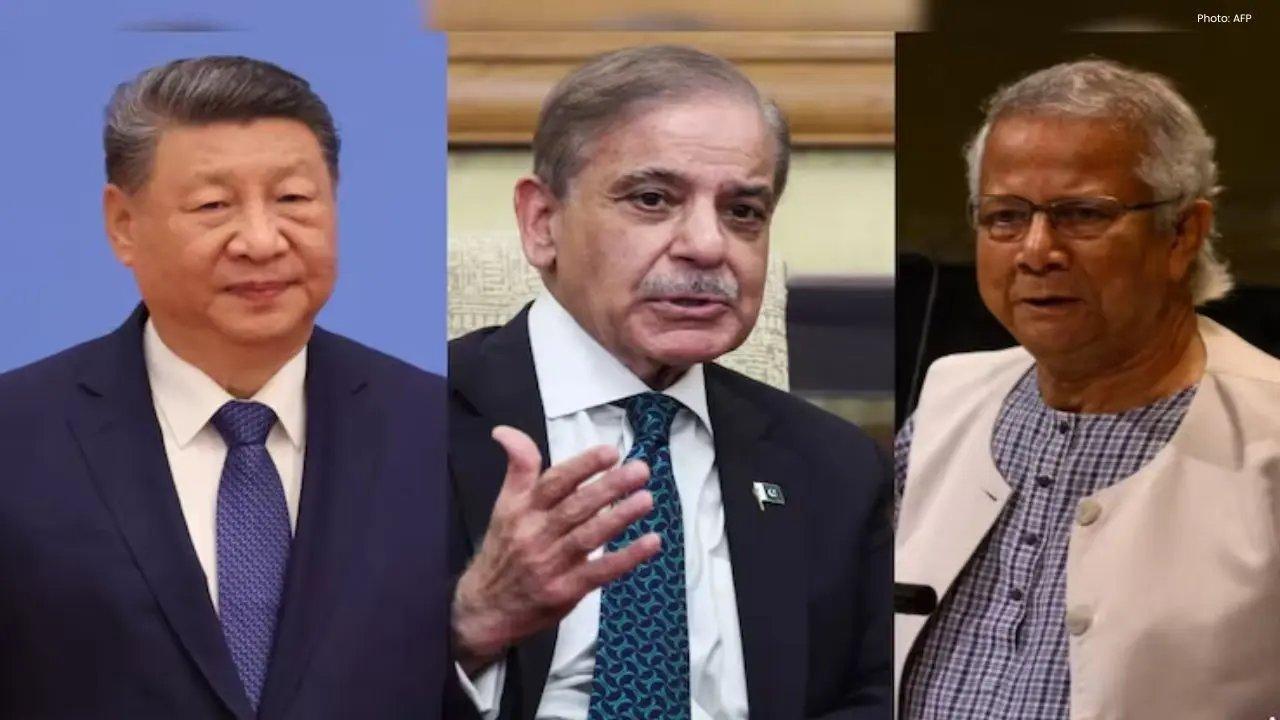
Amidst a shifting geopolitical landscape, Pakistan is making strides to diminish India's extensive influence in South Asia by advocating for a new regional coalition. Deputy Prime Minister Ishaq Dar recently shared Islamabad's ambition to broaden its trilateral partnership with China and Bangladesh, advocating for a model focused on “open and inclusive regionalism.”
Dar contended that South Asia must move beyond outdated “zero-sum mindsets, political fragmentation, and unproductive regional frameworks.” He expressed Pakistan’s aspiration for an environment where conflicts are settled amicably, economies prosper together, and collaboration supersedes division.
Earlier this year, Pakistan, China, and Bangladesh initiated a trilateral arrangement to promote joint economic and strategic interests, with their inaugural meeting held in Kunming last June. Dar proposed that this model could be further extended to other regional players, suggesting an adaptable strategy that does not hinge on one specific nation, implicitly referring to India.
The South Asian Association for Regional Cooperation (SAARC), formed in 1985, has seen diminished activity in recent years. Its members include India, Pakistan, Bangladesh, Bhutan, Maldives, Nepal, and Sri Lanka, with Afghanistan joining in 2007. SAARC aims to enhance economic, social, and cultural development within the region, though summits have been sparse and often canceled due to escalated tensions, notably after cross-border skirmishes involving Pakistan. Consequently, India has pivoted towards BIMSTEC, a regional organization that excludes Pakistan while focusing on functional collaboration.
Experts warn that Pakistan’s recent proposal is more aspirational in nature. Rabia Akhtar, director at the Centre for Security, Strategy and Policy Research (CSSPR), indicated that while this denotes Pakistan’s desire to diversify regional interaction, its success hinges on whether other countries perceive tangible advantages and can engage without political repercussions regarding India.
India continues to assert a dominant role in South Asia, with its population, economy, defense spending, and foreign reserves significantly outpacing those of Pakistan. Smaller countries like Nepal and Bhutan remain reliant on India for trade and disaster relief, emphasizing New Delhi's essential position in the region.
Home to over two billion individuals, South Asia's intra-regional trade is surprisingly limited, estimated at only around $23 billion—merely 5% of the overall commerce. Analysts believe that lowering trade restrictions might boost this figure to $67 billion, revealing the economic potential that exists within cooperative efforts.
While Pakistan’s initiative marks an effort to redefine regional cooperation amid SAARC's stagnation, the powerful influence of India, coupled with its central role in South Asian affairs, presents challenges for any venture excluding it. Ultimately, the effectiveness of this proposal will hinge on whether other nations find genuine value in participating without jeopardizing their ties with India.


 English