Post by : Meena
Hassan
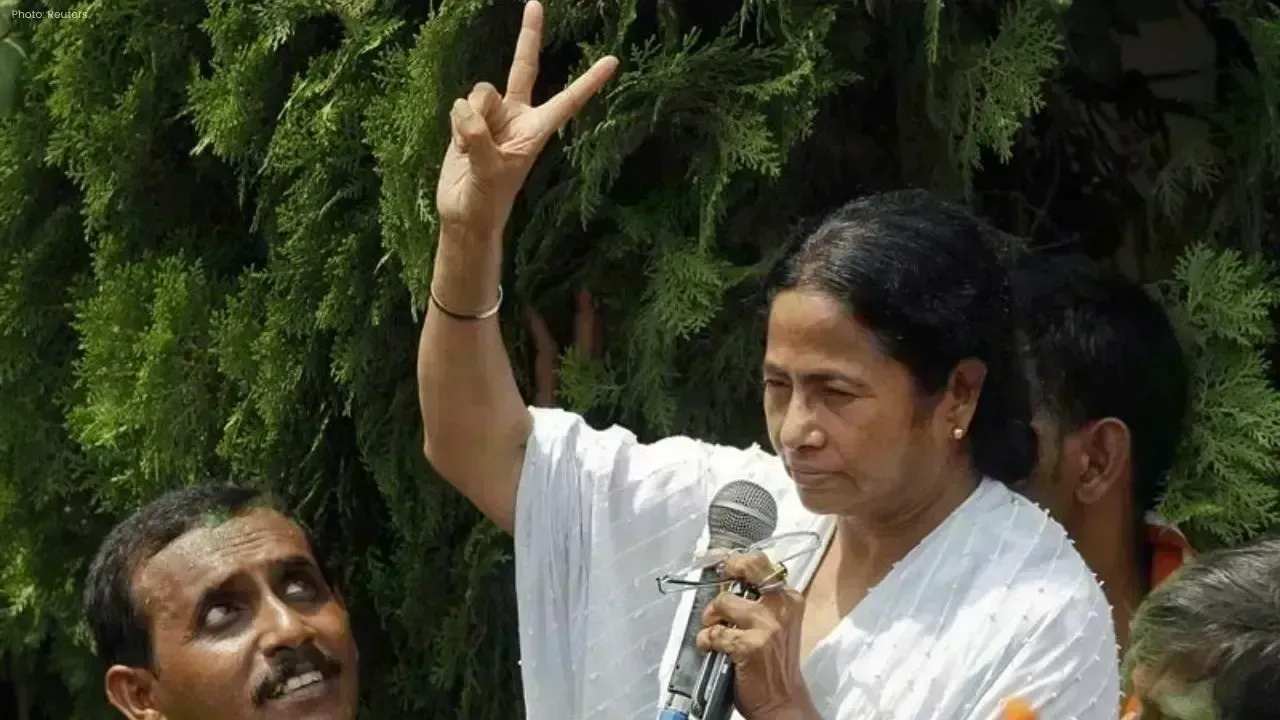
On Wednesday, the Supreme Court expressed its alarm at the turmoil observed in the Calcutta High Court during hearings associated with the Enforcement Directorate and the Trinamool Congress, led by Mamata Banerjee. The court deemed the situation as a major concern and indicated that it would be issuing a notice for a thorough examination.
A bench comprised of Justice Prashant Mishra and Justice Vipul Pancholi noted that such disorder within a constitutional court poses serious questions about the rule of law. The judges emphasized that repeated disruptions cannot be tolerated, stressing the necessity for strict measures to uphold the judicial system's dignity.
The controversy originates from allegations made by the Enforcement Directorate, which claims that prominent leaders from the Trinamool Congress and officials from the West Bengal government have interfered with its inquiries. The agency asserts it was obstructed during searches at I-PAC, a political consulting firm collaborating with the Trinamool Congress.
Solicitor General Tushar Mehta, representing the Enforcement Directorate, accused Mamata Banerjee of hindering the search operations directly. He alleged she interfered at the residence of I-PAC co-founder Pratik Jain, removing critical materials deemed vital for the investigation, labeling the incident as “theft.” Mehta cautioned that such actions could incentivize police to support or shield those under investigation.
He called for decisive actions, including the suspension of West Bengal Director General of Police Rajeev Kumar and other senior personnel, arguing that tolerating such behaviour would undermine the authority of law enforcement across the nation.
Mehta also recounted the events from January 9, when a considerable number of attorneys, many uninvolved with the case, disrupted proceedings in the Calcutta High Court, forcing the presiding judge to postpone the hearing. He described this state of affairs as an instance of “mobocracy,” warning that democracy is compromised when courtrooms are overtaken by politically driven crowds.
The Solicitor General informed the Supreme Court that lawyers had been mobilized via messages to gather at the court, leading to the disruption. He referenced a high court judge’s order, which indicated that the courtroom environment was unsuitable for proceeding due to the chaotic atmosphere.
In light of these statements, the Supreme Court bench inquired if the high court had effectively become a site for protests. The judges reaffirmed that such scenes are unacceptable and degrade public trust in the justice system.
Consequently, following the disturbances, the Calcutta High Court limited access to ongoing hearings, permitting only attorneys directly involved in the case. It later dismissed a petition from the Trinamool Congress after the Enforcement Directorate confirmed it had not seized any documents during the searches. However, the Trinamool Congress continues to allege that critical party documents were removed, a claim the central agency disputes.
Tushar Mehta asserted that this incident was not isolated and urged the court to address the issue decisively. He warned that repeated interference undermines the independence of central agencies.
Senior Advocate Kapil Sibal, representing Mamata Banerjee, questioned the timing of the Enforcement Directorate's actions, noting that significant developments in the ongoing coal scam case had occurred in February 2024. He wondered why such searches took place in 2026, right before the West Bengal Assembly elections.
Sibal explained that I-PAC handles election-related tasks for the Trinamool Congress under a formal agreement, managing sensitive election data, including candidate details and campaign strategies. He claimed that any access to this data could jeopardize the party's competitive position. According to him, Mamata Banerjee's visit was intended to safeguard this confidential information.
However, the Supreme Court clarified that these arguments would not hinder it from issuing a notice. The bench noted that if the Enforcement Directorate intended to seize election data, this should have been conducted already, and as no documents were taken, the matter requires examination.
Senior Advocate Abhishek Singhvi, representing the West Bengal government and police leadership, recognized a problem on January 9 but contended that it shouldn’t compel the Enforcement Directorate to pursue the same issue concurrently before both the Calcutta High Court and the Supreme Court, asserting that emotions can escalate in politically sensitive matters.
The bench responded assertively, stating that recurring uncontrolled emotions cannot be justified and reinforced that discipline and order in courtrooms are crucial and cannot be compromised.
With the Supreme Court opting to issue a notice, the case is poised for deeper examination. The implications of the outcome could be significant for the ongoing tensions between the Enforcement Directorate and the Trinamool Congress and for maintaining order within court proceedings across the country.


 English