Post by : Bianca
Haleem
The United States military carried out strikes on Iranian military targets on Friday after President Donald Trump accused Iran of violating the ceasefire by attacking a cargo ship in the Strait of Hormuz.
According to US Central Command (Centcom), the operation targeted missile storage sites, drone storage facilities, and coastal radar positions inside Iran. The military described the action as a direct response to a drone attack on a commercial cargo ship on Thursday, which disrupted plans to evacuate thousands of sailors stranded in the region.
Iran rejected the US accusation and said the cargo vessel was attacked because it was travelling through an unauthorised route in the strategically important Gulf waterway.
Centcom called the strikes "a powerful response" to what it described as an unjustified attack on commercial shipping.
In its statement, the command said the attack on the cargo ship clearly violated the ceasefire and threatened freedom of navigation along one of the world's most important trade routes.
Centcom also said the US military would continue coordinating and supporting the safe passage of commercial vessels travelling through the Strait of Hormuz.
Iran's Islamic Revolutionary Guard Corps (IRGC), however, blamed what it called the "treaty-breaking US regime" for escalating the situation.
Read More: Iran's Controversial Transit Fees Proposal for Strait of Hormuz
The IRGC said US forces launched airstrikes on Iran's coastline under what it described as different pretexts related to the cargo ship's route through the Strait of Hormuz.
The Iranian military force also claimed that its navy responded by striking US military positions in the region but did not provide additional details.
The IRGC warned that any further US military action would receive a stronger response.
Iran had effectively closed the Strait of Hormuz after US and Israeli military operations against Iran began at the end of February.
The closure of the key shipping route disrupted global oil and gas transportation, pushed international oil prices higher, and delayed shipments of important commodities, including fertiliser.
On 17 June, the United States and Iran agreed to end hostilities through a 14-point memorandum of understanding. The agreement also required Iran to make its best efforts to ensure the safe passage of commercial vessels through the Strait of Hormuz without charging any fees for 60 days.
Following the latest US strikes, Vice-President JD Vance wrote on X that if Iran had concerns about how the memorandum was being implemented, it should discuss them through diplomatic channels.
He added, "But violence will be met with violence."
Meanwhile, Ebrahim Azizi, head of the Iranian parliament's national security commission, accused the United States of attacking Iran while negotiations were still continuing.
In a social media post, Azizi said, "This reckless violation of the ceasefire will, as always, lead to retreat and regret on their part. The blame game does not work anymore."
Speaking to reporters at the White House on Friday, President Trump declined to explain how the United States might respond further or whether he believed the ceasefire remained in place.
"You'll find out," Trump said. "I don't like the fact that they took a shot yesterday. They shouldn't be doing that."
When asked why he believed Iran had carried out the attack, Trump replied only that "they're a little bit different."
Earlier in the week, Trump had said negotiations with Iran were progressing well and claimed Tehran had assured Washington that commercial ships passing through the Strait of Hormuz would not face tolls, insurance fees, or any other charges.
In a Truth Social post on Wednesday, Trump wrote that if this information proved false, negotiations would end immediately.
The United States has criticised reports suggesting Iran planned to charge vessels using the Strait of Hormuz, arguing that such a system would conflict with international maritime law.
On Tuesday, Iranian and Omani officials met in Muscat, the capital of Oman, to discuss the future management of navigation through the Strait of Hormuz.
Omani Foreign Minister Badr Al-Busaidi said both countries remained committed to maintaining toll-free and safe passage for commercial shipping.
However, Iran's chief negotiator, Mohammed Bagher Ghalibaf, said the administration of the Strait of Hormuz would never return to the way it operated before the war.
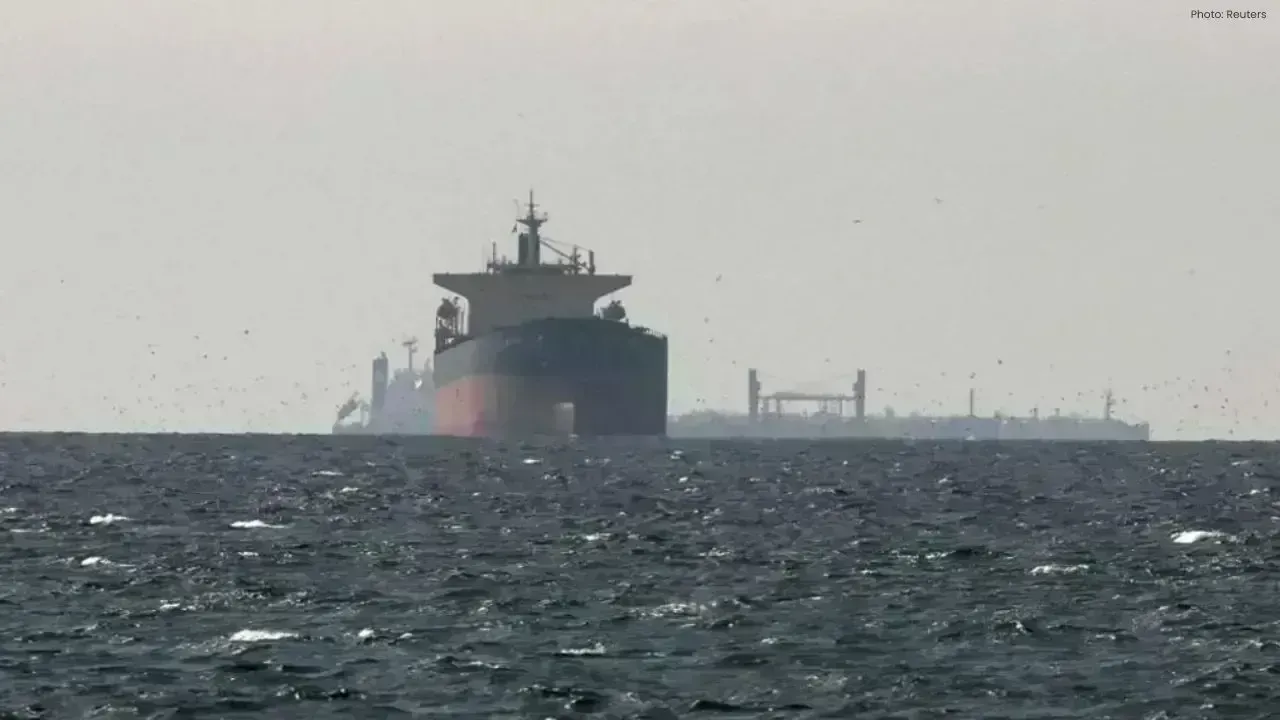
The cargo ship involved in Thursday's incident was the Singapore-flagged Ever Lovely.
The UK Maritime Trade Operations (UKMTO) agency said the vessel was struck by a projectile about 7.5 nautical miles southeast of Oman's port of Dahit.
Evergreen, the ship's owner, said the vessel had been following the route recommended by UKMTO when it came under attack.
The company confirmed that all crew members remained safe and that the ship and its cargo were not seriously affected.
Following the incident, the International Maritime Organization (IMO) suspended its planned evacuation of more than 11,000 sailors who have remained stranded in the region since the conflict began.
Why did the US strike Iran?
The United States said it launched strikes on Iranian missile, drone, and radar facilities after Iran allegedly carried out a drone attack on a commercial cargo ship in the Strait of Hormuz, which Washington described as a violation of the ceasefire.
What happened in the Strait of Hormuz?
A Singapore-flagged cargo ship, Ever Lovely, was hit by a projectile while travelling through the Strait of Hormuz. Iran claimed the vessel was using an unauthorised route, while the US said it was following an approved commercial shipping route.
What did Iran say after the US strikes?
Iran accused the United States of breaking the ceasefire, claimed its forces retaliated against US military positions, and warned that any future attacks would be met with a stronger response.


 English