Post by : Saif
Al-Najjar
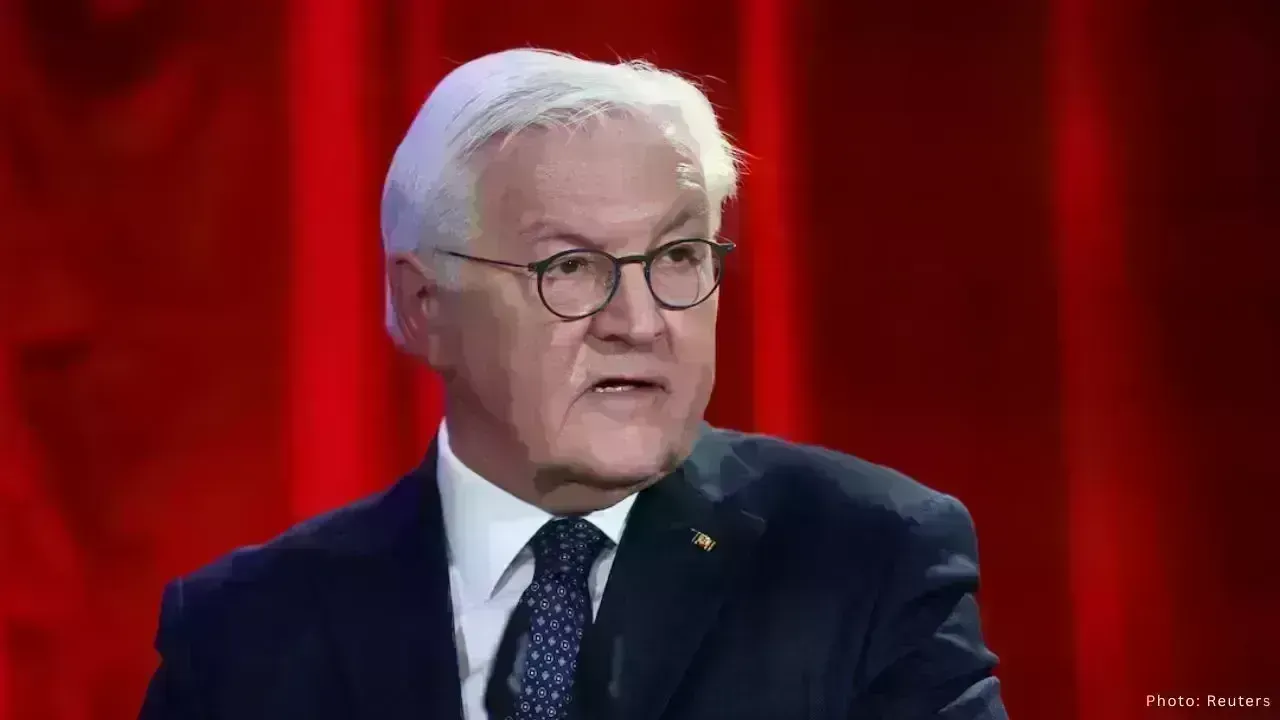
German President Frank-Walter Steinmeier has issued a profound critique of the current global order, expressly condemning the United States’ foreign policy stance. This statement reflects a rising concern among European leaders regarding increasing instability and the erosion of international regulations.
During a public gathering in Berlin, Steinmeier articulated that the world faces the risk of transforming into a battleground dominated by powerful nations indifferent to laws, values, and the plight of weaker states. He characterized this peril as a “den of robbers,” where ethics and collaboration are sidelined.
The German leader emphasized that global democracy faces unprecedented challenges. He highlighted recent global events indicating a deterioration in trust and shared obligations among leading nations. Although he refrained from citing specific incidents, his remarks implied concerns regarding aggressive political interventions and a disregard for established international norms.
Steinmeier also reminisced about past global crises, identifying Russia’s annexation of Crimea and the invasion of Ukraine as pivotal moments undermining the rules-based international framework. He remarked that current U.S. actions represent a significant deviation, particularly given America's instrumental role in establishing the post-war world order.
While the German president lacks direct influence over policymaking, his role empowers him to address moral and political challenges candidly. Thus, his statements resonate strongly and mirror broader anxieties within Europe about the trajectory of global leadership.
Steinmeier underscored that safeguarding the world order necessitates proactive measures rather than passive silence. He urged nations outside Europe and North America, such as India and Brazil, to reaffirm their commitment to international regulations and democratic values. According to him, global stability hinges on cooperation rather than mere power politics.
His remarks illuminate a rising trepidation that the framework established to avert disorder post-World War II is gradually deteriorating. Should nations disregard common rules, the likelihood of conflicts may increase, with the most vulnerable nations bearing the brunt of any fallout.
In conclusion, Steinmeier’s message was unequivocal: the global community must resist a future dominated by coercion and self-interest. A steadfast commitment to cooperation and shared values is crucial to maintaining a robust global order, essential for peace and security.


 English