Post by : Bianca
Haleem
The South Korean administration has shown optimism following Donald Trump’s announcement to significantly scale back U.S.-South Korean military exercises, viewing it as a potential pathway to rekindling discussions with North Korea. They believe enhanced ties between Trump and Kim Jong Un might pave the way for essential conversations that could alleviate tensions on the Korean Peninsula.
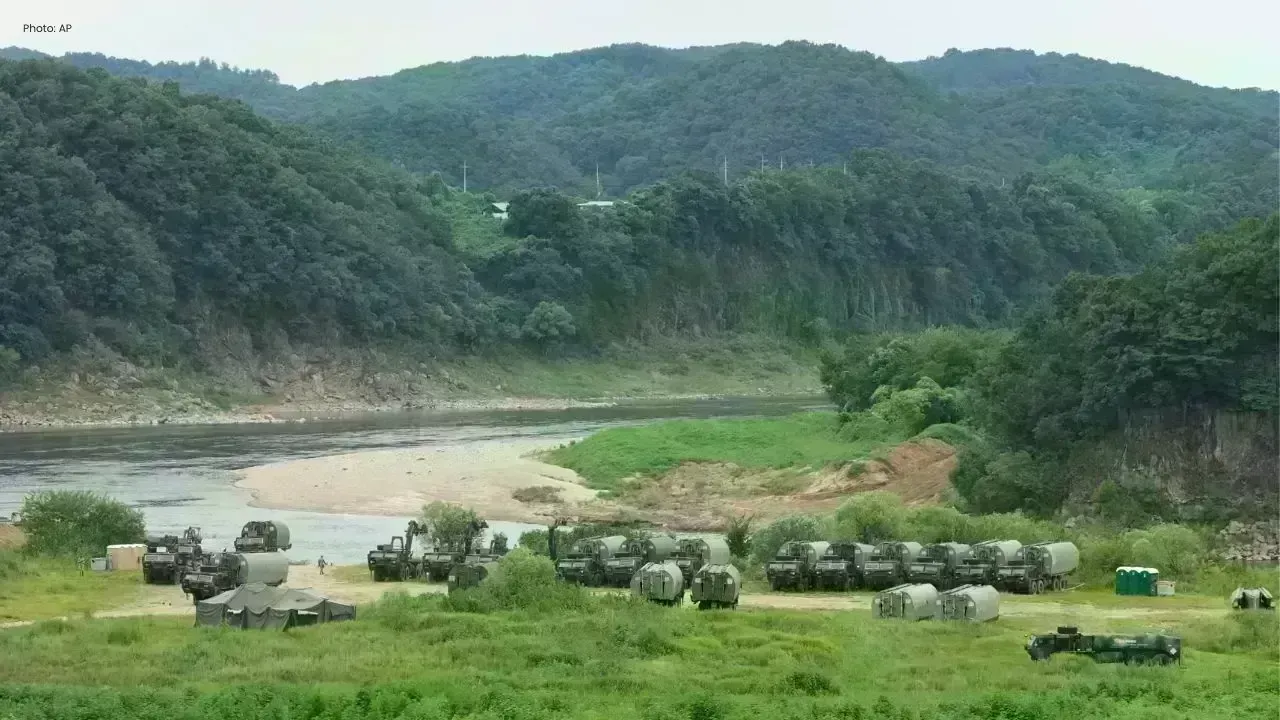
This move coincided with the commencement of the U.S.-South Korea annual Ulchi Freedom Shield military drills, which aim to bolster the allies' defense capabilities against possible North Korean threats.
However, concerns have arisen in South Korea about military preparedness following Trump’s directive to diminish the scale of the exercises, prompting discussions over the strength of the U.S.-South Korea alliance.
Trump's Directive on Military Exercises
Trump took to social media to explain that the drills are costly and could be perceived as hostile by North Korea. He cited his relationship with Kim Jong Un as a rationale for this strategic adjustment. Trump has indicated a willingness to re-engage with the North Korean leader, having previously held several meetings.
A clear message was sent to U.S. Defense Secretary Pete Hegseth regarding the need to significantly cut down the military exercises this year.
This decision has left South Korea in a state of uncertainty, as the exercises are a critical component of their defensive strategy in case of a North Korean incursion.
Prospects for Renewed US-North Korea Dialogue
Officials from South Korea have expressed hope that the cordial rapport between Trump and Kim might lead to constructive dialogue aimed at reducing hostilities. The government remains committed to diplomatic efforts supporting peace initiatives on the Korean Peninsula.
President Lee Jae Myung has undertaken various measures to decrease tensions with North Korea, including halting loudspeaker broadcasts near the border and backing initiatives to mend relations with Pyongyang.
On recent occasions, Lee has also suggested formal discussions to officially conclude the Korean War, a conflict settled under an armistice rather than a peace treaty.
Importance of Military Drills
The yearly U.S.-South Korea military drills are crucial for assessing the allies' readiness to counter diverse military threats. This year, the South Korean military anticipates maintaining a troop count similar to previous exercises, totaling approximately 18,000 participants.
The training sessions draw from insights gained from recent global conflicts, including the ongoing Russia-Ukraine war, and involve activities such as precision targeting and live-fire training among other operations.
Despite Trump’s orders to cut certain aspects of the drills, they proceeded as planned, with specific modifications still being clarified.
Concerns Over Military Readiness
Security experts raise alarms about the potential risks of scaled-back joint exercises, warning that it might hinder operational coordination between the U.S. and South Korea.
Leif-Eric Easley, an academic at Ewha University, cautioned that diminishing the drills might impair alliance solidarity and affect South Korea’s defensive autonomy. Analyst Duyeon Kim from the Center for a New American Security echoed concerns, stressing that reduced exercises could diminish military preparedness against a North Korean threat, especially as Pyongyang escalates its military capabilities.
Ongoing North Korean Military Cooperation
Since the collapse of nuclear discussions in 2019, North Korea has largely rebuffed diplomatic overtures from South Korea and the U.S., continuing its weapons testing while strengthening ties with nations like China and Russia.
This military collaboration with Russia has only served to bolster Kim's confidence, leading him to a less accommodating stance on returning to the negotiation table without significant compromises from the U.S. In September 2025, Kim hinted at possibly resuming discussions if the U.S. relaxed its denuclearization demands.
North Korea's Response to US-South Korea Exercises
Pyongyang has consistently denounced the joint military drills between the U.S. and South Korea, framing them as preparation for invasion. Recently, North Korea's Foreign Ministry condemned the military exercises as provocative and threatened to enhance its military readiness in response.
Earlier this month, the North launched two ballistic missiles into the sea, interpreted as a direct objection to the ongoing exercises, which North Korea cites as justification for its expanding nuclear arsenal.
A History of Reduced Exercises
This isn’t Trump’s first attempt to limit or suspend U.S.-South Korean military drills. Following his 2018 summit with Kim Jong Un, he announced a halt to significant summer exercises, labeling them as provocative and financially burdensome. The current decision underscores Trump’s ongoing strategy to leverage military activities alongside diplomatic efforts in pursuit of North Korean negotiations.


 English