Post by : Saif
Al-Najjar
The recent detention of former Venezuelan president Nicolás Maduro by U.S. authorities has instigated widespread alarm among global leaders, legal analysts, and international entities. There are growing fears that this event could undermine the framework of international laws that seek to avert global turmoil and conflict, established in the aftermath of the violent 20th century.
In response to the catastrophic impacts of two world wars, nations convened to develop international statutes under the United Nations aimed at safeguarding borders, curtailing the misuse of military force, and fostering diplomatic resolutions to disputes. Currently, this legal system is being challenged as powerful nations engage in actions that seem to disregard collective standards.
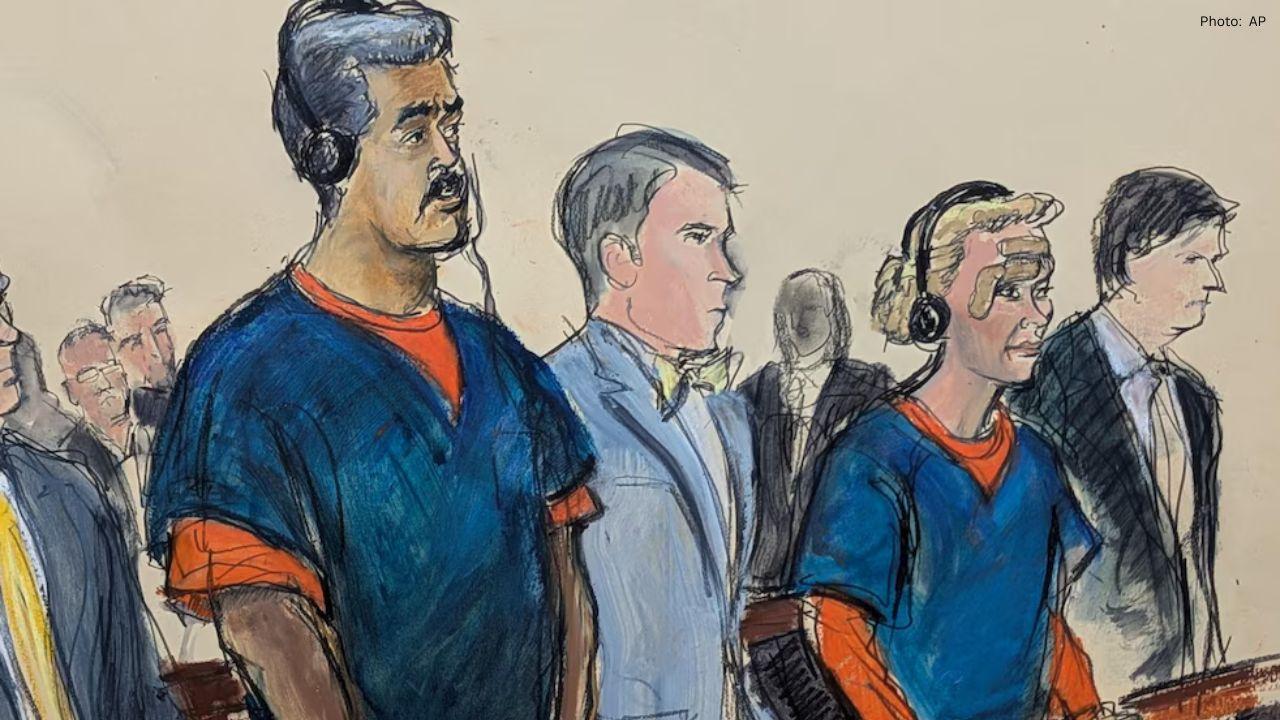
Maduro's transfer to U.S. custody and subsequent court appearance in New York, where he faces grave allegations related to drug trafficking and narco-terrorism, underscores the intensity of the situation. The U.S. government argues that the operation was both legal and essential, with officials asserting that criminal factions operating from Venezuela represent a significant danger, turning the nation into a hub for illicit activities that menace global stability.
The Trump administration characterized Venezuelan-linked drug cartels as unlawful combatants. This classification allows the U.S. to frame its actions as part of an armed conflict against these entities, thus legitimizing the military-style operation to apprehend Maduro and his wife, Cilia Flores.
At the United Nations, responses remain cautious. Senior UN representative Rosemary DiCarlo conveyed to the Security Council that global peace hinges on adherence to the U.N. Charter, warning that circumventing these regulations could provoke increased instability both in Venezuela and internationally.
Concerns abound that this precedent could create a perilous norm. If one state is empowered to forcibly oust another’s leader, it risks encouraging similar justifications elsewhere, potentially eroding respect for national sovereignty and escalating conflicts rather than resolving them.
Proponents of the U.S. actions contend that removing Maduro was essential in dismantling criminal organizations and restoring justice. Conversely, detractors maintain that serious allegations alone do not authorize any nation to operate beyond established international law; they fear reverting to a world in which might overshadows mutually accepted norms.
These discussions transcend Venezuela, presenting broader questions about the direction of global governance. Will nations uphold international conventions, or will brute strength overshadow diplomacy and shared objectives?
As the legal proceedings against Maduro unfold, global observers remain vigilant. The resolution of this case could influence not only Venezuela's future but also shape international behavior during conflicts. This scenario serves as an essential reminder that global harmony relies on faith in communal regulations, and once that faith wanes, renewal may prove extremely challenging.


 English