Post by : Shakul
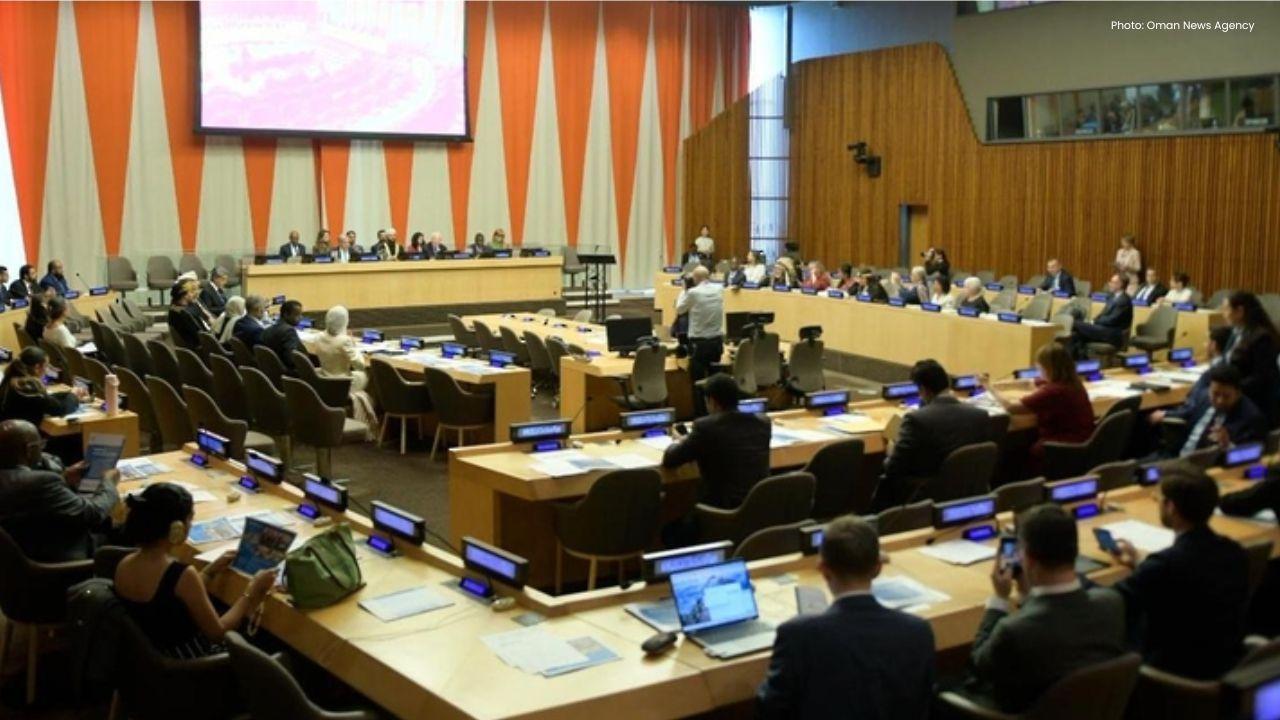
The Sultanate of Oman has officially launched the "Muscat Plan" at the United Nations Headquarters in New York, introducing a new international framework designed to combat hate speech, prevent genocide and reduce the risk of mass atrocities through dialogue, mediation and peacebuilding. The initiative reflects Oman's longstanding commitment to promoting coexistence, understanding and peaceful conflict resolution on the global stage.
The launch ceremony was held under the patronage of United Nations Secretary-General António Guterres and brought together senior representatives from member states, international organizations, indigenous communities, traditional leaders and peacebuilding networks. The event highlighted the growing international concern over the spread of hate speech and its impact on global peace and security.
Speaking at the ceremony, Dr. Mohammed bin Saeed Al Maamari, Oman’s Minister of Endowments and Religious Affairs, said the Muscat Plan is rooted in the values of dialogue, cooperation and mutual respect. He emphasized that diversity should be viewed as a source of strength and enrichment rather than division, noting that societies thrive when differences are managed through understanding and collaboration.
The minister stressed that the world is facing increasingly complex challenges, including poverty, climate-related crises, social fragmentation and rising intolerance. According to him, addressing these challenges requires collective responsibility, stronger partnerships and a renewed commitment to shared human values that promote dignity, peace and sustainable development.
United Nations Secretary-General António Guterres described hate speech as a growing threat to international peace and stability. He warned that hate speech often serves as an early indicator of violence and can contribute to the escalation of conflicts, discrimination and mass atrocities. Guterres called for stronger educational initiatives, support for vulnerable communities and greater accountability from technology companies to curb the spread of harmful content online.
The Muscat Plan recognizes the important role of religious leaders, indigenous communities and traditional authorities in preventing conflicts and promoting social cohesion. The framework seeks to empower these groups as active partners in peacebuilding efforts while encouraging dialogue, mediation and trust-building within societies affected by tension and division.
Oman officials described the initiative as a global call to move beyond managing conflicts toward building long-term partnerships based on respect, inclusion and shared responsibility. By strengthening cooperation among communities and institutions, the Muscat Plan aims to contribute to a safer, more peaceful and more prosperous future while reinforcing international efforts to prevent hate-driven violence around the world.


 English