Post by : Bianca
Haleem
His Highness Sheikh Hamdan bin Mohammed bin Rashid Al Maktoum has approved a series of major strategies and development projects worth AED18 billion aimed at improving the quality of life in Dubai and supporting the emirate’s long-term growth.
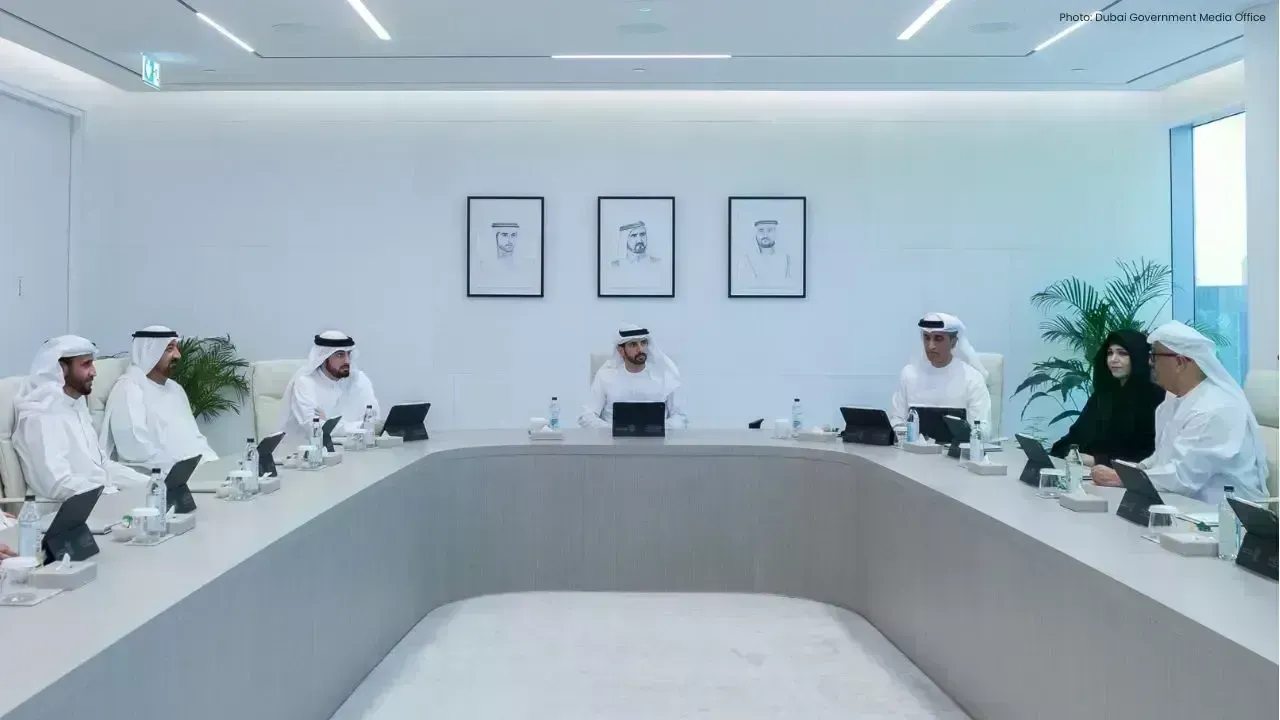
The approved initiatives cover several key sectors, including culture, trade, infrastructure, Emiratisation, finance, investment, urban planning, and population data. The decisions were made during a meeting of The Executive Council of Dubai held at Emirates Towers.
The meeting was attended by His Highness Sheikh Ahmed bin Mohammed bin Rashid Al Maktoum.
Sheikh Hamdan Highlights Dubai’s Vision for the Future
While chairing the meeting, Sheikh Hamdan said Dubai continues to turn its ambitions into reality through practical action. He stated that under the leadership and vision of His Highness Sheikh Mohammed bin Rashid Al Maktoum, the emirate continues to build for both the present and the future, ensuring every development contributes to lasting progress.
Speaking about the cultural plans, Sheikh Hamdan said the Dubai Cultural Strategy 2033, led by Her Highness Sheikha Latifa bint Mohammed bin Rashid Al Maktoum, will support the Dubai Plan 2033 and Dubai Social Agenda 33. He said the strategy aims to make Dubai a global cultural centre while preserving the UAE’s heritage and encouraging innovation and creative talent.
He also said Dubai is working across multiple sectors, including city planning, data-driven policymaking, investment, talent development, and emerging industries, reflecting the emirate’s broad ambitions for current and future generations.
Dubai Cultural Strategy 2033
The Executive Council approved the Dubai Cultural Strategy 2033, which will be supervised by the Dubai Culture and Arts Authority.
The strategy is designed to strengthen Dubai’s position as a global destination for culture, creativity, and innovation while protecting the UAE’s cultural heritage. It also aims to make Dubai a preferred location for creative projects, attract international talent, and promote social cohesion.
Read More: Sheikha Latifa Attends AUD Class of 2026 Graduation Ceremony
The strategy supports both the Dubai Plan 2033 and Dubai Social Agenda 33. It is based on four main pillars and includes 40 initiatives, supported by five sector indicators and 23 key performance indicators.
Major initiatives include the Dubai Cultural and Creative Innovation Programme, the UAE Heritage Design Challenge, and the Future Talents Development Programme.
The strategy aims to support more than 6,000 local creative talents, attract over 6,000 international creatives, increase Dubai’s cultural assets by more than 200%, raise the cultural sector’s contribution to GDP to 5.4%, and increase public-private partnerships in the sector to AED2.75 billion.
Dubai Customs Strategy 2030 Approved
The Executive Council also approved the Dubai Customs Strategy 2030.
The strategy focuses on making trade easier, strengthening economic partnerships, improving customs security and compliance, and enhancing services for customers and partners. It is designed to improve Dubai’s competitiveness, protect the community, and reinforce the emirate’s role as a leading global trade hub.
First Al Khail Street Development Plan
A major road infrastructure project, the First Al Khail Street Development Plan, also received approval.
The project includes the construction of a 15-kilometre elevated road with three lanes in each direction. The new corridor will run parallel to Sheikh Zayed Road.
Construction is scheduled to begin in the third quarter of 2027 and finish in the fourth quarter of 2030. Modern construction technologies will be used to speed up work while reducing traffic disruptions.
The project is expected to serve around 2.6 million people, improve access to Al Barsha, Al Quoz, Business Bay, and Meydan, reduce travel time on Sheikh Zayed Road by 51% during peak hours, improve road efficiency, and increase traffic capacity by about 9,000 vehicles per hour.
‘Dubai Population Now’ Initiative
The Executive Council approved the Real-Time Population Census and Growth Monitoring Initiative, known as ‘Dubai Population Now’.
The initiative will be managed by the Dubai Data and Statistics Establishment, part of the Dubai Digital Authority. It uses artificial intelligence and smart forecasting technology to provide a real-time population clock and support planning across the emirate.
Dubai’s population reached 4.58 million by the end of 2025, an increase of 332,000 people, or 7.5%, compared with 2024.
The project is intended to help authorities make more accurate decisions in areas such as housing, healthcare, education, and transport.
Emirati Talents Strategy for Private Education
The Executive Council also approved the Emirati Talents Strategy in Private Education.
The strategy supports the Dubai Education Strategy 2033 and aims to increase the number of Emiratis working in private education to 3,000 by 2033.
Performance will be measured through indicators such as the percentage of Emirati teachers and employee retention rates.
Its key initiatives include the Teacher Qualification and Accreditation Academy (Bridge to Teach), Success Partners Programme, Flex Emiratisation, TeachXperience, and a pathway to employ retired professionals.
Dubai Investor Register Introduced
A new Dubai Investor Register has also been approved to create a unified database for companies, institutions, and investors operating in the emirate.
The register supports the Dubai Economic Agenda (D33), which targets AED650 billion in foreign direct investment by 2033.
It will allow businesses and investors to operate across multiple zones without completing separate registrations. The system also meets Financial Action Task Force requirements while reducing costs and simplifying administrative procedures through unified data management.
New Visual Identity for Dubai Address System
The Executive Council approved a new visual identity for Dubai’s address system.
The updated signage will reflect Dubai’s urban character and classify addresses according to different urban sectors. The initiative aims to improve navigation, strengthen the identity of neighbourhoods, and align the system with international standards.
The project will gradually expand to include transport and residential services, with implementation planned across 186 areas by 2029.
Global Centre for Technology and Innovation in Islamic Finance
The Executive Council also approved the launch of the Global Centre for Technology and Innovation in Islamic Finance.
The centre will be managed by the Dubai International Financial Centre in partnership with global organisations. It is intended to strengthen Dubai’s position as a global hub for Islamic financial technology.
The Islamic finance market is projected to reach $9.31 trillion by 2030.
The centre’s planned initiatives include the Islamic Finance Innovation Challenge, an innovation platform connecting Islamic banks with start-ups, and the Future Islamic Finance Forum, scheduled for 4 November 2026.
The DIFC Academy will also introduce a talent development programme with a target of training more than 3,000 people by 2031.


 English