Post by : Anis
Al-Rashid
Your Trust in Phone Calls May Be Changing
For many years, receiving a phone call meant hearing a genuine human voice. Even automated systems had distinct limits in how lifelike they seemed. Now, that distinction is fading fast.
Modern technology can create voices that replicate breath, emotion, and accent with impressive fidelity. Machines can now express warmth, fatigue, friendliness, or concern—mimicking actual human voices almost flawlessly.
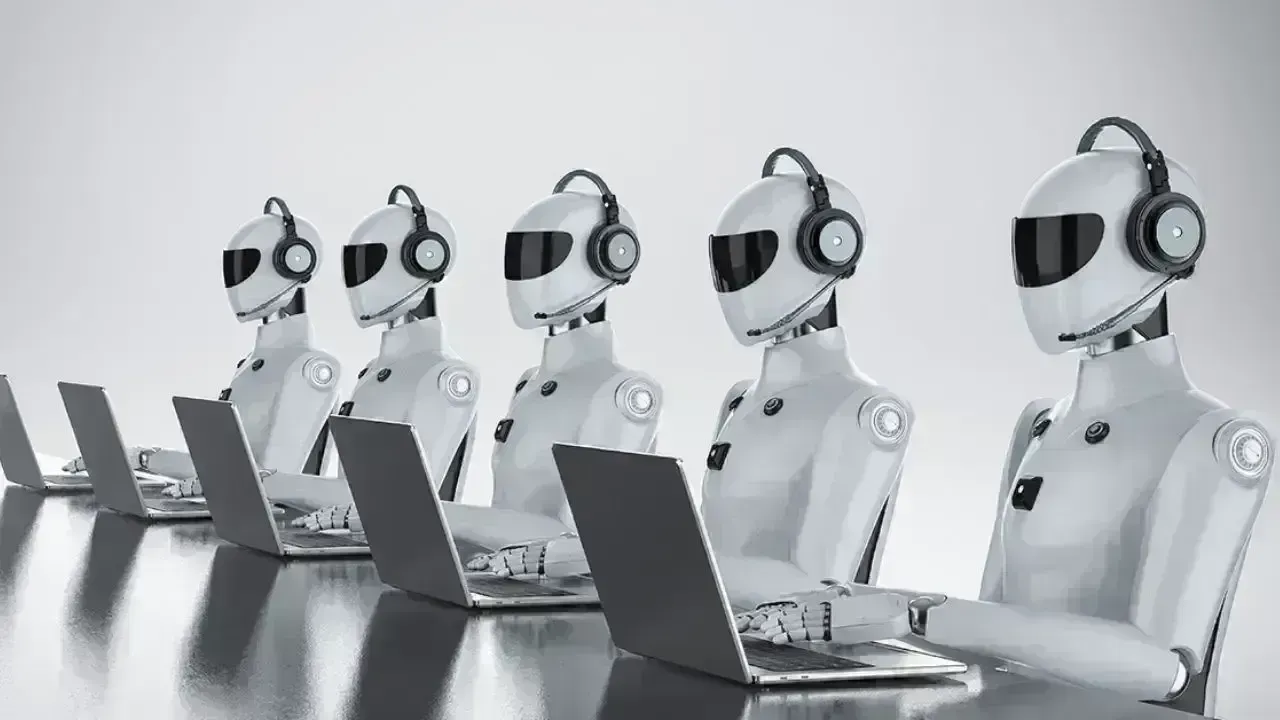
This advancement is already making its way into the customer service sector.
When you receive a call for a service update, reminder, or verification, a pressing question arises:
Is there a person on the other end, or is it an AI?
Understanding AI Voice Cloning
AI voice cloning implies the utilization of software that can echo a human's voice through artificial intelligence. With sufficient data, a system can accurately replicate speech patterns, emotional tones, and even pronunciation.
This technology doesn't merely replay recordings; instead, it synthesizes speech from text, crafting a digital likeness of vocal expression.
This key distinction allows:
-
On-the-fly conversational responses
-
Memory retention for previous interactions
-
Variations in emotional tone
-
Multiple language capabilities
-
Ongoing interactions without interruption
You're engaging with a simulation, not a recorded response.
The Mechanics Behind Voice Cloning
The technology analyzes how a person communicates, breaking it down into mathematical patterns. It comprehends:
Once trained, AI can produce that voice articulating thoughts the original speaker never expressed.
The Rapid Adoption of AI in Customer Service
Running customer support can be cost-prohibitive.
Companies allocate significant resources toward call centers, training, and staffing. AI voice technologies hold the promise of drastic cost reductions.
Businesses are turning to voice clones due to their ability to:
-
Scale operations instantly
-
Function continuously without break
-
Operate without wage demands or fatigue
-
Respond to scripted prompts without frustration
-
Handle numerous calls simultaneously
From a corporate standpoint, it presents an ideal solution.
Yet, from a human viewpoint, it raises concerns.
Replacing Outdated IVR Systems
Traditional automated systems tend to frustrate customers.
Voice cloning appears more engaging.
It can manage:
This transformation pushes companies to adopt voice cloning more aggressively.
The voice feels human.
The level of patience seems human.
The responsiveness, however, is exceptional.
The Dangers Behind the Comfort
The efficacy of voice cloning stems from its inherent risks.
Humans inherently trust voices.
A familiar tone tends to disarm defenses.
A soothing voice increases compliance.
When a machine mimics a human voice, the listener's skepticism diminishes.
And in customer service scenarios, individuals expect a certain level of authority.
When the voice claims to be "from your bank" or "providing delivery updates"—instant trust is triggered.
The Challenge of Detecting Artificial Speech
People have adapted to spottingFake visuals.
However, detecting audio deception is far more complex.
Our brains are wired to trust spoken language.
When we hear:
-
Natural breaths
-
Emotional shifts in tone
-
Genuine pauses
we automatically assume they signify authenticity.
Voice cloning takes advantage of this instinct.
It resonates as authentic, as our evolution has conditioned us to believe.
Scammers Taking Advantage
Criminals are quick to adapt.
They harness innovation faster than legal frameworks evolve.
The rise of voice cloning scams is alarming worldwide.
Scammers are known to:
-
Imitate the voices of family members
-
Pose as company representatives
-
Mimic the voice of bosses or managers
-
Pretend to be officials
-
Create false emergency scenarios
A scammer might replicate a family member's voice, initiating a crisis narrative.
The victim hears familiarity.
Fear overtakes logic.
Funds are quickly transferred.
The deception succeeds.
The Greater Threat Compared to Text Fraud
Written messages can be questioned.
Emails can be scrutinized.
Voices resonate on a personal level.
When someone calls sounding like your sibling, parent, or coworker, doubt dissipates.
Fear takes its place.
Voice cloning attacks the very essence of trust.
Benefits for Companies, Emotional Costs for Consumers
Businesses argue that voice cloning enhances customer service.
And at times, they are correct.
It can:
-
Shorten waiting times
-
Support multiple languages
-
Ensure consistent service
-
Function around the clock
-
Manage a high influx of calls
However, emotional connections cannot be authentically replicated.
Algorithms lack the capacity to truly grasp human distress.
They react as per data inputs.
This distinction is significant.
The Erosion of Human Insight
Human agents can pick up on:
-
Changes in tone
-
Moments of uncertainty
-
Expressions of distress
-
Emotional fluctuations
AI attends only to the spoken content.
Not the human aspect.
In critical situations, recognizing nuance can be life-saving.
Automated voices may falter there.
Trust Under Threat
Customer service hinges on a singular foundation:
Trust.
Fabricated voices risk damaging that trust.
When callers can’t distinguish:
then telephone communication turns treacherous.
Individuals may stop answering calls.
Support departments could suffer loss of reputation.
Even trustworthy companies may come under suspicion.
Widespread adoption of voice cloning can deteriorate public belief in voice communications altogether.
Legal Challenges Persist
Voice cloning operates within murky legal frameworks.
The questions are pressing:
As legal adaptations lag behind technological advancements, victims may find themselves caught in limbo.
A New Era of Identity Theft
Previously, identity theft centered on documents.
Now, it encompasses voices.
Your voice has become a form of password.
And it can be misappropriated without your awareness.
The Societal Impact of Trust Erosion
Faith in communication now hangs by a thread.
Individuals are growing wary of:
-
Unknown phone calls
-
Automated responses
-
Video warnings
-
Digital voices
Feelings of anxiety surrounding communication are escalating.
The act of phoning no longer feels secure.
When a voice sounds "too perfect," it raises alarm.
Consequently, society may be quietly developing a form of digital paranoia.
Guidelines for Erroneous Use
Voice cloning isn't inherently malicious.
It possesses immense potential.
However, like all capable tools, guidelines are essential.
Responsible use calls for:
-
Consent from the individual whose voice is utilized
-
Transparent communication to consumers
-
Avoidance of impersonation
-
Robust fraud prevention measures
Users should be informed if a voice is fabricated.
Silence regarding this issue constitutes deception.
Fostering Trust through Transparency
When businesses clearly state:
"This call employs synthetic voice technology for your assistance,"
confidence remains intact.
It is secrecy that erodes credibility.
Protecting Oneself Against Synthetic Fraud
People must now approach calls with caution.
Some practical measures include:
-
Avoid trusting urgent requests via phone
-
Verify any request through official platforms
-
Hang up and return the call using a registered number
-
Establish verification codes among family members
-
Never disclose OTPs or sensitive information
-
Remain calm and rational during calls
-
Always question any urgent financial requests
The era of blind trust is coming to an end.
Gaps in Education Need Attention
A wide portion of the public is unaware of the advancements posed by AI voices.
Educational institutions aren't addressing this.
Workplaces fail to explore this topic adequately.
Families remain uninformed.
This gap in knowledge presents significant risks.
Digital literacy must evolve to encompass audio awareness.
It’s not just about internet security anymore.
Urgent Action Required from Authorities
Regulatory bodies move at a glacial pace.
Unfortunately, harm unfolds swiftly.
Governments need to:
-
Criminalize identity theft using voice cloning
-
Enforce clear disclosure norms
-
Punish with severity instances of misuse
-
Mandate authentication standards
-
Create consent frameworks
Technology without enforceable law results in disorder.
And voice represents an intimately personal communication needing protection.
Complexities in the Workplace
Internal communications won't skip this transformation.
Voice cloning might be leveraged for:
-
Summaries of meetings
-
Training resources
-
Instructional guidance
-
Customer communications
Yet, it could also be exploited for:
Businesses must implement voice authentication protocols similar to how they secure password access.
Will we Normalise Synthetic Voices?
It's a possibility.
Human adaptation is swift.
However, this acceptance will likely come with resistance.
Individuals may acclimatize to uncertainty surrounding voice authenticity.
That shouldn't be regarded as a step forward.
Rather, it's a shift towards ambiguity.
Technological advancements ought to simplify life.
Not complicate it.
A Delicate Balance: Benefits and Risks
Voice cloning can provide advantages to:
Conversely, it can also:
The technology itself holds neutrality.
Its applications do not.
In Conclusion: Preparedness Remains a Question
The public is not adequately prepared.
Not in terms of regulation.
Not socially.
Not emotionally.
Voice cloning technologies arrived unexpectedly.
It entered subtly.
Under the guise of convenience.
Yet behind comfort lurk consequences.
Without stringent safeguards, trust will continue to diminish.
And when trust falters...
Communication begins to deteriorate.
Voice cloning may become one of the most pressing technology discussions of this decade.
Because when people can no longer trust voices...
What remains sacred?
DISCLAIMER
This article serves solely for educational and informational purposes. It does not offer legal, cybersecurity, or technical advice. Readers should consult professionals for security-related decisions and stay informed on regulations regarding AI technologies.


 English